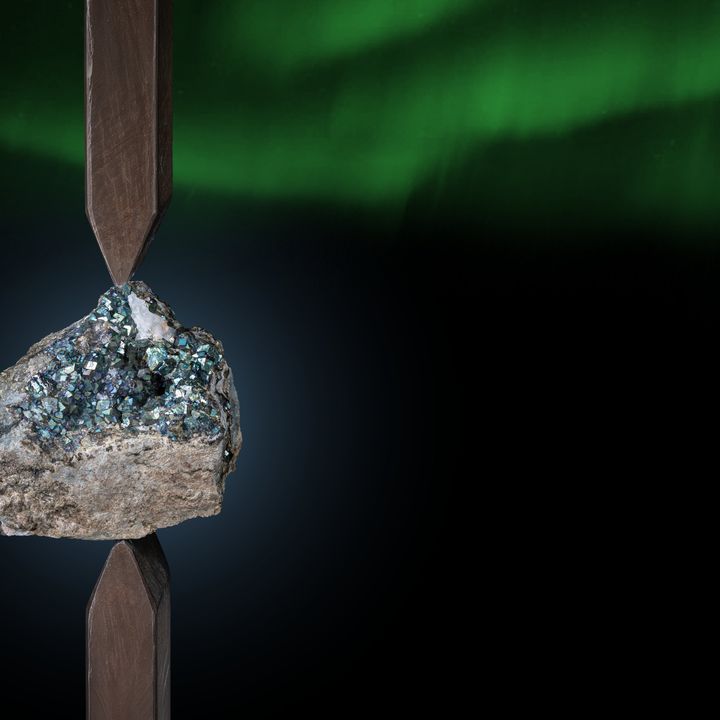
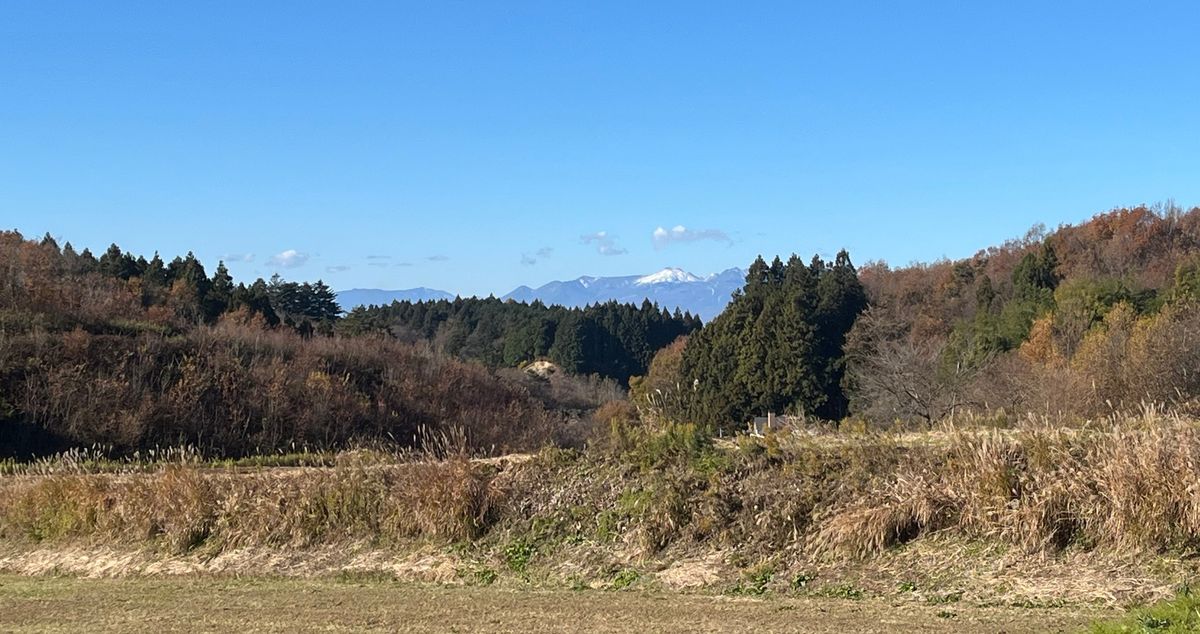
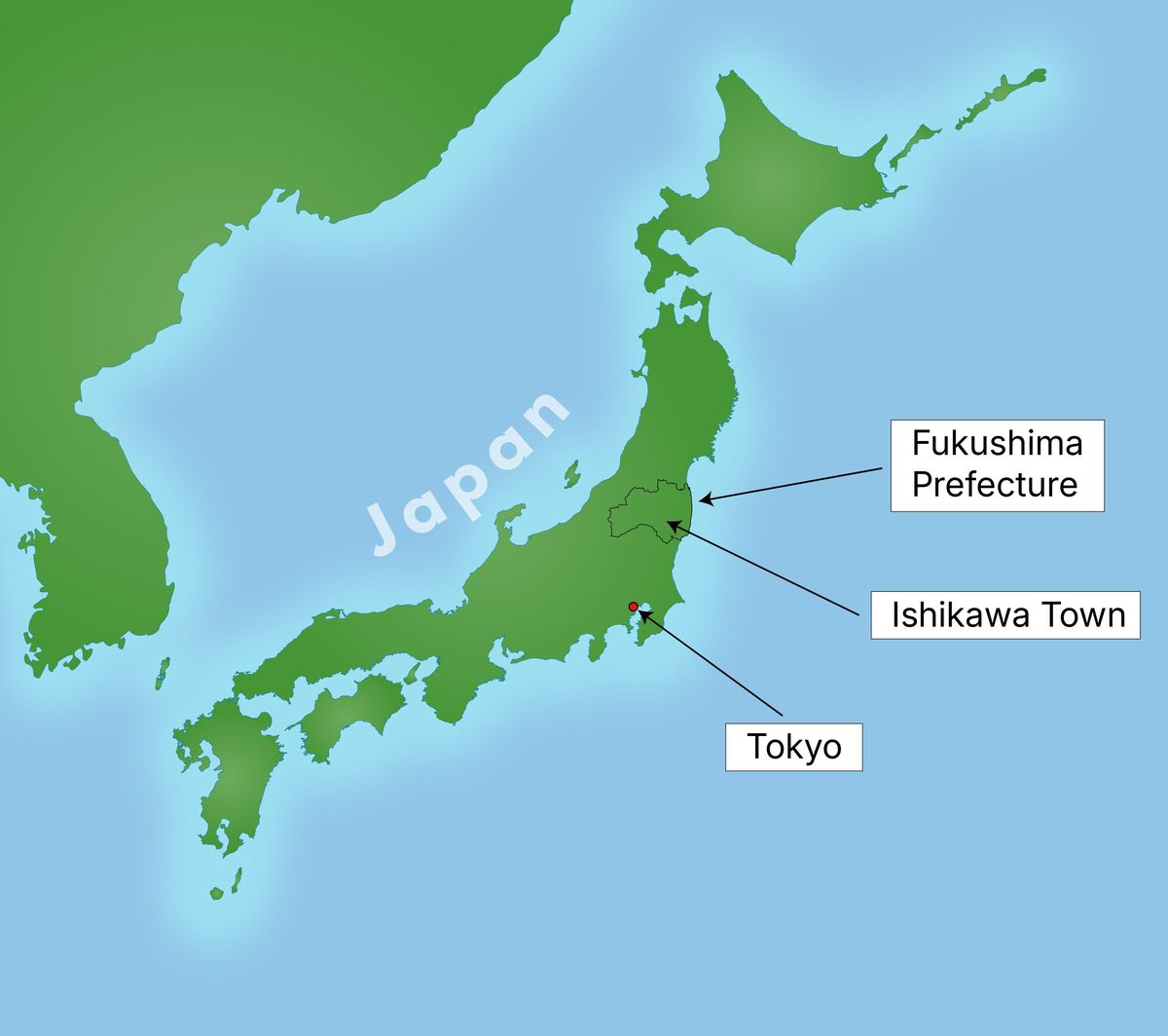
Ishikawa is a rural town with a population of a little less than 14000, located in the southeastern Fukushima Prefecture. Approximately 175 km to the north-northeast as the crow flies, about three and a half hours of driving away from the bustling megacity of Tokyo, the atmosphere in Ishikawa is quiet in contrast, with much of the landscape covered in rice paddy fields, forested hills and valleys. Today, just from a quick look alone, one would never suspect that this place is so strongly tied to the history of Japanese mineralogy, radiochemistry, and even the nuclear weapons research during the WWII.
Geography and Geology
Ishikawa Town sits on the western foot of the Abukuma Mountains — an extensive mountain range running north to south through the east of Fukushima Prefecture. These mountains may not be particularly tall, maxing out at a little less than 1200 metres, nor are they rugged and steep like some other major mountains in Japan. Rather, they are largely gentle, hilly highlands, giving them an alternative name: Abukuma Highlands.
The Abukuma Mountains are largely composed of granitic rocks (granitoids) known as the Abukuma Granites, consisting of granodiorite/tonalite, alkali-feldspar-rich “true” granites, interwoven with other associated intrusive and metamorphic rocks. These rocks date back to the Early Cretaceous, Aptian to Albian ages (ca. 100 – 120 Ma) [2]. Along this north-south belt of granitoids extending for more than 100 km, there exist many notable granite pegmatite deposits, particularly here in Ishikawa and in its surrounding regions.
Pegmatites are especially coarse-grained intrusive igneous rocks, with individual crystal sizes exceeding 1 cm, often growing much larger. Since most granitoids are made predominantly of quartz and feldspar, granite pegmatites are an excellent industrial source of these minerals in large masses, with the former being used for glass production and the latter for ceramic/pottery production. In addition, pegmatites also contain large, beautiful crystals of quartz and other potential gem minerals, thus are often explored for these minerals. Not only that, they are often enriched in unique, fairly rare and valuable chemical elements — the so-called rare elements. All these things combined, pegmatites are of particular geological and economic interest, as well as home to mineralogical wonders.
Dawn of Pegmatite Mining in Ishikawa
The earliest record of modern pegmatite mining in Ishikawa dates back to the Meiji Era (1868-1912) [1], roughly concurrent to the rapid modernisation and industrialisation of Imperial Japan following the fall of feudal rule by the Tokugawa Shogunate. Meiji-Era mining activities in Ishikawa were still limited, accounted only in certain parts of the town, namely Iriyama and Wagu neighbourhoods. A formal record exists that a pegmatite in Wagu had been worked for muscovite and subsequently quartz for glass production, prior to ca. 1907 when the mining activity was ceased [1].
By the early Taishō Era (ca. late 1910s), the region was already known nationwide for its feldspar, whose mining was encouraged by the government to increase the export of ceramic products. It was around the latter half of the Taishō Era (ca. 1920s) that the number of mines and mining workers increased, as the economic decline and poor harvests negatively affected the lives of local farming communities. The value of quartz-feldspar mining had risen like never before, especially amidst the then-ongoing industrialisation [1].
Around the same time, many mineralogical findings and scientific contributions were made in Ishikawa, including the discovery of ishikawaite in 1922. These cemented this region as one of the best-known localities of rare-element minerals, which were to gain even more significance later on due to the changing geopolitical landscape.
Rare-Element Minerals of Ishikawa
The word rare-element minerals, translated from Japanese 稀元素鉱物 (kigenso-kōbutsu), is rather ill-defined, as it is not a formal, strictly scientific term. Broadly, in the twentieth-century historical convention within the Japanese mineralogical community, rare elements refer to relatively rare, lithophilic incompatible elements that tend to be concentrated in granite pegmatites, such as lithium, beryllium, rare earth elements (REEs), zirconium, niobium, caesium, tantalum, thorium, and uranium. Gifted with numerous pegmatite deposits belonging to the NYF (niobium-yttrium-fluorine) type, Ishikawa is home to some of the most productive occurrences of rare-element minerals in Japan.
According to the book “Nogisawa — Land of Minerals”, rare-element minerals from Ishikawa had already been described as early as in 1904, starting with columbite, the primary niobium ore mineral, and beryl, a beryllium ore and a gemstone known for varieties such as aquamarine. Subsequently, in 1908, monazite, the primary REE ore mineral, and tourmaline group minerals (most certainly schorl), which contain boron, were also reported [1].
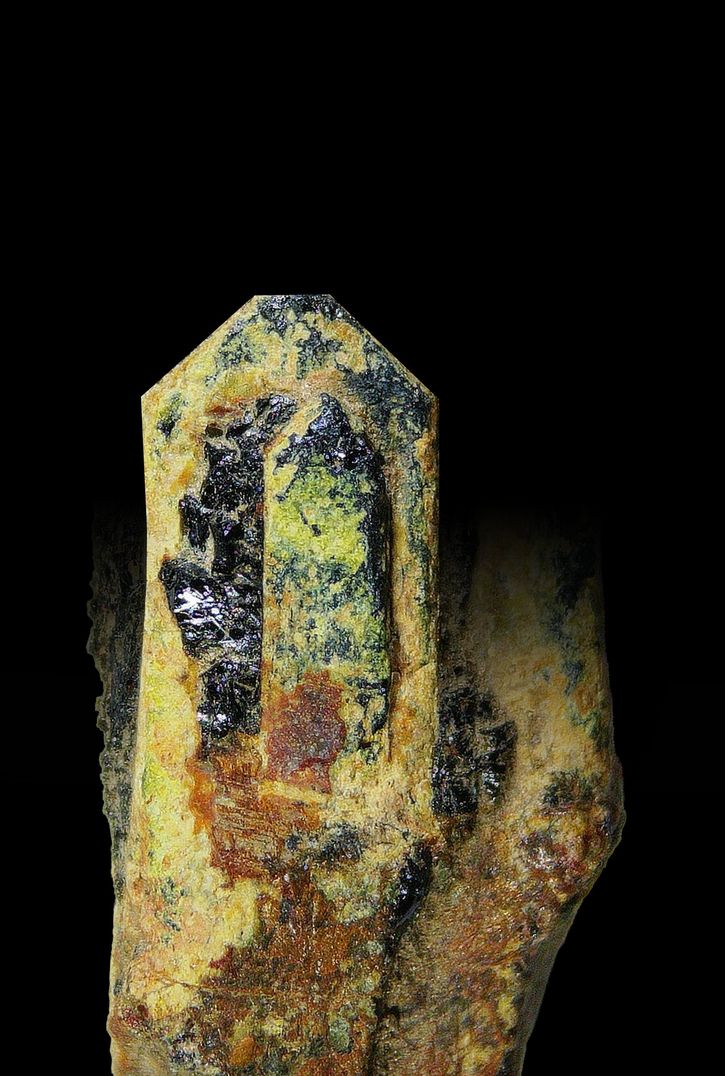
In 1915, an yttrium phosphate mineral, xenotime, was discovered from the neighbourhood of Wagu and the Ōhashi River (both located in Ishikawa Town), identified via its crystal geometry and analytical confirmation of phosphorus by Hideyuki Awazu (1886 – 1945, mineralogist). Samarskite, a complex niobium-bearing oxide, was also discovered from the same localities by Awazu, as pitch-black, tetragonal prismatic crystals with submetallic to adamantine lustre, dark reddish-black streak, and intense radioactivity [3].
In 1921, a detailed study involving wet-chemical analyses was published by two chemists, Yūji Shibata and Kenjirō Kimura, in which they examined and determined the compositions of iron-dominant columbite and monazite from Ishikawa [4].
Discovery of Ishikawaite
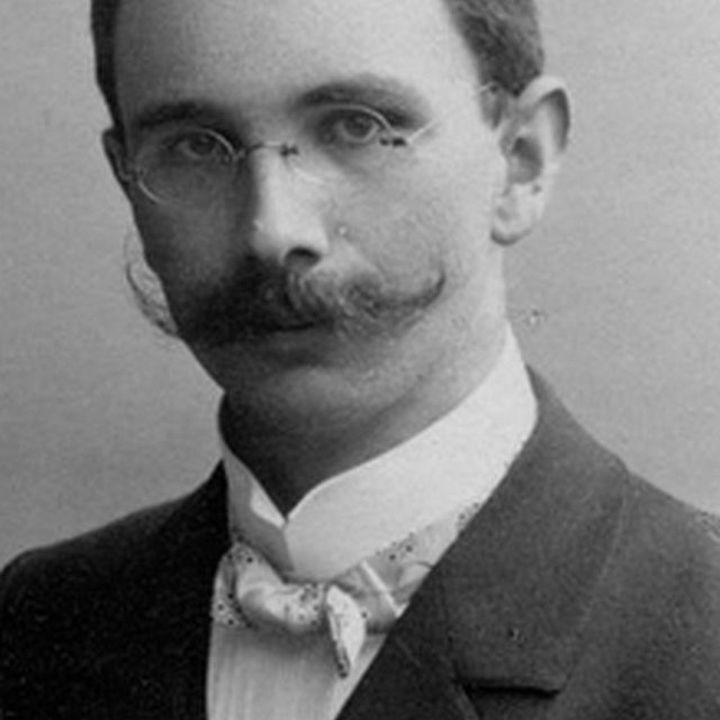
In March of the next year (1922), the same authors published another paper, this time on samarskite-like minerals found in Ishikawa. In the paper, they settled the identity of a previously described but disputed material as samarskite, not yttrotantalite unlike previously speculated. In addition, they found a probable new mineral resembling samarskite in composition but with a much higher uranium content, from “Tomaki-Kannonyama” and again from the Ōhashi River [5].
Later, in June that year, Kimura formalised and declared the new mineral as ishikawaite. The mineral can be distinguished from samarskite with its uranium-rich, REE-poor nature, as well as its higher specific gravity and differences in crystal geometry [6].
Shadow of WWII
From the 1930s onward, Imperial Japan marched the way of fascism and towards the Second World War. As the Sino-Japanese War (1937 – 1945) prolonged and the Pacific Theatre opened in 1941, Japan was dragged into the quagmire of ever-intensifying warfare. The State General Mobilisation Law required that all citizens participated in the nation’s war effort, and civilian industries and resources were repurposed and allocated towards the military.
Mineral resources of Ishikawa, too, had to be mined and utilised for wartime purposes. Quartz, for example, served as a source of silicon to produce ferrosilicon alloys, as well as glass and lens for the military and silica fibres for firefighting suits [1]. Zircon was mined for zirconium, which played a critical role in producing hardened special alloys. In addition, many other minerals, such as beryl (beryllium), tourmalines (boron), and micas (for their physical properties), were exploited for Japan’s wartime industrial effort [1][7].
Nuclear Ambitions
The discovery of nuclear fission by Otto Hahn, Fritz Strassman, Lise Meitner, and Otto Frisch in 1938 had a major impact on the trajectory of WWII. As the war progressed and intensified across multiple theatres, different nations on both opposing sides conceived the idea of fission-based nuclear weaponry. Although the Manhattan Project of the United States was the only one successful, thus is widely recognised today, there were competing, albeit much smaller and eventually unsuccessful, projects in both Japan and Germany.
Japan had two concurrent, independent research projects related to the potential of nuclear weapons. One was the Ni-gō Project of the Army, led under the pioneering physicist Yoshio Nishina, after whose initial part of the surname (Ni-shina) the project was named. Another was the F-Project of the Navy, likely named after the initial letter of “fission” (or, according to other hypotheses, after fluorine in uranium hexafluoride, UF6). These projects were, in hindsight, doomed to begin with, in that Japan lacked the natural resources, technology, funding or industrial capacity required to actually develop a fission bomb. Furthermore, the poor relationship and lack of cooperation between the two projects, between the Army and Navy, did not serve Japan’s ambitions either. In the end, both of them were to end up as proof-of-concept research projects, which eventually concluded that the development of a fission bomb was unrealistic and unlikely to happen anytime soon — even for the United States, to their unfortunate misprediction.
While these projects may not have yielded any tangible, physical result, their processes themselves were very real, affecting the lives of ordinary civilians. Particularly, the townspeople of Ishikawa were caught in the middle of the state’s struggle to obtain uranium required for its hopeless nuclear research.
Uranium Mining in Desperation
As the war situation worsened for Japan, the military pushed hard for fission bombs in desperation, seeking a quick solution to flip the tide and end the war. Yet, the import of raw uranium became progressively more difficult, especially as Japan lost its maritime superiority and was effectively blockaded by the Allied Forces. Thus, Japan had to seek a source of uranium domestically on its resource-poor mainland, and focused on Ishikawa due to its well-known pegmatitic radioactive minerals.
As per the army’s request, people of Ishikawa were tasked to mine samarskite, a uranium-bearing rare-element mineral, for the Ni-gō Project. The goal was to produce 10 tonnes, which, in today’s hindsight, is absurdly unrealistic given the small scale of pegmatites in Ishikawa [1][7]. By February, 1945, the army had realised that the goal will not be met with the Shionohira Pegmatite Deposit alone, and thus planned to expand the mining operations to Ōuchi, Maenouchi, and Wagu Deposits. They estimated to mine 1 ton of samarskite, a tenth of the initial goal, within two months from March to April, requiring 5000 workers per month [7]. The uranium mine operation in Ishikawa continued until the day of Japan’s surrender, on the 15th of August [1][7].
In the final year of the war, 1945, with many men away on the battlefront, there was a shortage of mining workers, which had to be filled in with local women and schoolchildren. Beginning from April, third-year students of the Ishikawa Middle School (present-day Gakuhō-Ishikawa High School) were sent to mines in groups of 20 to 30. Anecdotes tell that they had to select ore minerals they had been taught about: samarskite, columbite, and beryl, out of materials they carried out from tailing piles stacked outside of the mine. On one account, students were encouraged by the words of an army officer, who told them that “a powerful bomb the size of a matchbox” could win the war, and that their uranium mineral collecting played a crucial role in it. On another account, a teacher told students during break time about atoms, neutrons, and destruction of atomic nuclei, and that their work was for a bomb tens of millions of times more powerful than conventional bombs [1]. It is appropriate to say that the children of Ishikawa were forced into mine labour under the delusion of an atomic bomb, told with over-glorified stories of uranium minerals and their power, however inaccurate or unrealistic they were.
Once the war was over, the sacrifices of those people and minerals in Ishikawa were forgotten in time, remaining largely untold even within Japan.
Post-War
After the war, as Japan gathered itself up on track of recovery, people of Ishikawa once again began working in mines, just this time back for feldspar and quartz, no longer for uranium. This post-war recovery age saw rapid development of mines throughout Ishikawa Town, from the neighbourhoods of Nakano, Shiozawa, and Magaki to the Ishikawa-yama area. The peak of mining industry near Nogisawa, north of Ishikawa Town, was likely from around 1952 to 1962 [1].
In the 1950s, as the global political current shifted towards the peaceful use of nuclear energy, Japan, too, began exploring its uranium resource potential once again. Ishikawa, of course, received attention from the scholars, who studied and explored uranium-bearing pegmatites throughout the town in details. However, none was found significant enough to be economically productive, and the “uranium rush” faded away rather quicky [7]. This is likely why there are many academic papers on rare-element pegmatites in the region from the 1950s but almost none from the 60s or later.
From the late 1950s onwards, mining industry in Ishikawa gradually declined due to cost increase, depletion of ores, and global free trade resulting in increased import of cheaper ores from abroad. All mines were closed by around 1965, and many were lost to subsequent land development and conversion to fields and farmlands. Only minor operations persisted into the 1980s, to supply high-quality feldspar for specialty pottery artists [7].
Ishikawa Town Today
Today, all but one mine in Ishikawa are abandoned, most lost in time. While a few remains of former mines and quarries can still be located today, it may be a matter of time before their memories and proofs of existence disappear, along with the ever-ageing population who still remember the mining age of Ishikawa. However unfortunate that is, there may still be a hope. There is an ongoing effort by a group of local conservationists to preserve the relics of those mining sites and to educate visitors and local schoolchildren about them. They actively maintain the one last site standing — the Kannonyama Mine, one of the two localities of ishikawaite mentioned by Kimura in 1922. A guided tour can be booked to enter the mine adit with special permission. For more information, contact the Ishikawa Town Museum of History and Folklore.
Moreover, there are amateur mineralogists and mineral enthusiasts who keep records of abandoned, sometimes forgotten mining sites, confirming their presence and preserving their legacy alive to this day. For example, I have visited and can confirm at least eight pegmatite workings in and around Ishikawa Town, with minerals such as almandine (garnet), beryl, columbite-(Fe), euxenite-(Y), fergusonite-(Y), ishikawaite, monazite-(Ce), samarskite-(Y), schorl (tourmaline), xenotime-(Y), and zircon still present in small quantities. Even today, Ishikawa Town remains one of the most affluent sanctuaries of various rare-element minerals; a precious geological jewel box preserved through 100 million years of time.

/mineralica-magazine/l7j7f1/p8-01.jpg)