Maximilian Schiller (2026): The Maucher Mineral Trade: The End of an Era. Mineralica 2026-2, pp. 70–72.
Online
Maximilian Schiller (2026): The Maucher Mineral Trade: The End of an Era. Mineralica online, June 2026. https://mineralica.com/a/FwBNGH (accessed October 13, 2026)
For more than a century, the Maucher mineral shop was part of mineralogical Munich. Now the Kristallgarten in Pasing is closing – a look back at a piece of Munich's collecting history.
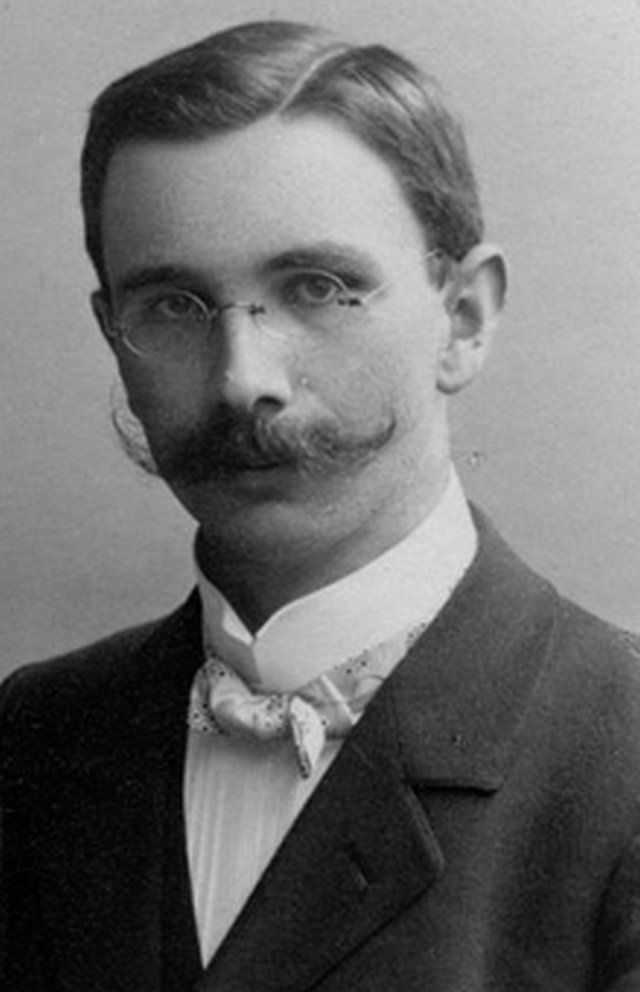
Wilhelm Maucher (1879–1930), founder of the house: in 1909 he opened one of the first mineral and fossil shops in Germany, in Munich. Before that, he had managed the Saxon state's mineral depot in Freiberg, Saxony.
The following lines are only a brief sketch. A detailed portrait of the Maucher family and its founder, Wilhelm — his origins, his far-reaching travels, and the great collections he supplied — will follow in the next issue.
For many, the name Maucher is synonymous with high-quality, authentic mineral specimens. Founded in 1909 by Wilhelm Maucher on Munich's Schellingstraße, the specialist shop "Die Süddeutsche Mineralienzentrale" (The South German Mineral Center) was among the first of its kind in Germany. For decades it remained the only shop in the entire southern German region devoted exclusively to minerals and fossils.
Known today as "Kristallgarten Maucher," the specialist mineral shop has been run by the Maucher family for more than a hundred years. Now, however, the shop is closing its doors — an occasion to look back on this institution of the collecting world.
Wilhelm Maucher himself did not live to see the long success of his establishment; he died as early as 1930. His daughter Elisabeth (1910–2007) carried on the mineral trade even through the most difficult years. When the shop on Schellingstraße was destroyed in a bombing raid on December 19, 1944, the family had brought three cabinets and their contents to safety in time. It was precisely these remnants that became the foundation for a fresh start in what was then the Munich suburb of Pasing. To this day, "Kristallgarten Maucher" can still be found there, bearing the sign "since 1909."
Anyone who owns a piece from the house of Maucher can still recognize it today by its characteristic labels — small cards, often handwritten, that have long been regarded among collectors as a mark of provenance. Some of them even reveal a chapter of the family's history: when Elisabeth Maucher married in 1936 and thereby took on a new surname, the company would technically have had to be renamed. But her brother Herbert Maucher stepped in, lending his name to the business. And so some labels bear the imprint "Dr.-Ing. H. Maucher" alongside the more familiar, original "Dipl.-Ing. W. Maucher."
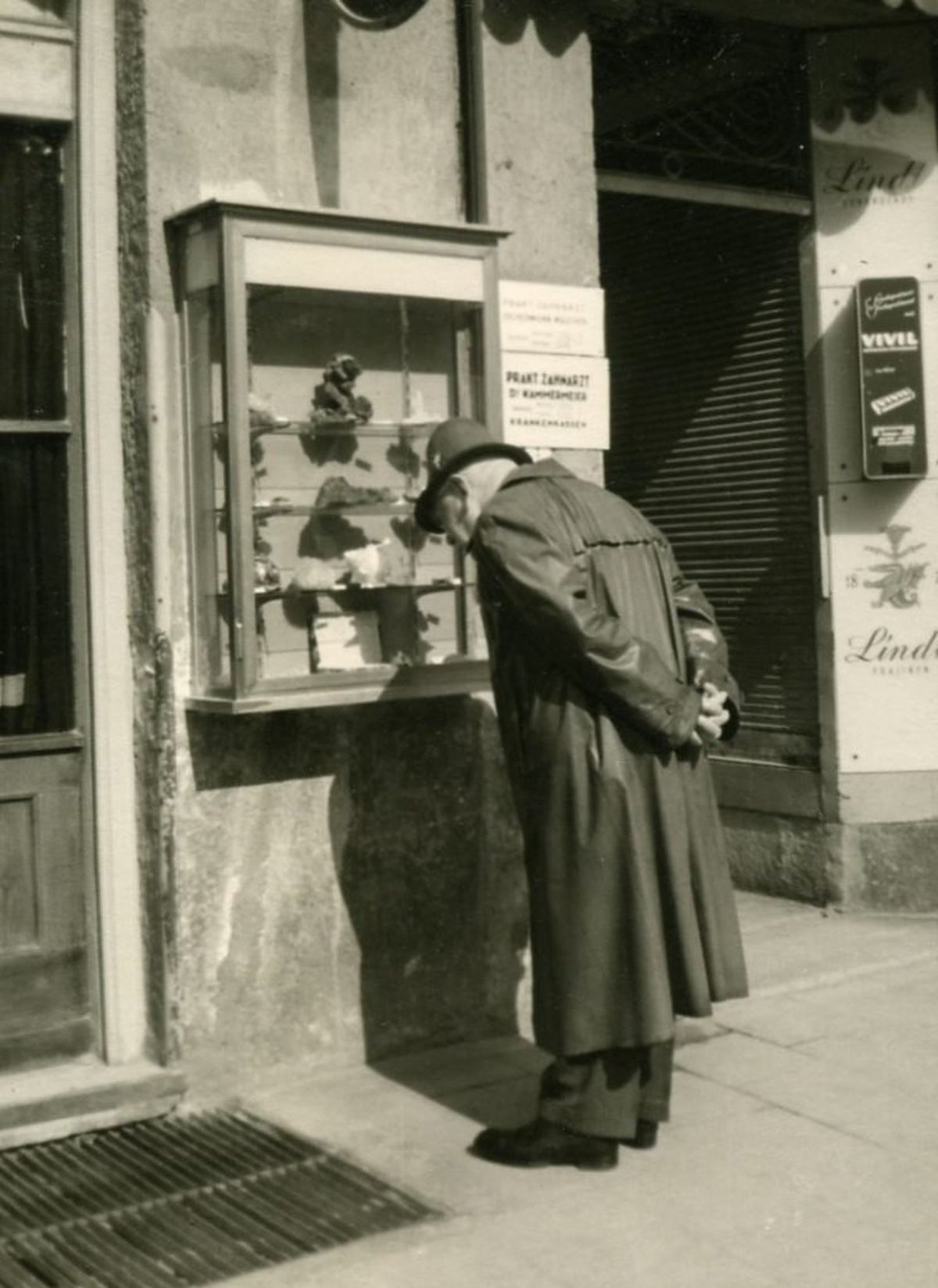
The display case on the street: the shop window of the Kristallgarten Maucher at Gleichmannstraße 9 in Munich-Pasing.
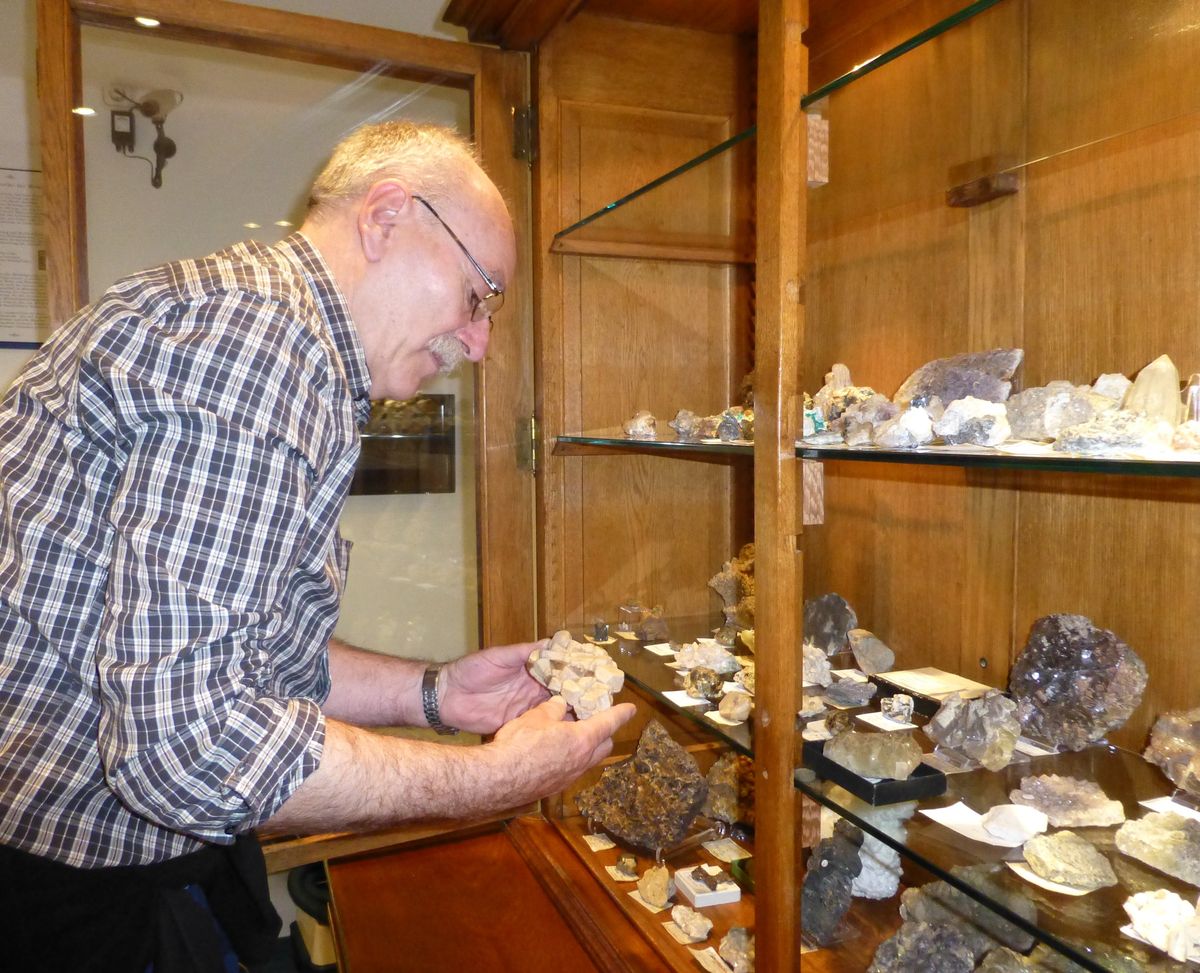
Anyone who knows the shop may have a typical image in mind: a collector bent over the display case, captivated by the incredible selection of rare collector's pieces. For decades, generations of Munich collectors picked up their first mineral here — and, along with it, their first knowledge. Here one could hold a stone in one's hand, compare it, ask questions, and learn — something that has all but vanished in today's customary online trade.
The shop's cellar was also famous — or rather, notorious. Behind the sales room lay a vast stock of pieces from every era of the establishment, a trove spoken of among collectors; those granted access could indeed still track down rarities between the shelves. Over the years, of course, this cellar had already been combed through many times — but that never did the legend any harm.
With "Kristallgarten Maucher," more than a century of Munich's mineral trade now comes to an end — quietly and without great fanfare. What remains are, on the one hand, the stones in the collections and the little cards that accompany them. On the other, there remain the memories, the knowledge, and the fascination with which the Maucher family has enriched countless collectors all over the world.
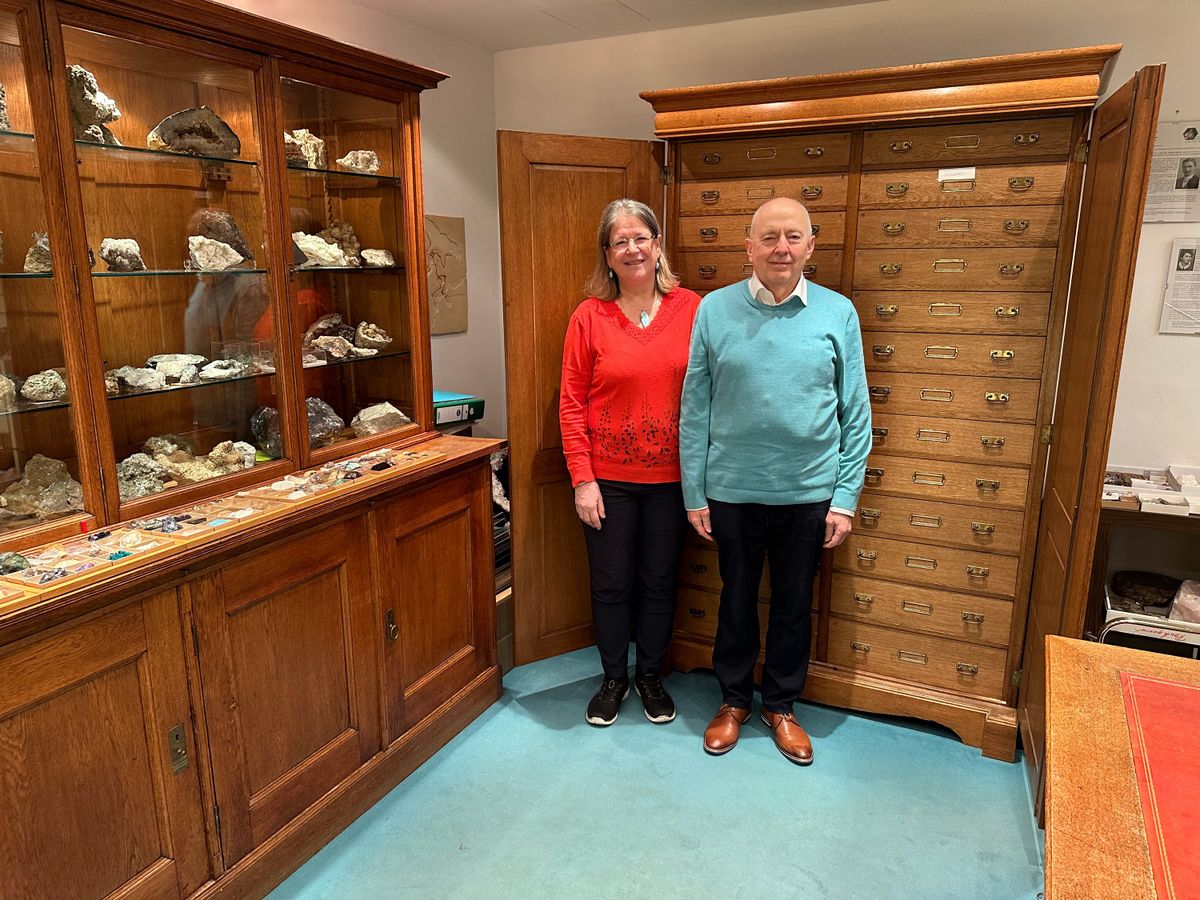
The well-known German collector Karl-Heinz Gerl looking into one of the historic display cabinets that survived the destruction of 1944 and became the foundation of the Pasing shop.In the shop: Johannes Anneser, grandson of the founder, and Andrea Schnetzer, who has run the business since 2018. Maximilian Schiller photo.
In Mineralica 2026-2
This article runs on pages 70–72. The first 2 pages are free to browse.
This page is fully readable with a subscription.See subscription
The Wittichen valley in the Black Forest was once a center of silver and cobalt mining and is one of Germany's classic mineral localities. At its heart are photographs of very rare minerals from one of the district's most comprehensive collections.
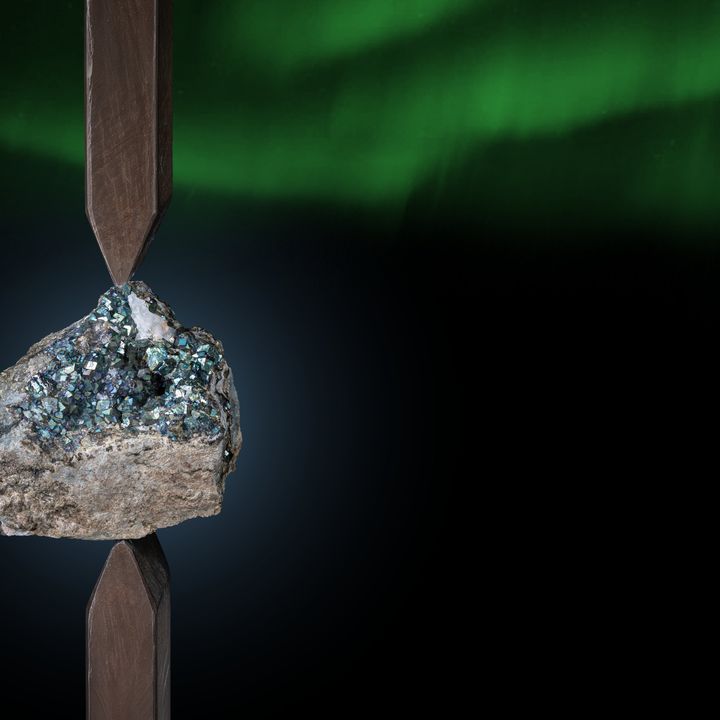
In 2025, iridescent andradite garnets were discovered near Drammen, Norway – the first confirmed European locality for rainbow garnets. The authors present the site, the discovery and the play of color, and trace its cause.
By Máximo Alfonso Rojo, Gabija Maršalkaitė and Adrien Sautier
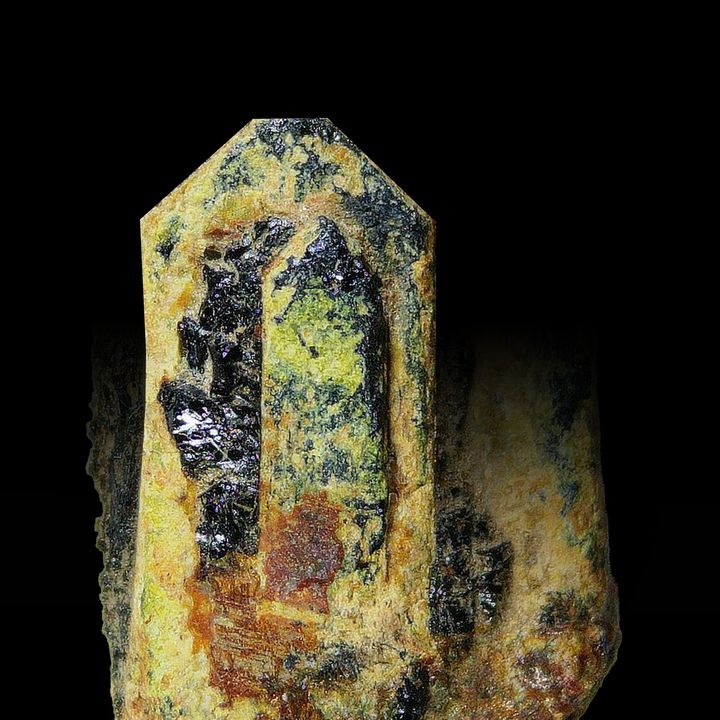
Ishikawa in Fukushima Prefecture is one of Japan's most prolific regions for rare-element minerals. Kōta Harihara traces its story from feldspar mining for porcelain to the desperate search for uranium in World War II.

/mineralica-magazine/l7j7f1/p8-01.jpg)