In the 19th century, the island of Elba was considered the world’s most famous locality for tourmaline specimens, renowned above all for their elegant, multi-colored crystals. In August 1913, the well-known Russian mineralogist and geochemist Vladimir Vernadsky (1863–1945) submitted a manuscript on the crystal chemistry of the tourmaline group to the prestigious German scientific journal Zeitschrift für Krystallographie und Mineralogie. In this context, the term “elbaite” was coined, as the island of Elba represents the type locality of this mineral.
Vernadsky studied several pink tourmaline crystals found in the pegmatites of San Piero in Campo on the island of Elba and identified the chemical elements characteristic of them: lithium, boron, sodium, aluminum, silicon, oxygen, and hydrogen. Thanks to his knowledge of chemistry and physics, combined with a remarkable capacity for abstraction, he was able to envision how these elements might be arranged within the crystal structure of this mineral, long before X-ray diffraction became a routine analytical method (Dini 2021).
At that time, the magnificent specimens of Elba tourmalines were already well known and highly valued in the most important mineralogical museums of the world. By the end of the 19th century, the two villages of San Piero in Campo and Sant’Ilario in Campo had become among the most sought-after destinations for collectors, dealers, prospectors, and curators of major museums, attracted by the discovery of exceptionally beautiful specimens with multi-colored tourmaline.
At the beginning of the 20th century, very fine elbaite crystals were also discovered in other pegmatites worldwide—in Russia, California, Brazil, Afghanistan, Madagascar, Mozambique, to name just a few. These pegmatite bodies were significantly larger than those of Elba, as were their cavities, which consequently produced much larger crystals. For this reason, they were also better suited for faceting for the gemstone market. The globalization and increasing availability of non-European elbaites in both the collector and gemstone markets somewhat overshadowed and relativized the original fame of Elba’s crystals. This effect was further amplified by the drastic decline of tourmaline finds on Elba during the 20th century—today, they are rarities at mineral shows.
Let us therefore attempt to briefly describe the distinctive features of Elba tourmalines. The crystals rarely exceed 5 cm in length and are thus significantly smaller than most specimens from other world localities. In contrast, it is essentially three characteristics that make these tourmalines unique:
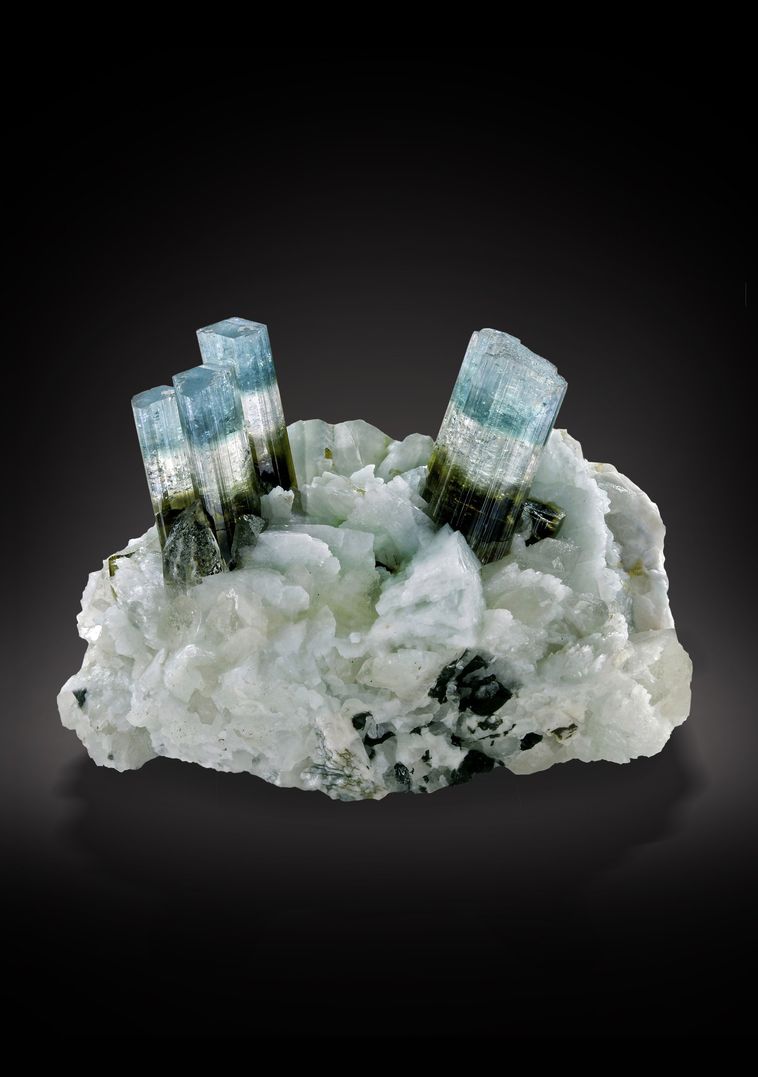
Great morphological and color variability of the crystal terminations. The most famous feature is the so-called “black cap” (Italian testa di moro): a terminal “cap,” usually black in color (though with possible color variations), whose thickness can range from a few tenths of a millimeter to two centimeters or more.
Delicate and highly diverse coloration and hues. Both monochromatic and multi-colored crystals display exceptionally subtle color tones that can readily be described as pastel shades—very pleasing and particularly harmonious. The sequence of colors in multi-colored crystals is also highly variable and of great aesthetic impact.
As Dr. Federico Pezzotta, an expert on Elba tourmalines, rightly points out, another typical characteristic of these specimens is that the tourmaline crystals are relatively large in proportion to the crystals of the associated minerals such as quartz, orthoclase, albite, and lepidolite. These minerals, in turn, consistently occur as very high-quality, clear, and lustrous crystals whose size is well matched to that of the tourmalines. These features give Elba specimens a particularly elegant and well-balanced appearance, ranging from outstanding thumbnails to larger pieces. In the finest examples, the colors of the paragenetic minerals further enhance their beauty: in addition to the color palette of the tourmalines, blue albite, pink orthoclase, pinkish-violet lepidolite, and smoky quartz to citrine are frequently present.
TECTONIC AND STRATIGRAPHIC INTERPRETATION OF THE GEOLOGY OF ELBA
Bernardino Lotti was one of the greatest Tuscan geologists; his geological map of the island of Elba (1884) was the first accurate and modern cartographic representation of Elba’s geological diversity (Dini 2021). He is also credited with a statement that, in a sense, anticipated the concepts of geodiversity and geoconservation by capturing the geomineralogical uniqueness of the island:
“The island of Elba and the Campiglia area may rightly be described as magnificent natural mineralogical and geological museums.”
At the end of the 19th century, fewer than one hundred mineral species were known from Elba; today, nearly 250 have been identified. Lotti’s maps were very detailed in their description of the island’s various rock types, but a tectonic and stratigraphic interpretation was virtually unknown at the time and had yet to be fully developed. The complex succession of geological formations did not represent a continuous sedimentary sequence from the Paleozoic to the Oligocene that had merely undergone vertical movements and deformation. The Apennines—like the Alps—were formed by tectonic overthrusting of segments of continental and oceanic crust that were once adjacent. Entire pieces of crust were displaced laterally over many kilometers and emplaced over neighboring sequences, completely disrupting the chronological order of the formations.
It therefore became necessary to define coherent sequences of geological units (tectonic units), to identify the surfaces along which overthrusting had occurred (tectonic contacts), and to reinterpret the geological history of the island. In the years 1940–1950, Livio Trevisan, a geologist at the University of Pisa, carried out this work—and then went a step further. After distinguishing five tectonic units (“complexes”), he recognized that the geological framework was further complicated by several anomalously oriented tectonic contacts.
On Elba—and throughout the Apennines—the overthrusting of tectonic units took place as west-to-east transport along eastward-rising surfaces. The anomalous contacts observed by Trevisan, however, dipped eastward and cut across the “normal” tectonic contacts between the units. These were not thrust surfaces but low-angle extensional faults that developed only after the formation of the Apennine chain. Such faults lowered entire crustal sectors, allowed them to slide laterally over kilometers, and in doing so exposed the underlying rocks: the granitic plutons. This provided the solution to the problem: on Elba, the granitic plutons were brought to the surface by the “gentle” eastward displacement of the approximately six-kilometer-thick cover sequence.
GEOLOGICAL NOTES ON ELBA
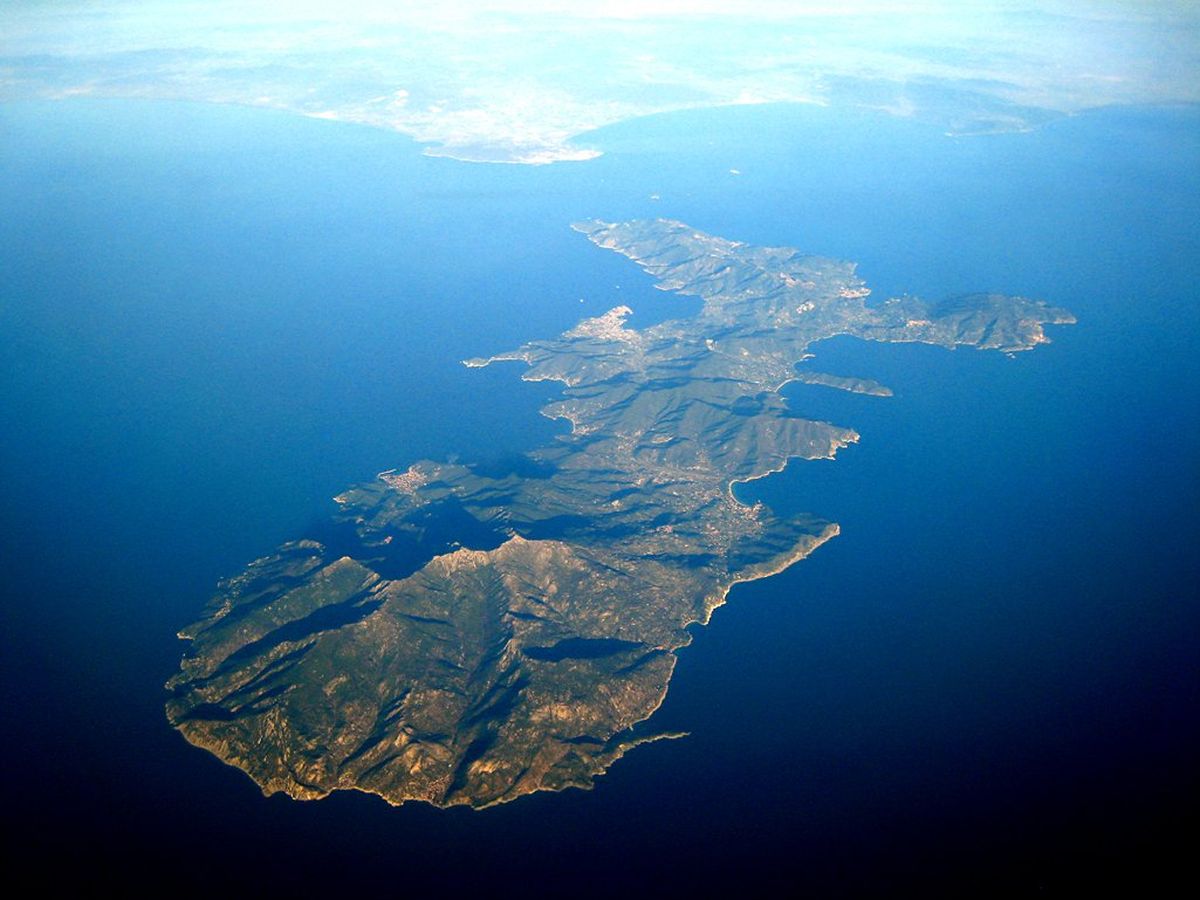
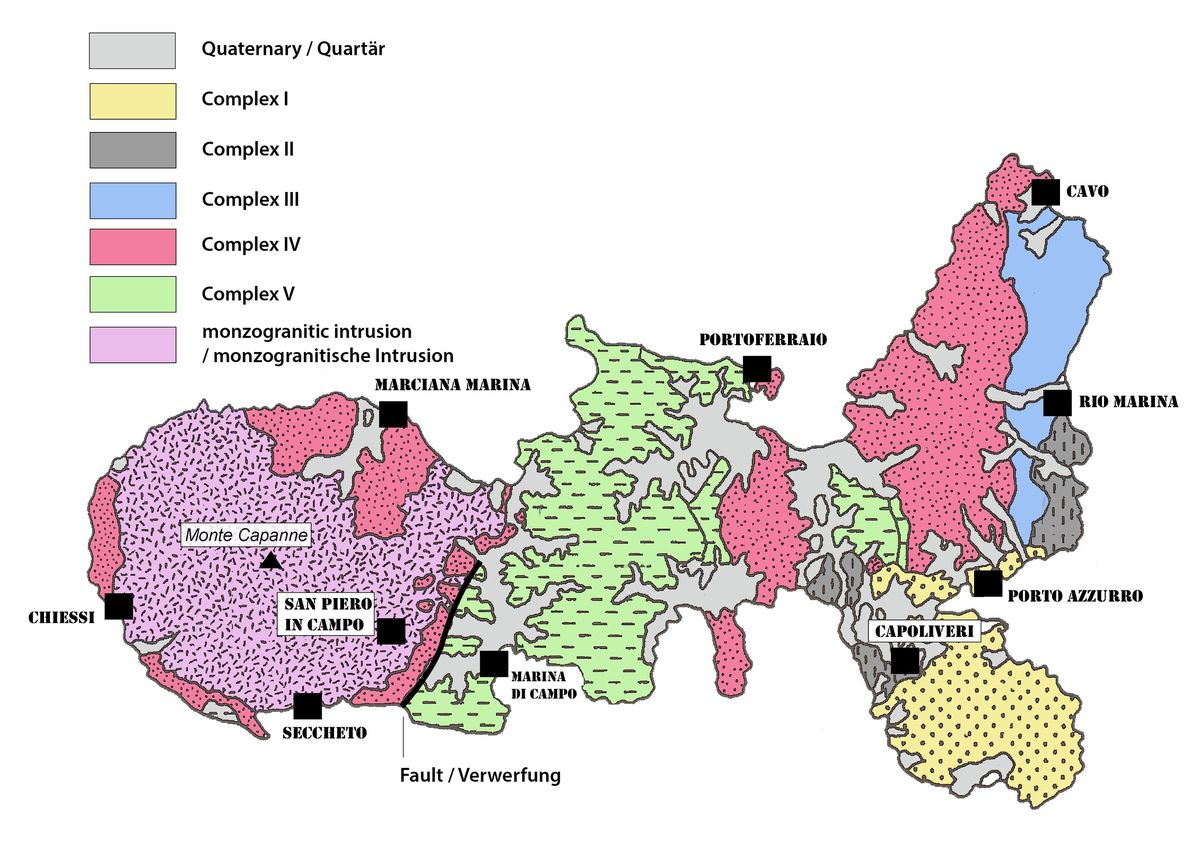
Trevisan (1950) subdivided Elba into two domains: a central–eastern domain and a western domain. The former is composed of a system of east-verging nappes (with eastward-directed transport), made up of crustal fragments of both oceanic and continental origin (see map on P. 29). In the western part, by contrast, only a single nappe is exposed, consisting of ophiolitic material (metamorphosed oceanic crust) and sedimentary cover units, and is extensively intruded by the monzogranite massif of Monte Capanne (Orlandi 1996).
With reference to this tectonic framework, five tectonic units defined by Trevisan can be identified as characteristic of the island of Elba:
Complex 1 (Barbieri et al. 1967) forms the Calamita promontory and the coastal belt from Porto Azzurro to Terra Nera. It consists of metamorphic and schistose rocks, quartz-rich conglomerates, and predominantly dolomitic carbonate rocks.
Complex 2 extends along the coastal belt between Terra Nera and Portoferraio and in the area of the Gulf of Stella. It is composed of porphyroid rocks and porphyroid schists, marble, calc-schists, and quartzites.
Complex 3 crops out in the northeastern part of the island, in an area north of Punta di Cavo that closes southward near Terra Nera, as well as in a narrow belt between the Gulf of Portoferraio and the Gulf of Stella. It consists of a phyllitic basement and a sedimentary cover sequence with con- glomerates, purple schists, dolomitic limestones, massive limestones, and marls.
Complex 4 occupies large parts of central–eastern Elba—from Cala della Vita to Monte Puccio—in a broad north–south belt from Portoferraio to Capo Stella, as well as in the surroundings of Monte Capanne. This complex includes an ophiolitic sequence and represents a section of oceanic crust: serpentinites, gabbros, diabases, pillow basalts, and pelagic sedimentary cover rocks.
Complex 5 occurs in isolated slices between the Gulf of Portoferraio and the Calamita Peninsula, as well as extensively in the central part of the island. It consists of clayey–calcareous, schistose, and marly–sandy rocks, as well as porphyries (Orlandi 1997).
THE MONTE CAPANNE PLUTON
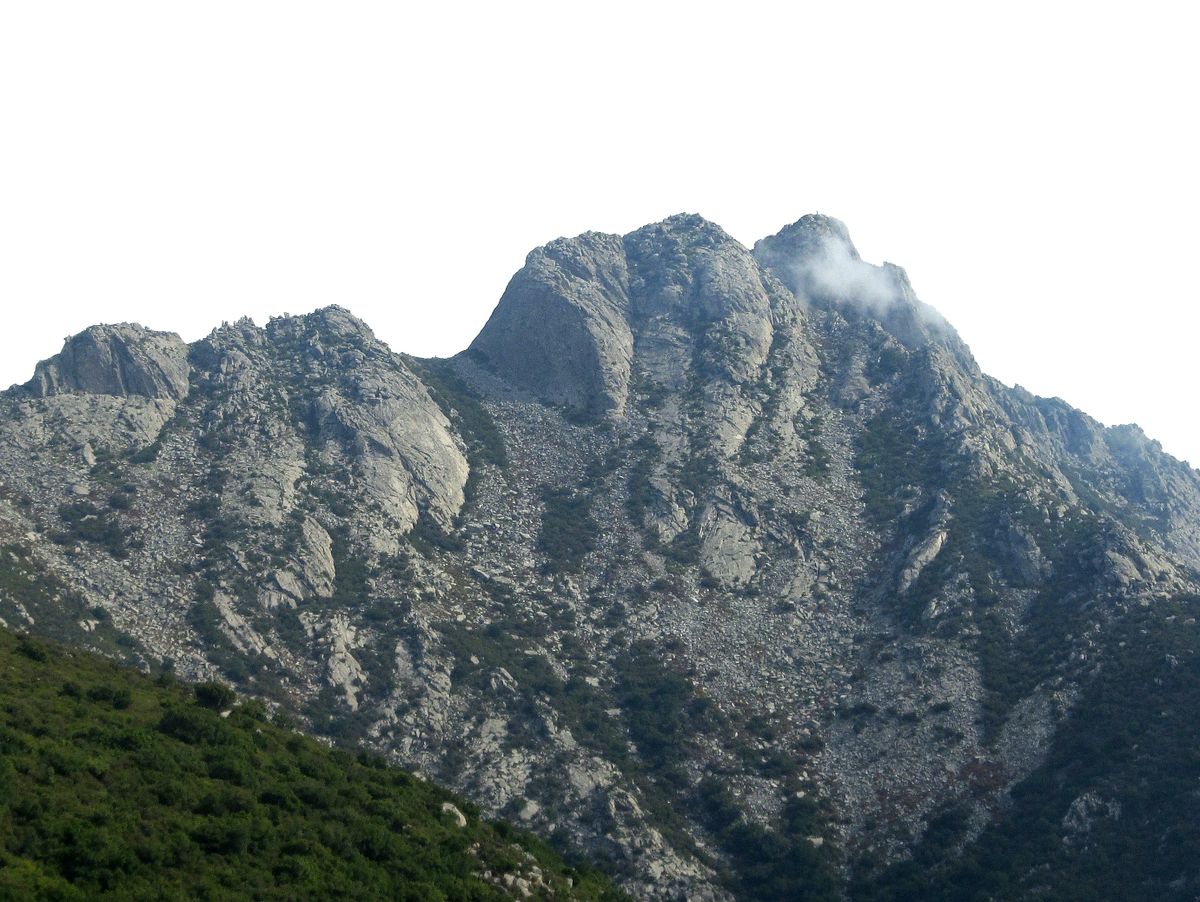
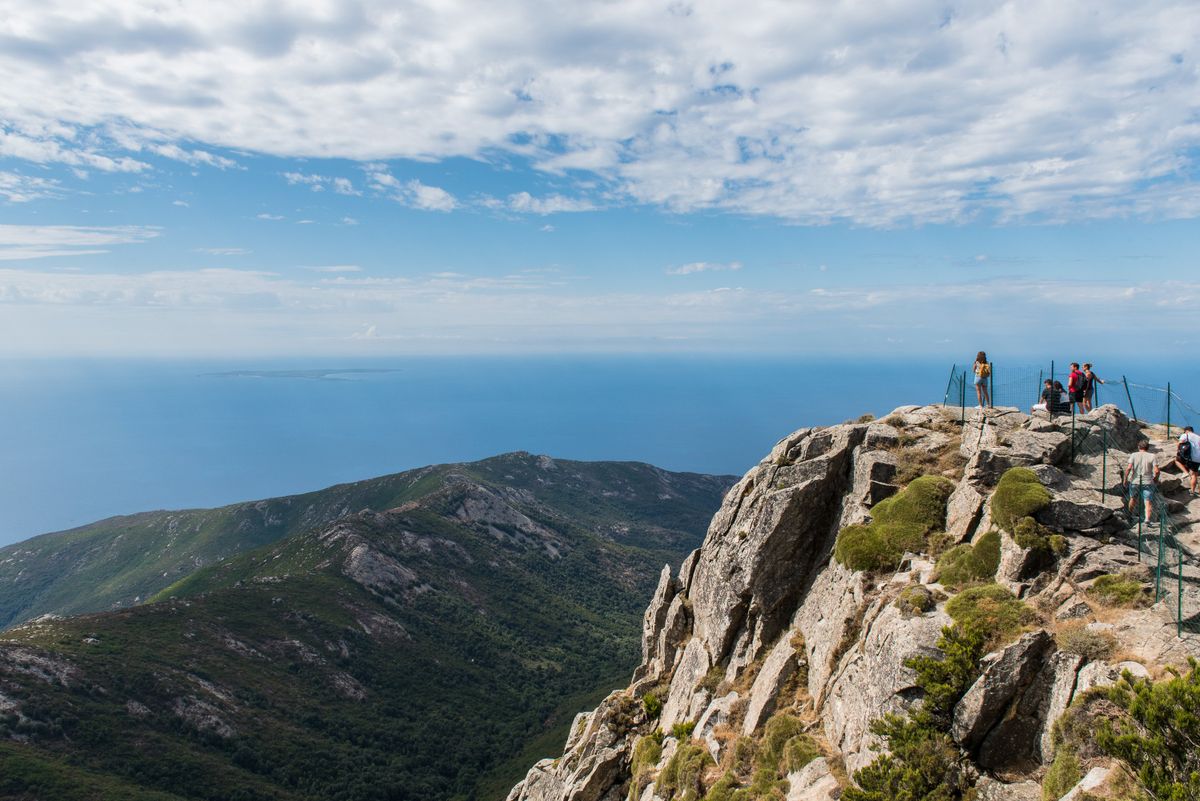
The monzogranitic pluton of Monte Capanne, closely associated with the aplitic and pegmatitic dikes in the San Piero in Campo area, has the shape of an elliptical dome and was intruded at shallow depth (about 6 km) slightly more than 6 million years ago (Orlandi 1996).
Based on geochemical and isotopic data, Poli et al. (1989) suggested that the Monte Capanne granite originated from an anatectic magma produced by partial melting of metapelitic rocks (metamorphosed clay-rich sediments) and metasomatically enriched in volatile elements. This magma encountered a barrier that prevented its upward ascent, forcing it to spread laterally between the bedding planes of other rocks. In this way, an approximately circular, horizontal magma body formed, roughly corresponding to the present outline of western Elba and having a diameter of about 10 km.
The pressure exerted by magma continuing to rise from below began to deform this tabular intrusion and to uplift the overlying rock package. The initially thin, sheet-like intrusion (a sill) thus evolved into a laccolith and eventually into a pluton that is thicker in the center and thinner toward the margins.
In 1990, Fabrizio Innocenti (University of Pisa) resumed studies on subvolcanic intrusions in central Elba and was able to show that the previously mentioned “trap” that blocked the ascent of the granitic magma consisted precisely of the granitic porphyries now exposed in central Elba. These formed between 7.5 and 8.5 million years ago and occupied exactly the position later taken by the Monte Capanne pluton. The slow eastward displacement of these porphyries ultimately allowed the granitic pluton to be exhumed.
The present-day Monte Capanne approximately corresponds to the original upper boundary of the intrusion. Along the margins of the pluton and within the contact rocks of the aureole, numerous dikes—predominantly aplitic—are present. The ascending granite deformed and contact-metamorphosed the surrounding rocks of Complex 4. Dikes, sills, and subvolcanic bodies are widespread in Complex 5 of central Elba, in the thermometamorphic rocks, and within the granodioritic pluton of Monte Capanne.
All rocks that came into contact with the granitic magma recrystallized at temperatures of approximately 500–700 °C and underwent intense metamorphism. The geological history prior to pluton emplacement resulted in strong lithological heterogeneity, which was further reworked within the metamorphic aureole. What were originally limestones, jaspers, claystones, basalts, gabbros, or serpentinites were transformed into marble, quartzite, schist, amphibolite, hornfels, and related lithologies (Dini 2021).
THE PEGMATITE AND APLITE DIKES
In geology, the term pegmatite refers to an igneous rock characterized by a coarse- to extremely coarse- grained texture, whose crystals may reach several centimeters—and in exceptional cases even several meters—in size. Among the various pegmatite types, granitic pegmatites are the most widespread, consisting of minerals such as K-feldspar, plagioclase, quartz, and mica. Granitic pegmatites are further subdivided into numerous types based on their internal structure, mineralogy, depth of intrusion, and relationships with the surrounding host rocks (Orlandi 1996).
Many different hypotheses have been proposed for the origin of granitic pegmatites. Today, there is broad agreement that granitic pegmatites represent the products of crystallization of residual magmatic melts (i.e., melts with low to very low contents of Mg, Ca, and Fe, depleted in trace elements such as Cu, Co, Ni, etc., and at the same time enriched in light elements, particularly boron and fluorine). During crystallization, these melts can release large amounts of aqueous fluids (Orlandi 1996).
The famous pegmatite dikes of Elba formed from a residual parental melt rich in light and rare elements, within a chemical system that remained essentially closed (i.e., without new magma injections), with no significant reaction with the host rocks and without major fluid loss to the exterior. Under these conditions, the residual melt becomes enriched in minor and trace elements such as fluorine, lithium, boron, rubidium, beryllium, and others (Walker et al. 1986). This leads to the development of characteristic parageneses (crystallization sequences) with tourmaline-, beryl-, and garnet-bearing assemblages, which are typically zoned.
The finest crystals form in the quartz cores at the center of the dikes—or, even better, in miarolitic cavities (geodes) (Orlandi et al. 1996). In pegmatites with only a few accessory minerals, tourmaline, if present, is black; such pegmatites are referred to as “primitive.” Where accessory minerals are abundant, tourmaline is colored, and with strong enrichment in light elements the pegmatites are termed “evolved.” Tourmaline is therefore a highly informative indicator of the degree of evolution of a pegmatite body (Jolliff et al. 1986), as it can change its chemical composition during growth and thus clearly “record” variations in the chemical conditions within the crystallization environment. These chemical changes are reflected in color variations: with increasing evolution, colors range from black through green, yellow, blue, colorless, to pink or red, and so on.
In the cavities of Elban pegmatites, traces of late hydrothermal processes are frequently observed: fracturing, mineral dissolution, new crystal generations, pseudomorphs, fillings of clay minerals, and similar features. In exceptional cases, when the fluid pressure during crystallization exceeds the lithostatic pressure, a true “explosion” of the cavity may occur, involving rupture of the host rock, violent fluid escape, collapse and breakage of already formed crystals, followed by renewed crystal growth (Orlandi et al. 1996).
The pegmatite dikes of Elba have been classified as shallowly intruded pegmatites (Ruggeri & Lattanzi 1992; Pezzotta 1996). According to the criteria of Černý (1991), Pezzotta assigns the dikes of the first group to sterile miarolitic dikes, and those of the second, third, and fourth groups to complex pegmatites with lithium minerals of the petalite–pollucite subtype. The dikes of the second and third groups display—albeit on a smaller scale—typical features of gem-bearing pegmatites from many world localities, with particularly clear analogies to the Californian aplite–pegmatite dikes described by London (1986) and Stern (1986).
Based on an analysis of internal structures and textures, the abundance and distribution of major and accessory minerals, tourmaline colors, and the parageneses of the cavities, Pezzotta (1996) subdivided the miarolitic aplite–pegmatite dikes of Monte Capanne into four main groups:
Dikes without lithium minerals
Dikes with lithium minerals and complex asymmetric zoning
Dikes with lithium minerals and simple asymmetric zoning
Dikes with lithium minerals without zoning or with irregular zoning
The best-known and most productive dikes on Elba belong to the second group: they contain lithium minerals and display a complex, three-dimensional asymmetric zoning. These dike bodies reach thicknesses of up to about 2 m and lengths of 10–15 m; thin apophyses may extend for several tens of meters. Many of the famous, long-exhausted localities—such as Grotta d’Oggi, La Speranza, Fonte del Prete, and Fosso Gorgolinato—belong to this type (Orlandi et al. 1996).
Detailed study became possible through the discovery and exploitation (1991–1994) of two dikes south of the La Speranza quarry: Filone di San Silvestro and Filone Rosina. These yielded multi-colored tourmaline, blue and pink beryl, petalite, spessartine, and numerous rare minerals such as uranopolycrase. The dikes of this group are emplaced within the porphyritic monzogranite of Monte Capanne, only a few meters from the contact with the thermometamorphic host rocks. In a single case (about 100 m northeast of Sant’Ilario), a dike of this group was observed partly within a leucogranite dike and partly within thermometamorphic mafic rocks.
Smaller cavities are distributed along the “tails” of the dikes, whereas in the central part—at the contact between the underlying aplite zone and the overlying pegmatite zone—few but large cavities may form. In the Filone di San Silvestro, a single large central cavity was present, irregularly flattened, measuring approximately 2.30 × 0.35 × 0.8 m. Even larger cavities were encountered in the last century during mining at localities such as Grotta d’Oggi, Fonte del Prete, and others.
The mineralogy of these cavities ranges from primitive to highly evolved and varies according to the dike zone. Around the largest cavities, radial fractures and clear collapse structures can sometimes be observed, with subsequent recrystallization—evidence of likely intense fluid release during crystallization. In addition, these cavities record hydrothermal circulation of at least two generations. The first event caused corrosion of petalite, pollucite, and helvite, and locally, to a lesser extent, of multi-colored tourmaline, beryl, and K-feldspar, with the formation of zeolites and amorphous silica. The second hydrothermal event was controlled by late fractures cutting the dikes and locally intersecting the cavities; it led to the near-complete corrosion of the paragenesis present within the cavities (Orlandi et al. 1996).
FORMATION AND PARAGENESIS OF A MIAROLITIC CAVITY GEODE
In the matrix rocks of most Elban tourmaline specimens, dark areas are frequently observed that are characterized by graphic intergrowths between schorl (black tourmaline) and quartz, which can in every respect be considered epitaxial. Such intergrowths are very common in pegmatite blocks from the dumps of old mining and prospecting sites, as well as in some still active quarries. They are regarded as good indicators of the presence of well-crystallized cavities within the dikes. These graphic intergrowths in pegmatite dikes are a direct result of the crystallization stages of the dikes themselves (London 2013). The various stages leading to the formation of the final, tourmaline-rich cavity geode are described below.
Phase 1: The starting point is a fracture within already solidified granite, into which a pegmatitic fluid body of silicate composition intrudes, rich in rare and volatile elements, at temperatures of around 700 °C.
Phase 2: Quartz and feldspar crystallize immediately along the walls of the granite fracture, and part of the fissure is rapidly filled with solidified material. Quartz and feldspars incorporate neither water nor boron into their crystal lattices. As a result, the concentration of these components increases in the residual melt, which becomes progressively concentrated in pockets within the central part of the dike until the stability field of tourmaline is reached. Tourmaline can now nucleate and likely begins to crystallize at about 550 °C.
Phase 3: Rapid tourmaline growth, combined with chemical mobility within the system that prevents equilibrium, leads to fluctuations in the availability of chemical components at the interface between the crystallization front and the silicate melt. This chemical disequilibrium forms the basis for the development of graphic aggregates of quartz and black tourmaline. The same mechanism also allows, in pegmatite dikes, the formation of graphic intergrowths of other mineral combinations, such as quartz–K-feldspar, quartz–sodic feldspar, quartz–garnet, and so on.
Phase 4: Once the growing graphic aggregate reaches a stage at which the silicate melt is exhausted and a geochemically highly evolved, lithium-rich fluid remains, the later crystal-filled terminal cavity becomes defined. The composition of tourmaline evolves from schorl (in the graphic aggregates) to elbaite. This transition corresponds to a change from an iron- and magnesium-rich black tourmaline variety to a transparent, highly perfect, lithium-rich colored tourmaline. The crystals are oriented parallel to one another—reflecting the orientation of the schorl crystals in the underlying graphic aggregates—and are closely associated with quartz crystals, which are likewise often mutually parallel but may be oriented at different angles relative to the tourmalines. By this stage, temperature has decreased substantially, and the system enters the hydrothermal phase at approximately 370 °C.
Phase 5: During the final stages of crystallization, rupture or fracturing of the cavity may occur, making iron and manganese available once again, leached from minerals in the granite. These elements can give rise to the Elba-typical testa di moro termination (black cap). However, observation of a pegmatite cavity often illustrates how difficult it is to find perfectly terminated and undamaged crystals. A frequent cause is fluid overpressure, which may exceed the confining pressure of the cavity: fluids then escape—often not “gently”—and the more fragile crystals protruding from the cavity walls break or become damaged. Late dissolution–reprecipitation processes driven by the remaining residual fluids lead to ongoing chemical changes and may cause corrosion and alteration of previously formed minerals. A strongly acidic environment is commonly indicated by progressive formation of albite + muscovite on perthitic K-feldspar, followed by precipitation of zeolites and clay minerals.
HISTORICAL LOCALITIES
All historically most important and best-known pegmatite dikes within the granitic pluton of Monte Capanne are concentrated along its eastern margin, particularly between the locality of Caviere south of San Piero in Campo and the Valle dei Forcioni northeast of Sant’Ilario in Campo. Over roughly 250 years of prospecting and mining, countless localities yielded fine elbaite specimens; in most cases, however, the original names and exact locations have been lost. This chapter describes the few truly historical localities that produced the finest and most famous specimens.
GROTTA D’OGGI
This is certainly the most famous locality, as it yielded the finest Elban specimens; some of these are now preserved in the mineralogical collections of the University of Florence. From San Piero in Campo, looking north toward Sant’Ilario, one can see, at the bottom of the Fosso Bovalico, a granite ridge with a small excavation. This is the famous and now almost mythical pegmatite quarry of Grotta d’Oggi. It was among the first pegmatite workings and one of the last to be abandoned. Mining began in 1825. Lieutenant Giovanni Ammannati acquired the area with its pegmatite dikes from the priest Raffaello Pisani, the landowner. The granite was traversed by large pegmatite dikes from which extraordinary specimens were recovered, including multi-colored tourmaline, blue beryl, pink and colorless beryl, spessartine garnet, and others. In the five pegmatite dikes of Grotta d’Oggi, unusually large and crystal-rich cavities were discovered. In the second half of the 19th century, the well-known collector and prospector Luigi Celleri worked there on behalf of the Florentine collector Giorgio Roster, when he encountered a cavity so large that a candle was needed to illuminate the crystals inside. During that period, the famous Roster and Foresi collections were assembled; these later entered the collection of the Istituto di Studi Superiori of Florence and can today be admired—together with the specimens from the “candle geode”—in the museum “La Specola” of the University of Florence (Dini et al. 2021).
MASSO FORESI
Work at the Masso di Fonte del Prete (known as Masso Foresi, after Raffaello Foresi) began on January 25, 1872, and ended in mid-April of the same year. During this period, numerous minerals were discovered: foresite (described in 1874 as a new zeolite species but in fact a mixture of stilbite and cookeite), heulandite, chabazite, and natrolite. The Masso Foresi is the source of the large geode blocks known as I Quattro Evangelisti (“The Four Evangelists”). These consist of four granodiorite blocks measuring approximately 60 × 70 cm, whose surfaces are covered with crystals of pink tourmaline, aquamarine beryl, pollucite, heulandite, and orthoclase. The blocks were found in 1873 at Fonte del Prete during work carried out by Raffaello Foresi, at a short distance from the present-day Museo Mineralogico Luigi Celleri in San Piero (western Elba). Initially, the “Four Evangelists” were displayed in the Museo Foresi in Portoferraio. Their name originates—according to contemporary accounts (La Nazione, 1874)—from a monk who found the blocks so impressive that he knelt before them in admiration and called them “The Four Evangelists.” Today, they are preserved in the Museum of Mineralogy and Lithology of the University of Florence, together with the so-called Cinquemila Elbani (“Five Thousand Elbans”), all of them Elba specimens.
The locality is also known for significant pollucite specimens. After years of inactivity, the dike was reworked in 1905 and 1906 by the engineer Giulio Pullè. The site is located practically on the southeastern slope of the village of San Piero.
FACCIATOIA
Facciatoia is one of the most famous Elban tourmaline localities, discovered by Luigi Celleri in the second half of the 19th century. The pegmatite was exposed in a granite outcrop adjacent to a magnesite quarry at the foot of San Piero, immediately below Piazzale Belvedere. A relatively small pegmatite vein yielded a rarity for Elba: tufted rubellite aggregates of intense pink color, which could exceed 6 cm in length and showed a pronounced tapering of the prism toward the lower part of the crystal. The last significant finds of elbaite specimens date to the period 1974–1985, when a large granite block a few meters from the road was worked. Remarkable specimens with multi-colored elbaite, some with black-cap terminations, were recovered from miarolitic cavities up to about 30 cm in size, in paragenesis with orthoclase, albite, quartz, and lepidolite.
FILONE ROSINA
This is the youngest locality, discovered in the late 1980s, very close to the historic locality of Il Prado, which in more recent times yielded specimens among the finest of the 20th century. The area lies on private land owned by the Bavarian collector Klaus Wirth, who knew Federico Pezzotta and collaborated with him during extensive earthworks to gain access to the large miarolitic cavities of the pegmatite dikes.
Filone Rosina is an aplite–pegmatite dike with a thickness of 1.5–2.0 m, showing complex asymmetric zoning: a sodium-rich aplitic footwall and a potassium-rich, coarse-grained hanging wall. It contains many large pockets with accessory minerals, including schorl, elbaite, spessartine, blue and pink beryl, petalite, pollucite, and (Nb,Ta)-oxide minerals. In the upper part of the aplitic zone, a medium-grained phase occurs with numerous small miarolitic cavities lined with small quartz and feldspar crystals. Within these cavities, acicular to hair-fine crystals of foitite occur. Associated minerals include biotite, colorless and blue beryl, cassiterite, columbite-(Mn), euxenite-(Y), ilmenite, zircon, and zeolites (mordenite and altered laumontite). In some cavities, foitite needles can be observed directly intergrown, in crystallographic continuity, with coarse-grained tourmaline. The fibrous foitite develops only as an overgrowth at the analogous end of the crystals (which consists of schorl), whereas the antilogous end is composed of coarse-grained schorl–elbaite.
ADDITIONAL LOCALITIES
In addition to the localities mentioned above, many others are cited in the mineralogical literature. However, because of the small dimensions of the dikes and their frequent occurrence in swarms, many of these names refer to neighboring or even partially overlapping areas. Other historical localities include: Speranza, Prado, Calcinaio, Fate, Masso Canili, San Silvestro, Graziano, Forcioni, Gorgolinato, Catri, San Francesco, Fosso Bovalico, Cà Mastaglino, Fosso San Francesco, and Pastori.
ELBAN TOURMALINE
The first official mention of Elban tourmalines is probably due to the Barnabite archpriest Ermenegildo Pini, who in 1777 published (in Latin) his book Osservazioni mineralogiche sopra le miniere di ferro e di altre parti dell’Isola d’Elba. In it, Pini reports in substance that it was said that gemstones had been found in some mountains of Elba, both at a place called Le Francesche and in cavities between Poggio and Marciana. He himself, however, was unable to find anything and assumed that these were mostly vitreous fragments with the color and luster of emerald, amethyst, and similar stones. Pini was therefore unable to confirm the reported “gemstones” during his visit.
Only a few years later, the famous French geologist Déodat de Dolomieu provided the first confirmation of unusual crystals of multi-colored tourmaline. This occurred in August 1784, when Dolomieu (1750–1801), who was teaching a course in mineralogy in Florence, visited the island of Elba. During this trip, he collected a specimen with multi-colored tourmaline crystals (black, colorless, and red) together with a colorless beryl crystal (Gallitzin 1796; Dolomieu 1798). This represents the first official report of an Elban tourmaline find, although exploitation of granite from Monte Capanne had begun some 2,000 years earlier. This first documented discovery marks the beginning of a long mineralogical and sociological history involving miners, collectors, dealers, researchers, and museum curators for nearly 250 years.
International recognition began in 1825 with the documentation by Ottaviano Targioni Tozzetti of the extraordinary collection of Captain Giovanni Ammannati, assembled from finds made during the first months of that year. Only in August 1913 did Vernadsky submit the manuscript mentioned above—and the term elbaite was coined.
Within the tourmaline supergroup, elbaite is the most aesthetically sought-after species because of its wide color range, especially in multi-colored crystals, which are very common in the cavities of Elban pegmatites. These crystals can be regarded as “molecular sponges”, capable of incorporating different elements into their crystal lattice, which in turn color different parts of the crystal in different ways. Simplifying somewhat, color can be said to reflect chemical composition. However, most Elban pegmatitic tourmaline crystals are not pure elbaites: in nearly every multi-colored crystal, different tourmaline species are present in distinct zones, not only elbaite. Before modern analytical techniques confirmed the presence of additional tourmaline species in Elban crystals, the name “elbaite” was often repeatedly and imprecisely applied to all colored tourmalines from Elba.
According to current analyses, eight tourmaline species have been identified in the Elban pegmatites:
ELBAITE: Na(Li1.5Al1.5)Al6(Si6O18)(BO3)3(OH)3(OH)
FLUOR-ELBAITE: Na(Li1.5Al1.5)Al6(Si6O18)(BO3)3(OH)3F
TSILAISITE: NaMn2+3Al6(Si6O18)(BO3)3(OH)3(OH)
FLUOR-TSILAISITE: NaMn2+3Al6(Si6O18)(BO3)3(OH)3F
ROSSMANITE: □(LiAl2)Al6 (Si6O18)(BO3)3(OH)3(OH)
SCHORL: NaFe2+3Al6(Si6O18)(BO3)3(OH)3(OH)
FOITITE: □(Fe2+2Al)Al6(Si6O18)(BO3)3(OH)3(OH)
CELLERIITE: □(Mn2+2Al)Al6 (Si6O18)(BO3)3(OH)3(OH)
In addition, it must be considered that Elban tourmalines apparently show complete solid-solution between elbaite and tsilaisite, including the manganese-rich varieties (personal communication, Pezzotta). Tsilaisite and fluor-tsilaisite were identified through detailed study of the chemical evolution of the green zones and of the magnificent multi-colored crystals that for a long time were regarded as pure elbaites. This results in a wide range of intermediate color tones, so that often only precise analysis can determine the actual tourmaline species.
Black-cap crystals may consist of schorl, foitite, or celleriite. Homogeneously colored elbaite or fluor-elbaite crystals are distinctly rare; most commonly they are small, second-generation crystals (“pencils”) that coat the larger crystals like a fine “rain.” Because of their small size and rapid crystallization, they were unable to “record” in color the strong chemical changes of the mineralizing fluids that produced the polychromy of the large crystals.
The most classic and significant Elban tourmaline specimens form by a common mechanism. At the onset of pegmatite crystallization, black, iron-rich tourmaline (schorl or Mg-rich schorl) forms first, growing in competition with quartz, orthoclase, and plagioclase crystals. During this stage, the characteristic graphic aggregates of black tourmaline and quartz develop, forming the compact, massive part of the dike. Most pegmatite dikes at Monte Capanne are of this type: entirely massive, speckled with schorl, and lacking colored tourmaline.
In the San Piero and Sant’Ilario area, however, evolution proceeded differently. The pegmatitic magma did not completely fill the available space, and cavities (miarolitic cavities) remained in the central part, allowing crystals to continue growing undisturbed. At this moment, the decisive process occurs: the black, iron-rich tourmalines of the massive zone change color as soon as they protrude into the cavity. The extreme chemical variability of the subsequent pegmatitic fluids produces a broad palette of colors that develops outward from the initial black core. The transition from the massive zone into the cavity took place as iron in the magmatic fluid became depleted and tourmaline, during continued growth, incorporated elements from the residual fluid: lithium, boron, sodium, aluminum, silicon, oxygen, and hydrogen. During this stage—at decreasing temperatures between about 600 and 300 °C—the magnificent multi-colored elbaite crystals formed (Dini 2021).
This complex mechanism can result in the occurrence of several tourmaline species zoned within a single crystal, for example:
base: schorl; lower section: elbaite/fluor-elbaite; middle section: elbaite/fluor-elbaite/tsilaisite/fluor-tsilaisite; upper section: elbaite/fluor-elbaite/tsilaisite/fluor-tsilaisite/rossmanite; black-cap termination: foitite/schorl/celleriite.
In terms of color, the sequence may progress without sharp boundaries from black through brownish green, green, yellow, pink, to colorless—rarely also blue. In some cases, the termination may be colorless (achroite) and belong to elbaite or rossmanite.
TERMINATIONS OF ELBAN TOURMALINES
One of the most unusual features of Elban tourmaline crystals is the so-called testa di moro termination (black-cap)—a morphological characteristic that has played a major role in establishing the fame and fascination of these highly sought-after specimens. It consists of a more or less dark “cap” at the end of the analogous pole (the positive pole) of the crystal, which stands in marked contrast to the transparency and colors of the prism. Black-cap terminations occur exclusively at the analogous pole; there are no tourmaline crystals bearing such caps at both ends. Their size may range from a few tenths of a millimeter to 20–30 mm.
At small thicknesses (up to about 6–8 mm), the cap may display light, vivid hues: blackish, gray, brown, green, violet, purplish red, or blue. At maximum thickness, the color becomes distinctly dark and opaque, black to blackish gray without further nuances, sometimes with a fibrous appearance, with fibers parallel to the threefold axis. The thicker the termination, the sharper and more geometric the color boundary between prism and cap appears. Particularly aesthetic are terminations (black cap or normal) that show fine, straight bands orthogonal to the c-axis in sharply contrasting colors (green, violet, blue, yellow)—evidence of abrupt chemical changes in the terminal fluids (see specimen on page 43).
Most black-cap terminations display typical forms of the trigonal system: commonly only the face of the terminal pedion, or trigonal to ditrigonal pyramids. The terminal faces are usually silky-matte, sometimes “sandpaper-like” (Photo right top), and only very rarely smooth and lustrous (Photo right). In some crystals, the black-cap termination is not defined by distinct crystal faces but consists of numerous thin, rod-like, parallel intergrown individuals terminating at different heights; this is interpreted as the result of corrosive processes (Photo below).
For a long time, the formation mechanism of the black-cap remained enigmatic. More recent microstructural observations suggest that the final growth sectors formed immediately after a rupture event of the cavity. It is assumed that Mn and Fe entered the terminal fluids through leaching processes caused by highly reactive late fluids that attacked previously crystallized Mn-/Fe-rich minerals in the vicinity of the cavities (e.g., biotite and spessartine). These Mn-/Fe-enriched late fluids controlled the chemical evolution of the tourmalines (or reinitiated crystallization) and produced the observed color anomalies at the crystal terminations. Analytical results from a recent study indicate that the color change of the black-cap termination is due to the incorporation of increasing Mn and/or Fe contents. The increase can be substantial, as shown by several samples (MnO > 5 wt.% and FeO > 2 wt.%), leading to an evolution from elbaite/fluor-elbaite to celleriite, foitite, or schorl at the crystal tip (Altieri et al. 2023). In practice, the black termination is often schorl, but in many crystals it may be foitite (the Na-vacancy analogue of schorl) with variable schorl components, or celleriite.
BRUSH TERMINATION
Some crystals display terminations composed of a dense bundle of acicular, parallel or subparallel intergrown crystallites, with an irregular transition between the prismatic crystal and the needle-like zone (Photos on page 48). The diameter of the needles is so small that the overall shape resembles a brush with very fine bristles. This structure may form the termination of either a black-cap termination or a “normal” crystal. In most cases, these terminations consist of foitite. It is assumed that this morphology develops as a result of temporary corrosion phenomena during crystal growth.
SNOW TERMINATION
In some crystals, the termination—often formed only by the pedion face—is covered by a dense carpet of small, white albite crystals that perfectly imitates a layer of snow (Photo P. 49). These albite crystals belong to the final generation of crystallization and produce particularly attractive specimens; they originate mainly from the Filone Rosina.
NORMAL TERMINATION
Apart from black caps, “normal” terminations—regardless of the faces present—show a wide variety of surface textures. Very regular, lustrous faces are rare and are typical of smaller crystals (P. 49, Photo 1). With increasing crystal size, the terminal faces may be smooth but matte (P. 49, Photo 2), or become “sandpaper-like,” with varying degrees of roughness (P. 49, Photo 3). On close inspection, many individual crystal individuals can often be recognized, intergrown parallel or slightly diverging. This is particularly extreme in the tufted pink rubellites from Facciatoia or Grotta d’Oggi: here, the crystal diameter may be on the order of a millimeter or more, and each individual termination is so clearly expressed that no single terminal face can be identified (see P. 50). Some crystals show very irregular terminations without identifiable crystal faces (see P. 50). These features are the result of pronounced corrosion processes, which are not uncommon in Elban tourmalines.
TERMINATIONS WITH SELECTIVE DISSOLUTION OF INDIVIDUAL FACES
In some rare crystals, pronounced roughening or corrosion can be observed on the three faces of one trigonal pyramid, while the three faces of a second pyramid of a different order show perfect smoothness, luster, and reflectivity—occasionally including the terminal pedion face. These are clearly selective corrosion processes affecting only a specific crystallographic form, while other forms remain completely unaffected.
CRYSTAL HABITUS OF ELBAN TOURMALINES
Tourmaline crystallizes in the trigonal system and belongs to the ditrigonal-pyramidal class (3m). Its most important characteristic is the presence of a polar axis, resulting from the absence of a center of symmetry. This gives rise to hemimorphic crystals with two morphologically different terminations: the analogous pole (positive) and the antilogous pole (negative). The well-known phenomena of pyroelectricity and piezoelectricity are also related to the absence of a center of symmetry and the presence of a polar axis.
All testa di moro (black-cap) terminations of Elban tourmalines correspond to the positive analogous pole of the crystal. When this type of termination is absent, visual distinction between the two poles is usually based on the presence of more or less acute trigonal or ditrigonal pyramids. In particular, terminations consisting of a pedion or of blunt, weakly developed pyramids are considered analogous-positive, whereas the occurrence of sharper pyramids characterizes the antilogous-negative pole. Pezzotta maintains that most terminations developing in cavities belong to the positive pole—that is, the one that also consistently forms the black-cap termination.
Within this crystal class, only trigonal or ditrigonal pyramids occur (rhombohedra, which might appear similar, are excluded for symmetry reasons), along with trigonal, ditrigonal, or hexagonal prisms of various orders. Faces orthogonal to the c-axis always belong to the pedion (and not to pinacoids, since a center of symmetry is absent).
The size of Elban tourmalines ranges from a few millimeters up to a maximum of about 10 cm. The most common habit is distinctly prismatic, with an average prism length-to-diameter ratio of 2.5:1 to 4:1. Doubly terminated crystals are extremely rare—also because the finest and most classic crystals form as continuations of graphic quartz–schorl aggregates, whose c-axis is often orthogonal or nearly orthogonal to the walls of the pegmatite cavities.
Crystals with equally developed faces or with very short prisms are extremely rare, as are doubly terminated, rod-like habits, which are mostly attributable to small, last-generation crystals (“pencils”).
The cross section of the prism in Elban crystals is highly variable, as trigonal, ditrigonal, and hexagonal prisms often occur simultaneously, producing very complex and difficult-to-interpret forms in various combinations. In crystals with strongly striated prism faces, the cross section often appears rounded, without clearly recognizable geometric prism faces. In fact, the great majority of crystals show more or less pronounced striations on the prism faces; crystals with smooth, lustrous, striation-free faces are rarer.
Terminations frequently consist solely of the pedion face, which truncates the threefold axis orthogonally; however, terminations formed by a combination of pedion and trigonal pyramid, or by trigonal pyramids of different orders, are also very common. Ditrigonal pyramids are very rare and have been reliably observed on only a few crystals.
Some specimens—especially among pink rubellite varieties—show tufted crystals in which many slender prismatic individuals are intergrown parallel or subparallel and often diverge toward the crystal end (second Photo on P. 38), causing the diameter to increase toward the termination.
There are also crystals whose growth was impeded at the base by pre-existing crystals. In such cases, the crystal exhibits a continuous, prismatic “notch” from the base to the termination, parallel to the c-axis. This feature—together with others—shows that growth was dominated by strong material addition at the terminal faces (pedion and pyramids), while the prism faces increased very little in width and the cross section remained nearly constant during growth.
Another group of crystals shows so-called “welded” (healed) fractures. Stresses within cavities—such as minor rock deformation caused by tectonic stresses during crystal growth—can lead to partial or complete breakage. If this occurs while mineralizing fluids are still present, the fractures may be filled by newly crystallized material, often of a different color than the broken crystal. If the fracture affects the crystal without complete separation of the parts, a more or less distinct recrystallized seam remains. If parts become detached, true regrowth bridges may form, occasionally reconnecting two crystal segments whose threefold axes are no longer parallel.
The Colors of Elban Tourmalines
Elban tourmalines became famous in the 19th century for the beauty and harmony of their specimens and for the wide color palette of their multi-colored crystals. This very diversity—often combined with black-cap terminations in different shades—was decisive for their success in both private and museum collections. The color palette on the right side conveys only a portion of the possible color tones observed in elbaites from the San Piero area. Many colors occur over a very broad range—from intense hues through increasingly delicate shades to nearly colorless.
In multi-colored crystals, very distinctive and unusual hues often appear in the transition zones between two colors, affecting only small portions of the crystal. It should be noted that colored or colorless tourmalines from the Elban pegmatites can belong to only five species: elbaite, fluor-elbaite, tsilaisite, fluor-tsilaisite, and rossmanite. Completely colorless crystals or zones may correspond to elbaite or rossmanite, the latter also capable of producing very delicate pink tones.
The remaining three species—schorl, foitite, and celleriite—display black or very dark colors that are easily distinguished from those of the species listed above. They occur either at the base of the crystals (schorl or fluor-schorl) or in the black-cap terminations (schorl, foitite, celleriite).
Some of the colors observed in Elban crystals appear to have been previously undescribed at the beginning of the 19th century, particularly dark blue, colorless material, and the so-called porro green (“leek green”). This color term was first used by Targioni Tozzetti (1825) to describe an unusual, vivid yellowish, almost “toxic” green that is typical of some Elba tourmalines but very rare at other localities.
Elbaite
The classic color traditionally associated with Elban tourmalines is pink (rubellite). The range is enormous: from intense pinkish red through strong pink to brownish pink, salmon pink, coral pink, carmine pink, orange-pink, or greenish pink. All these shades occur with varying degrees of saturation, down to nearly colorless tones. In some rare rubellites, a highly saturated red dominates with only a slight pink nuance. Pink and colorless zones are thought to represent the purest elbaite compositions on Elba.
Another very common color is green, likewise occurring in many shades and intensities. Crystals showing a completely homogeneous green color are relatively rare, as are those with a pale green terminal cap on a yellow prism. In multi-colored crystals, green zones generally appear fairly “pure,” but transitions to other colors often include brownish components. Green hues range from pale mint green through oil green, olive green, bottle green, grass green, yellow-green, blue-green, gray-green, to very pale green. This green coloration is attributed to the presence of manganese in the crystal lattice.
Yellow is also very common and occurs in crystals that rank among the most classic Elban specimens. Pure yellow is rare; more frequently, yellow colors show subtle intermediate hues. The most widespread is yellow with more or less pronounced brown or green components, as well as “oil yellow.” In most cases, yellow occupies a extensive middle section of the crystal, which often bears a black-cap termination and a black basal portion of schorl growing into the matrix. Yellow coloration is likewise attributed to the presence of manganese in the crystal lattice.
Of the colors discussed so far (pink, green, yellow), the rarest and most highly prized is unquestionably the blue to light-blue color. It was first recognized on Elba at the beginning of the 19th century and represents one of the most sought-after and rarest occurrences. The darker shades correspond to blue, while the lighter ones grade into sky blue and very pale blue. This color typically appears in the terminal portions of multi-colored crystals; monochromatic light-blue crystals are unknown.
A recent study of two tourmalines with a blue growth sector at the analogous pole showed that the upper part of both crystals is characterized by the presence of divalent iron. This involves the same mechanism that favors black-cap terminations or colored end caps: a rupture event of the cavity and the sudden appearance of Fe2+ in the pegmatitic fluids, caused by leaching of biotite from the surrounding rocks.
In addition to these four most common colors, other rare colors such as red, violet, and orange occur. Added to this is a very broad range of intermediate hues that appear in the transition zones of multi-colored crystals.
Tsilaisite and Fluor-tsilaisite
Bosi et al. (2015) described tsilaisite and fluor-tsilaisite as new species, with the island of Elba as their type locality. They are sodium-bearing tourmalines with dominant divalent manganese occupying a specific site in the crystal structure, the Y position; tsilaisite was first found as a single crystal of greenish-yellow color at Grotta d’Oggi. Subsequently, additional crystals of this species were discovered at Forcioni north of Sant’Ilario and at other localities. It appears, however, that tsilaisite and elbaite form isomorphous solid-solution series on Elba (personal communication, Pezzotta), producing crystals with distinctive, often greenish-yellow, brownish-green, or brownish-yellow hues. On Elba, tsilaisite occurs predominantly in restricted zones within multi-colored crystals, most commonly in transition areas between two colors.
Color Sequences in multi-colored Crystals
The color sequences observed in multi-colored elbaite crystals are numerous; some recur frequently and are considered typical of Elba. The most common and best-known sequences (from base to termination) are:
Black – green – pink – colorless – black-cap
Black – yellow – black-cap
Black – green – black – colorless – blue
Black – blackish green – green – pink
Black – yellow – colorless – black-cap
Black – yellow – colorless – blue
Black – yellow – pink – colorless – black-cap
Black – yellow – blue
Green – pink – colorless
Black – brownish yellow – pink
Brownish yellow – pink – colorless
Black – yellow – pink
Luigi Celleri
The long mineralogical and human history (250 years) associated with the search for and study of Elban tourmalines involves a great many individuals—prospectors, collectors, scientists, and directors of major museums worldwide. The list would be very long; in this chapter we focus on one figure who attained an almost legendary status and whose life was inseparably linked to the most important tourmaline discoveries of the most productive period of the pegmatite dikes of Grotta d’Oggi and other classic localities: Luigi Celleri.
For more than five decades of the 19th century, Luigi Celleri walked countless paths among granite blocks and through the scents of the Mediterranean maquis in search of multi-colored Elban tourmalines. He was born in 1828 in San Piero in Campo, the son of Matteo Celleri and Rosa Gasperi, and devoted himself to mineralogical prospecting from the age of thirty onward.
Celleri played a key role in the creation of the famous Foresi Collection and in the establishment of the Museo Foresi in Portoferraio (1873). The celebrated “Four Evangelists,” first exhibited there, were recovered and prepared by him. Around 1874/75, he ended his collaboration with Foresi and thereafter worked for Giorgio Roster and Bista Toscanelli. During these years, he discovered an extraordinary number of outstanding specimens at Grotta d’Oggi, Fonte del Prete, Facciatoia, Forcioni, and Prado: tourmalines, beryls, pollucites, petalites, garnets, zeolites, and other minerals.
After the death of Bista Toscanelli and the subsequent waning of Roster’s interest in minerals—shaken by the early death of his friend—Celleri found himself in a difficult economic situation. Later, with the foundation of a new mineralogical museum in the Napoleonic villa of San Martino (on the initiative of the Elban deputy Pilade del Buono), he was commissioned by Professor Antonio D’Achiardi to lead the search for new specimens. Together with the well-known mineralogist G. von Rath (University of Bonn), he discovered wollastonite at Cavoli; together with Roster, the “gommoid” quartz crystals of Palombaia.
Celleri became particularly famous for the discovery of a dike at Facciatoia at the foot of the San Nicolò fortress (very close to today’s MUM museum), from which magnificent pink tourmalines were recovered. He died on July 21, 1900, two days after suffering a collapse during work at Grotta d’Oggi. Below are three highly interesting testimonies by prominent contemporaries who knew him well.
Giovanni D’Achiardi
“Celleri was extraordinarily skilled at recognizing minerals, even the rarest ones, and at discovering new species within different specimens. He liked to emphasize that he had acquired this ability not only through practice, his hand lens (which he always wore on a black ribbon around his neck), and his good eyesight (which he jokingly attributed to the small golden earrings he wore), but also through the study of a mineralogy book that Bista Toscanelli had given him.”
Bista Toscanelli
“Celleri was a highly original character, a simple man yet intelligent in every kind of work. In winter he lived in his village, collecting everything he could extract from the crystal-rich ground, and waited for the summer return of Raffaello Foresi. Once he received a few hundred lire notes from him, he would set off gloriously on a pleasure trip to the mainland. His idea of pleasure consisted of settling for fifteen days in Pisa or Livorno, in a state of continuous drunkenness… As soon as he was picked up by the police with empty pockets, he was sent back to Elba, where he spent another year searching for minerals.”
Giorgio Roster
“I was among those who went directly to San Piero, and I remember that as we reached the village clinging to the granite blocks, a man came toward us who, because of his stooped posture and long, unkempt, almost white beard, appeared very old. Some recognized him from afar, and I heard from various directions: ‘There’s Celleri! How are you, Celleri?’ When we met him, he smiled wearily at the group, shaking hands with each of us as with old acquaintances. (…) One should have heard him as he spoke of his joy on the day they found a cavity studded with thousands of multi-colored tourmalines and beryls (…). He spoke excitedly, spread his arms in delight, opened his eyes wide, as if the image of the cavity were still before him—that cavity which Roster had illuminated with a candle was so beautiful that it (…) appeared like paradise!”
MUM Museum “Luigi Celleri” in San Piero in Campo
In March 2014, the MUM Museum “Luigi Celleri” was inaugurated in San Piero in Campo. The aim of the museum is to present the magnificent crystals of the island—particularly the famous elbaite—in their place of origin. Collectors and researchers from Italy and abroad have contributed to making San Piero in Campo an internationally known site, whose extraordinary mineralogical history began about 250 years ago.
The exhibited collections are housed on the upper floor of the building in 13 display cases, with tourmaline clearly dominating. The specimens come from various important private collections, museums, and public institutions, including a large portion of the collection of Federico Pezzotta, material from the Klaus Wirth collection, from Marco Lorenzoni and Michele degli Innocenti, as well as pieces from historical holdings of the Natural History Museum of Milan and from researchers of the Lithium Association.
The idea of opening a mineralogical museum in San Piero arose from a conversation between Dr. Federico Pezzotta and his Bavarian collector friend Klaus Wirth during a prospecting hike in 1994. From that point on, the project developed in parallel with Pezzotta’s professional career in the museum field as a curator at the Natural History Museum of Milan. The great majority of the displayed specimens are tourmalines from the San Piero area; in addition, significant specimens from the iron ore mines on the eastern side of the island are also represented. The quality of the exhibition is extremely high—and for enthusiasts of Elban tourmalines, it offers a unique opportunity to see so many top-class specimens at once.