Long before Ötzi's time, a source of rough material for toolmaking existed in the Zillertal Alps of Austria. Already in the Middle and Late Stone Age, the region was part of an important north-south alpine transit route used by nomadic hunters and gatherers moving between the Inntal (Inn Valley) and the Brixen Basin. In this area, quartz crystal was mined. It is assumed that the large deposits of quartz crystal served as a key resource hub for passing groups of hunters. Stone Age finds at the Riepenkar, near the Olperer peak, have added an important new dimension to the history of the Zillertal.
The Olperer, located in the western Zillertal Alps near the border between Tyrol (Austria) and South Tyrol (Italy), rises to 3,476 meters. Alongside the Hochfeiler and Möseler, it is the third-highest summit in the Zillertal Alps. It was first climbed in 1867 by Paul Grohmann, accompanied by guides Georg Samer (also known as "Steinklauber Josele") and Jakob Huber. The ascent followed what was then called the "Rippenkar," later renamed "Riepenkar."
The Tux and Zillertal Alps are among the major quartz-bearing regions of the Tyrolean Central Alps and are popular among mineral collectors. The area around the Olperer is known as a historic crystal site; even Peter Anich’s 1774 map includes the note: „Alpeiner Ferner – wo Christall zu finden“ (“Alpeiner Ferner – where crystal is found”), Such a remark was likely based on more than a single find.
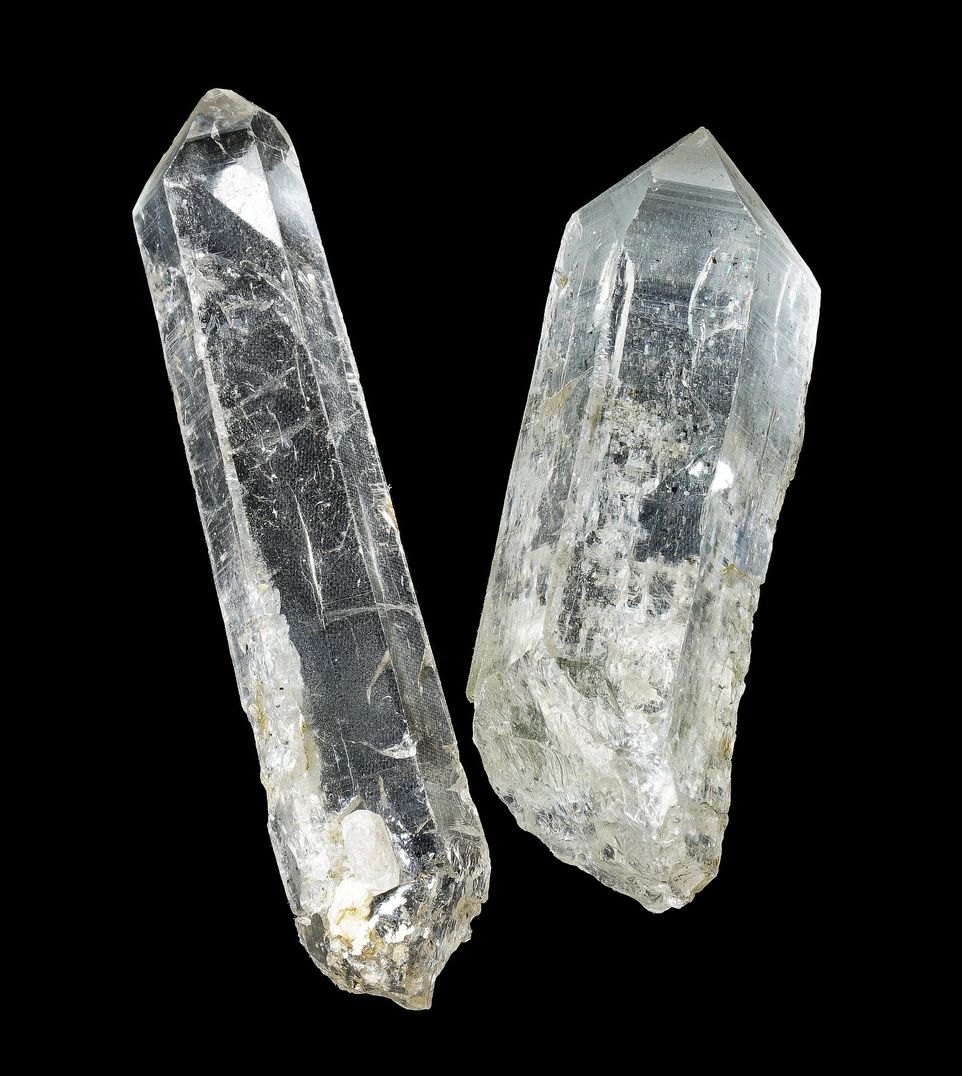
In 1977, Walter Ungerank (author of this article) visited the rock crystal site at “Riepenkar” for the first time with a fellow collector. In the scree, they found relatively clear quartz crystals up to 8 cm in length. Above the site, snowfields and ice still covered parts of the terrain possibly hiding more material. What was striking was the large number of unusually shaped crystal fragments, which the fellow collectors were unable to explain at the time.
Even back then, numerous collectors were active around the now-known archaeological site, likely damaging or dispersing prehistoric remains in the process. In 2000, mineral collector Patrick Pataky discovered more quartz fragments at the same location, along with a pitch-black stone about 3 × 2 cm in size. Its foreign appearance amidst light gneiss and quartz prompted him to keep it. He showed the stone to his father, Siegfried, who passed it on to Ungerank for identification. Based on his travels to Greece and visits to numerous museums at home and abroad, Ungerank initially thought the black stone was obsidian from the Mediterranean region. However, he immediately recognized the quartz shards as clearly worked prehistoric tools: blades, scrapers, and arrowheads. His first words: “This is a major find.”
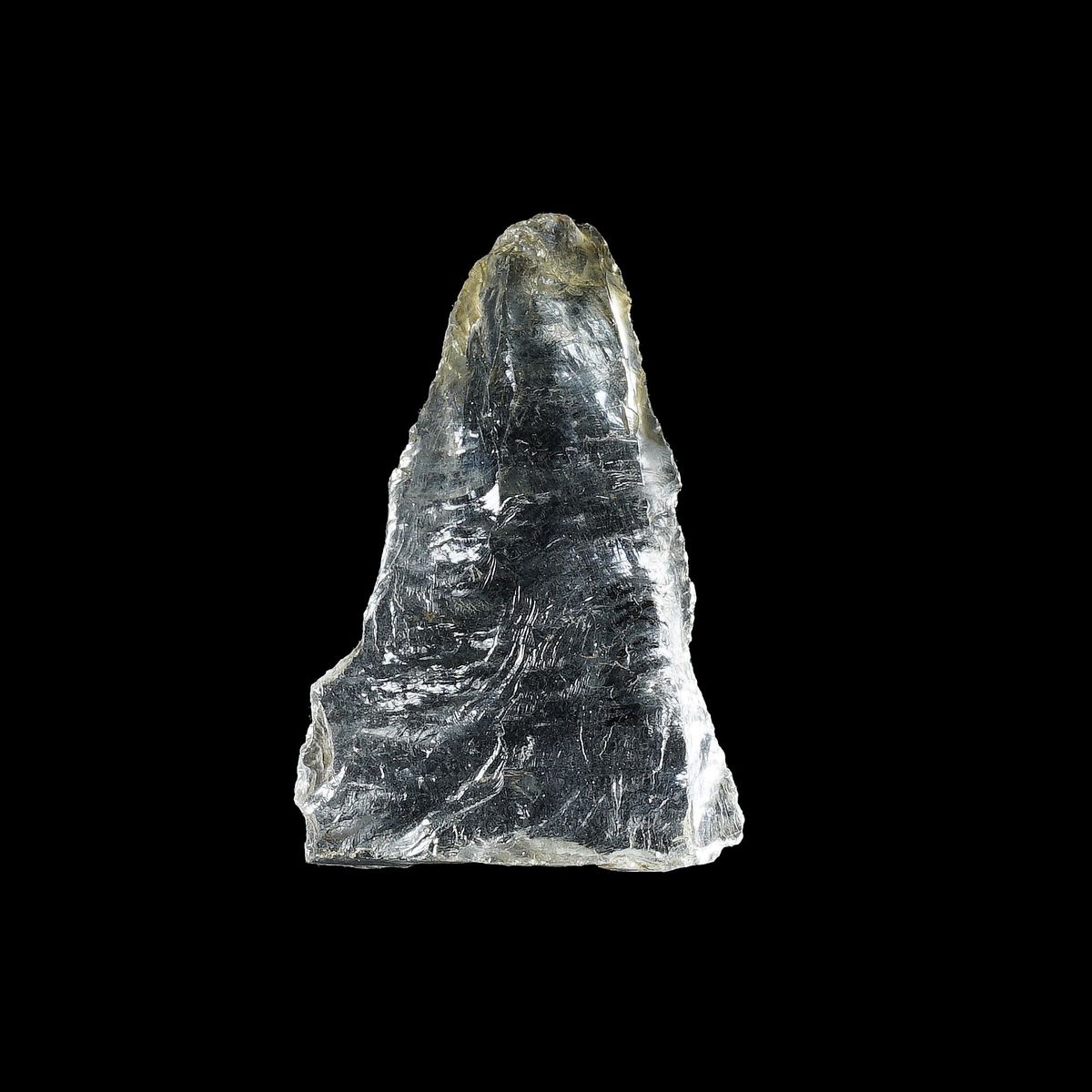
It was evident this was not modern collector debris. Many quartz pieces showed retouch marks and resembled finely serrated stone knives. It is likely that prehistoric hunting groups once discovered a lucrative quartz vein here and mined the crystalline material for tool production. Clearly, today’s “crystal hunters” were not the first to explore this site.
Subsequent searches by Patrick and Siegfried Pataky, along with Ungerank, yielded further material, which was promptly submitted to the Institute of Prehistory and Early History at the University of Innsbruck.
In autumn 2001, Dr. Walter Leitner and Dr. Gert Goldenberg joined the collectors for an expedition to the site. Additional tools with blade- and flake-like forms were recovered and secured. The examination of the suspected obsidian was, of course, incorrect; it was a “radiolarian chert” (jet-black stone with tiny inclusions and chip marks) from the southern Alpine region, which had traveled several hundred kilometers to get there and was probably left behind when these crystal-clear, transparent materials were found. According to Dr. Gerhard Niedermayr of the Natural History Museum Vienna, the find is a sensation in the context of alpine archaeology.
During a later visit, another chert scraper (4 × 3 × 1.5 cm) was discovered, possibly used to sharpen arrowheads, along with a slate fragment (3.5 × 3.5 × 1.5 cm) from the Northern Calcareous Alps. These could be fragments of hammer stones used to extract the quartz.
These findings confirm the fact that hunters and gatherers encountered a particularly rich quartz vein during their migrations from the southern Dolomite region towards the main Alpine ridge. They extracted the found crystal material, possibly even using primitive mining methods. The vein lies at the southern base of the Olperer glacier, on a high alpine corridor between the Brixen Basin in South Tyrol and the lower Inntal in North Tyrol. Several Mesolithic rock crystal artifacts have been found along this route, which ultimately gave it the name Rock Crystal Road.
Archaeological digs beginning in 1995 in the rear Ötztal (Ötz Valley) and Sellraintal (Sellrain Valley)—about 100 kilometers west—uncovered stone tools made from non-local materials. In the Sellraintal, archaeologists excavated a hunter station with evidence of occupation going back 11,000 years. Among the finds were quartz crystals from the Zillertal, confirming the importance not only of north–south but also of east–west trade routes for the exchange of materials. Because of its transparency and sparkle, quartz crystal may have held symbolic, prestige, or ritual value in addition to practical use.
The Riepenkar, with its abundant crystal resources, appears to have served as a key supply site for hunting groups from both north and south. At 2,800 meters above sea level, it is the highest archaeological site in Austria. Several barren quartz veins run parallel to a 15-meter-long main vein. The tools discovered are typologically assigned to the Middle and Late Stone Age (ca. 8,000–10,000 years ago). Quartz crystal and flint were the primary rough materials for tools and weapons. The crystals from the Olperer area are of such exceptional quality that some can be described as flawless, likely an important factor even in prehistoric material selection. As Dr. Leitner put it, “Quartz crystals were the diamonds of prehistory.”
Quartz crystal was likely highly valued and may also have played a role as a commodity for barter. Though brittle and harder to work than flint. However, it is sharper, which made tasks such as cutting up prey and processing game much easier. Even back then, the glitter, sparkle, and special transparency of this unique mineral must have held an extraordinary appeal. Its high value was undoubtedly also due to the fact that quartz crystal occurs only in a few, often difficult-to-access locations.
Artifacts recovered from the site include blades, lamellae, scrapers, drills, arrowheads, and large quartz flakes shaped into slicing tools—ideal for breaking open carcasses—as well as cores from which flakes were struck. No permanent camp has been found at the site, suggesting that hunting groups ascended to 2,800 meters to gather rough material and returned to their base camps for tool production.
Several years ago, archaeologist Thomas Bachnetzer found small worked crystal blades along the path below the Olpererhütte.
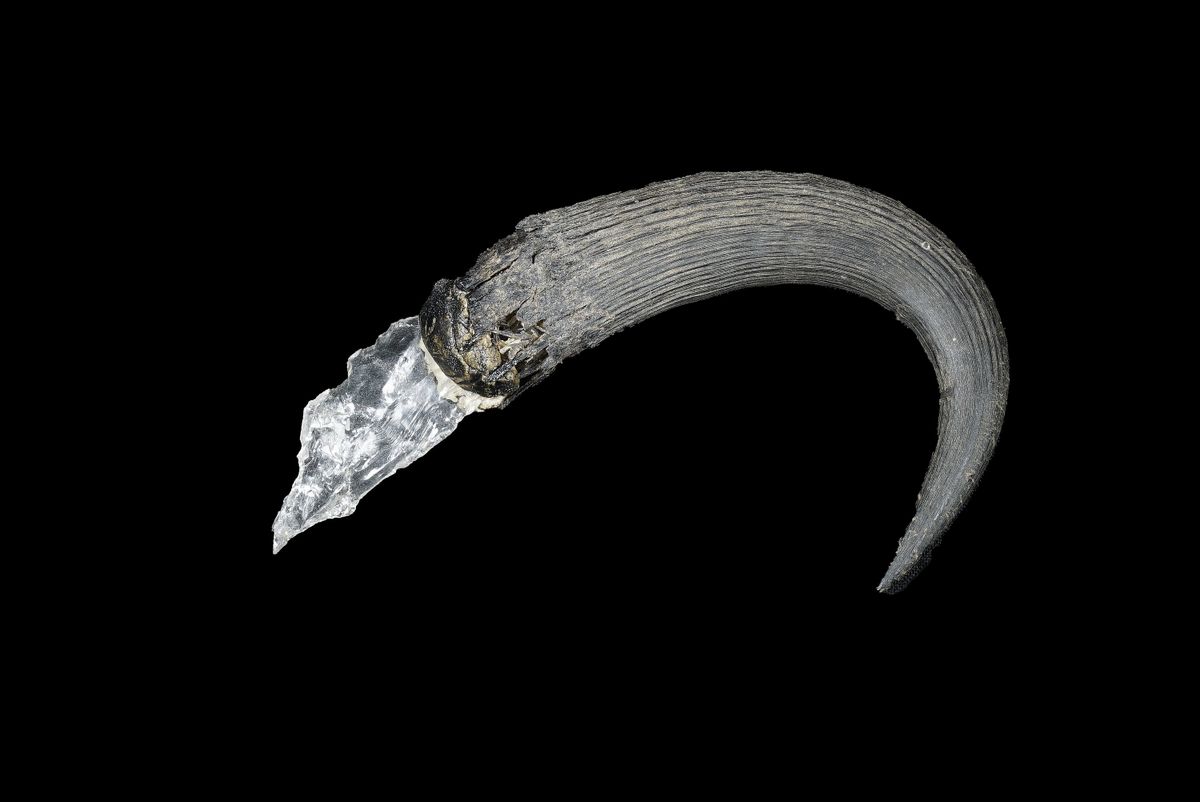
In 2006, brothers Helmut and Herbert Schader from Traunstein made a sensational discovery during a collecting trip near the Olperer. On a small ledge, they found a perfectly clear crystal shard that was later identified—following analysis at the University of Innsbruck—as the world’s only known Neolithic rock crystal axe, estimated to be around 6,000 years old.
To date, 30 Stone Age sites have been documented in Tyrol, but the one in the rear Zillertal valley, at an altitude of approximately 2,800 meters, is the highest in Austria. Since this site is located far above the tree line, it can be assumed that no fires were ever lit here. A find of charcoal would allow for a much more accurate dating. This was not a campsite, but rather a “factory” for producing crystal tools. Nowhere else in the Alps has such a large Stone Age "quartz crystal workshop" been discovered by mineral collectors.
As an added point of interest, further surveys in the area revealed at least three “cup stones” (Schalensteine) on large gneiss blocks. Their function and meaning are still the subject of scientific investigation.