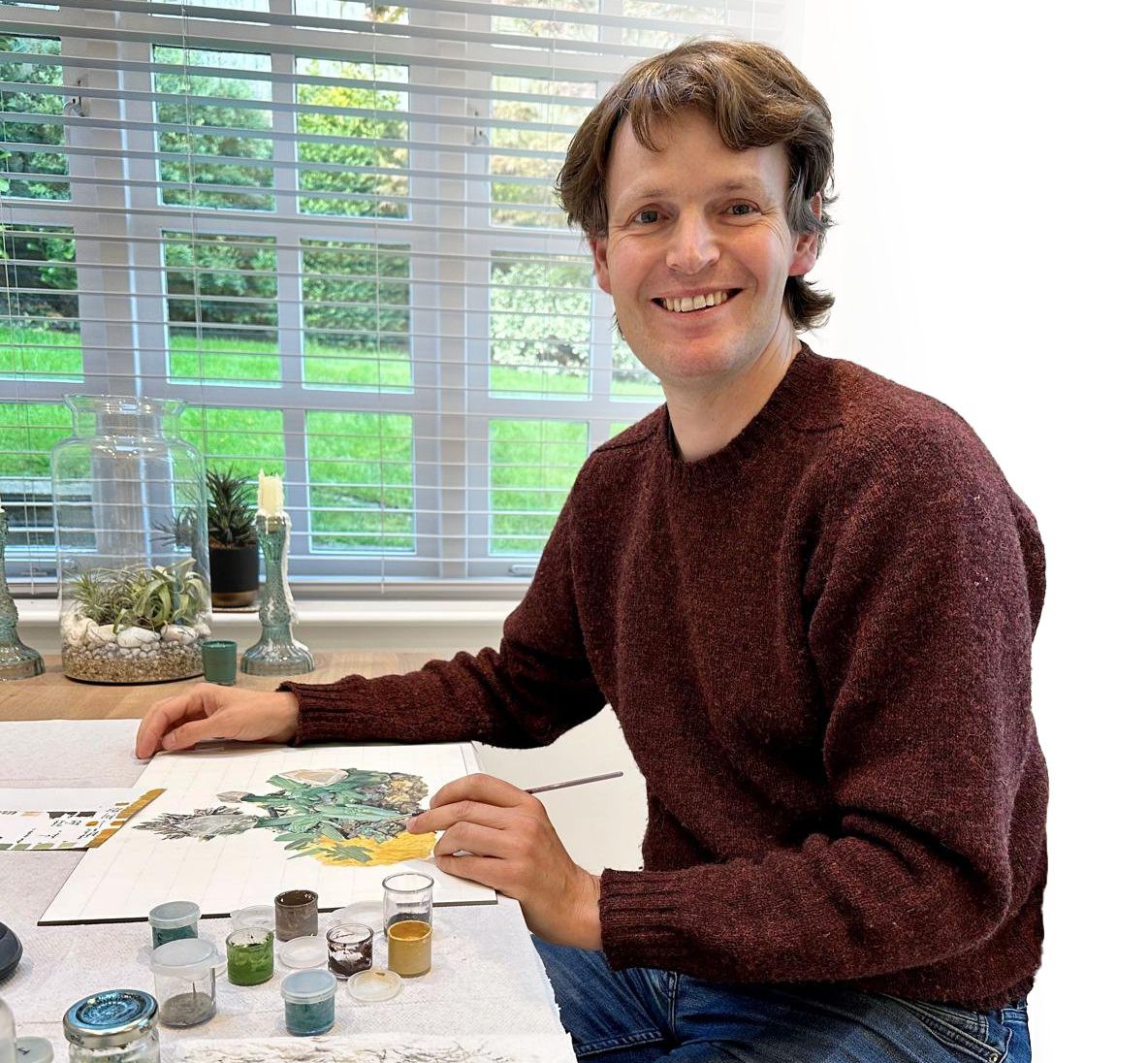
At the Tucson Gem and Mineral Show 2025, we met the young artist Christopher Smith-Duque, whose paintings of minerals are currently making experts listen up. He lives in Newcastle Upon Tyne in the United Kingdom. Originally a geologist with a doctorate in geochemistry, Smith-Duque ventured into the art world - and now combines scientific precision with artistic expression. In this interview, he explains how minerals brought him to painting, why a black background has a deeper meaning for him and what role patience plays in his creative process.
Mineralica: Christopher, you originally studied geology - how did you get into art?
Christopher Smith-Duque: I was already passionate about drawing as a child. It was during my geology studies, particularly mapping, that I realized how much I loved visual representation. I wrote my doctoral thesis as part of a scientific program on ocean drilling. I was a petrologist, so I characterized drill cores - it's very observational. This skill still accompanies me in my art today.
What did your first artistic works look like?
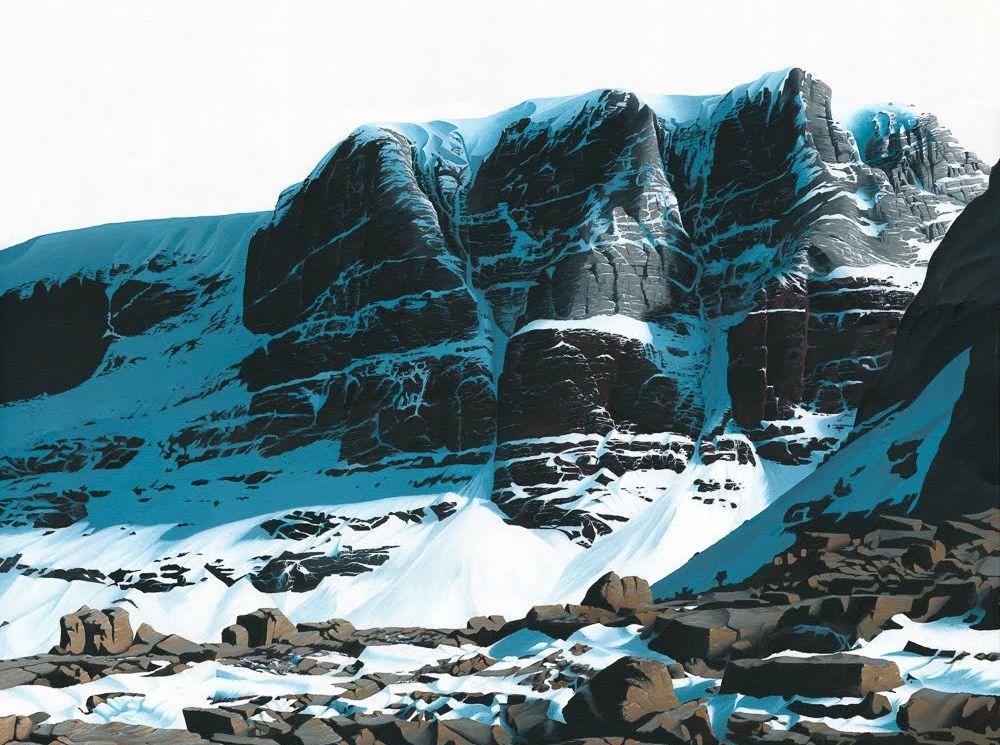
At first I drew landscapes and mountains. Nature was always my starting point. I only started collecting minerals later. But when I started painting minerals, my focus shifted: Today, I almost exclusively paint mineral specimens because I have found great joy in expressing the wonders of minerals through art.
How did the shift to minerals as an artistic motif begin?
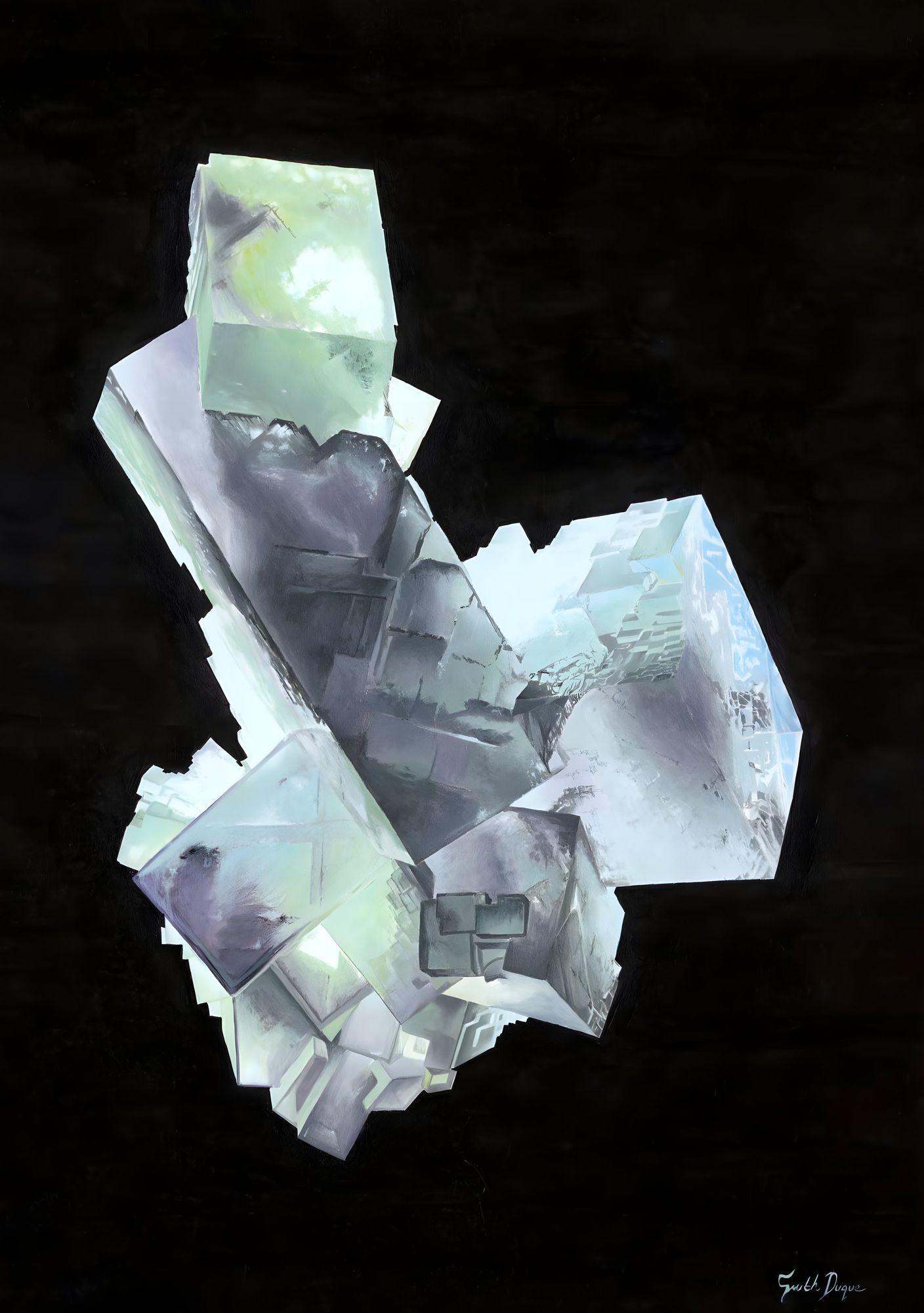
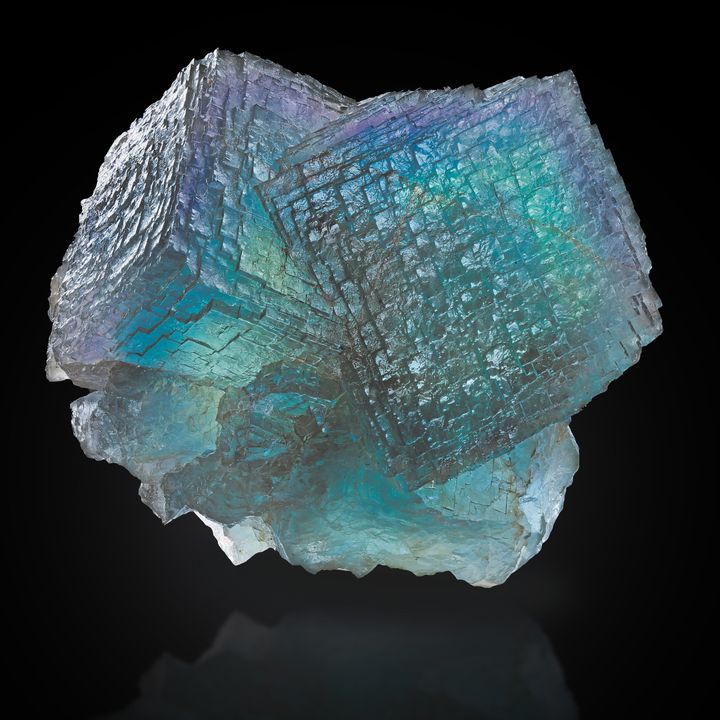
A friend - Peter - showed me a beautiful fluorite specimen from Greenlaws, England. It fluoresced beautifully in daylight, but was difficult to photograph. Without further ado, we decided to draw it. I really enjoyed the process. And in the end I thought the result was so successful that I wanted to continue. Now I want to use my work to capture what the presence of such unique specimens does to us. I felt that by painting one of the most unique specimens of Greenlaws Mine, I could help tell the geological story of this mine. To illustrate this, I painted “Funky Fluorite”.
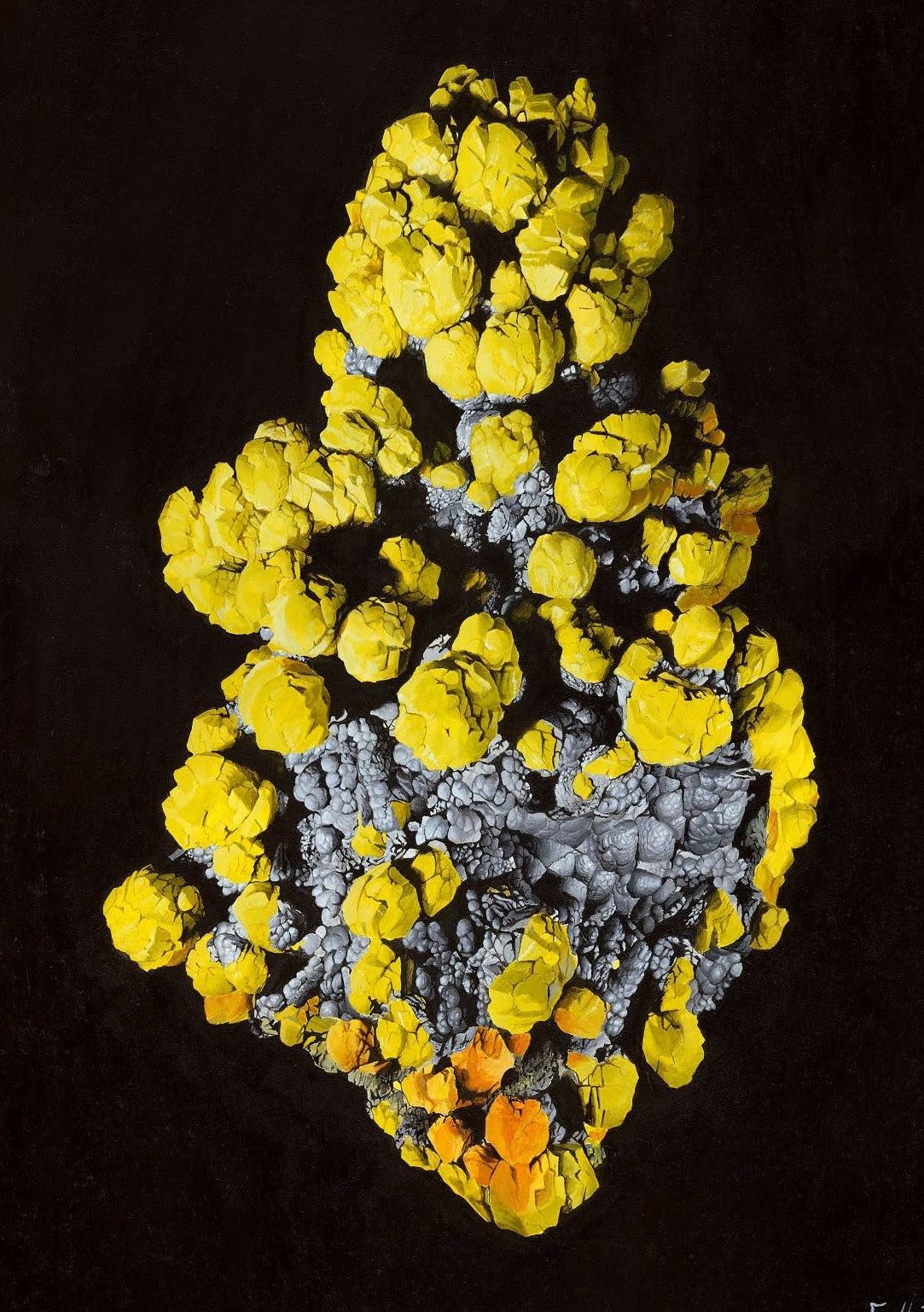
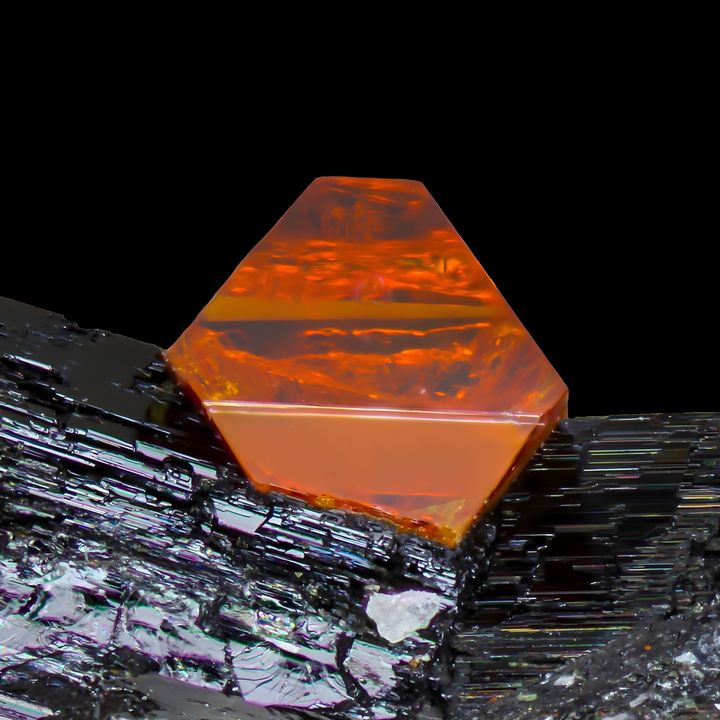
Shortly after, I painted a campylite specimen - this piece ended up getting me a lot of attention in Tucson 2022.
Was that your breakthrough?
The breakthrough, if you want to put it that way, came in Munich in 2023 at the special Art d'Objet show at the Munich Show. I was able to present four of my works here. They included my first commissioned works. From then on, things got really serious - museums and collectors also became aware of me and sent me inquiries.
What techniques do you use for your paintings?
Basically, I work with acrylic paints. I build up the paintings in layers. Mixing the colors is also particularly important to me. First, I create different color swatches to get the exact shade of a mineral. I often have a photo, but ideally also the original piece in front of me as a reference.
How does a new picture start and how long does it take to complete it?
First I draw precise pencil outlines - often using a grid to maintain the right proportions while painting. This is followed by the gradual build-up of color. It takes about 150 hours, or around three weeks, to complete a painting. I like to listen to music while I work - classical, electronic, jazz, depending on my mood. Above all, good light is important for the work in order to properly see the colors of the mineral specimens and to mix the acrylic paints appropriately.
How do you choose the minerals you paint?
A lot comes by chance or through commissions. But I always prefer pieces that are visually challenging. Fluorite, for example, fascinates me. The luminosity, the transparency - it's a world of its own and really difficult to capture in a painting.
Do you have any artistic role models?
Yes, definitely. I learned a lot from art books. Caravaggio, for example, influenced me in terms of the lighting. But classic scientific illustrations from the 18th century, for example Philip Rashleigh or James Sowerby, are also a source of inspiration for me. I try to unite the two worlds: classical composition and scientific accuracy.
Do you also collect minerals yourself?
Yes, I recently started. I'm particularly interested in British specimens from Cornwall or northern England. But, as I mentioned, it was the fluorites from Greenlaws Mine that got me into painting mineral specimens.
How do collectors and visitors react to your work?
The response is very positive - especially at trade fairs like the ones in Tucson or Munich. Collectors appreciate it when a painting emphasizes the beauty of a piece or makes visible what the naked eye easily overlooks. In a way, a painting shows a specimen from a completely different perspective, or in a different light.
Has there already been institutional recognition?
Yes, a print hangs in the "Reich der Kristalle" in Munich. The Natural History Museum in London has also requested a collaboration - I'm going to paint a specimen for them, which I'm really looking forward to. However, I can't reveal which one yet.
Your paintings almost always show minerals against a black background. Why is that?
Minerals are formed deep underground, in complete darkness. My paintings show them “emerging from the dark”. They are coming out of the darkness. The black background emphasizes this. It highlights the object and gives it dignity.
People also shape the presentation: cleaning, sanding, preparing - all of this is interpretation. My pictures are another form of this.
What does patience mean for your work?
It is essential. I break each picture down into parts and set myself clear milestones. This is the only way to achieve precision.
What projects are coming up next?
I am currently working on several commissions and a commission for the Natural History Museum. In the long term, I would like to continue perfecting the depiction of minerals - new concepts, new ideas, but always with the aim of making the uniqueness of each piece visible.