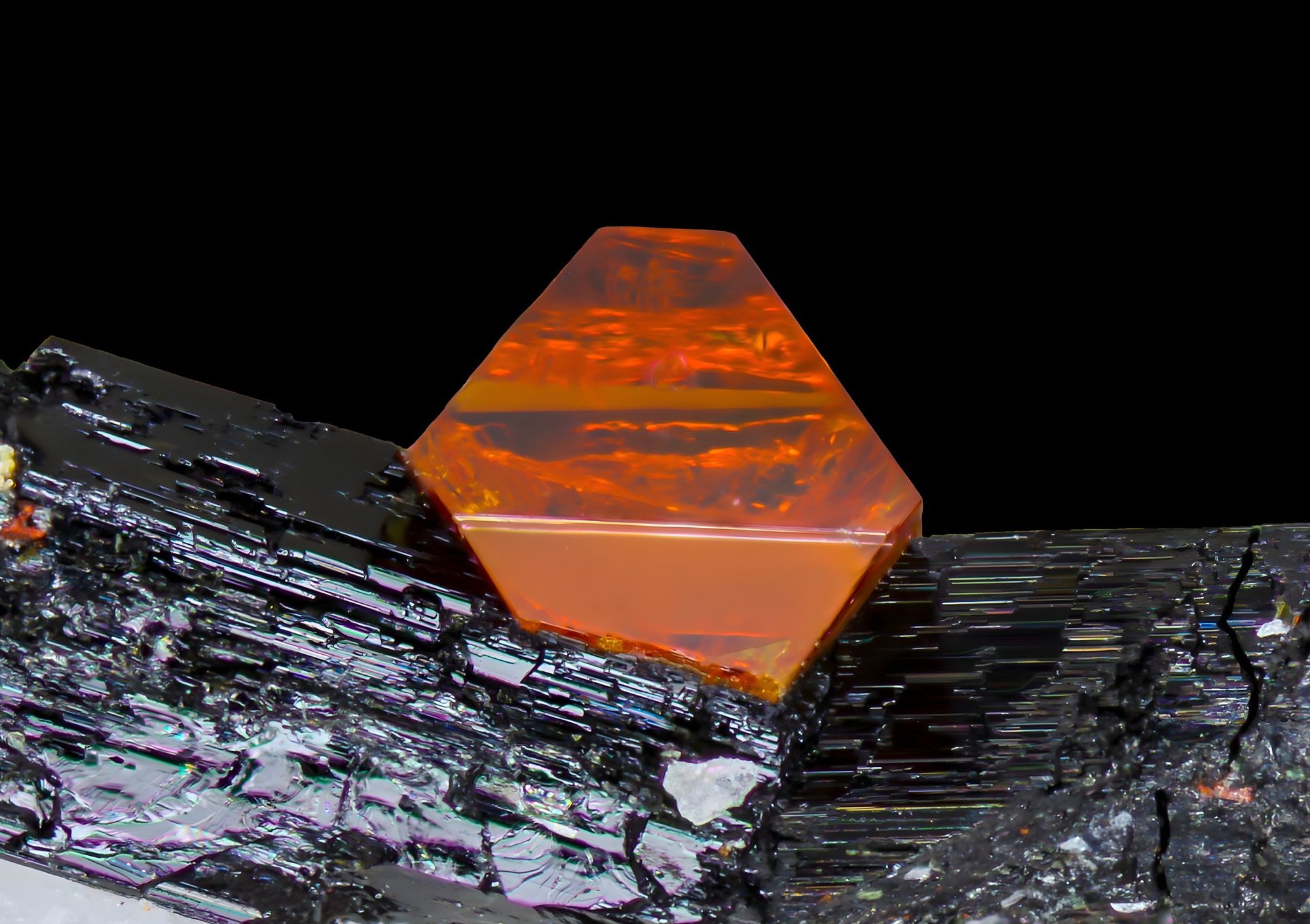
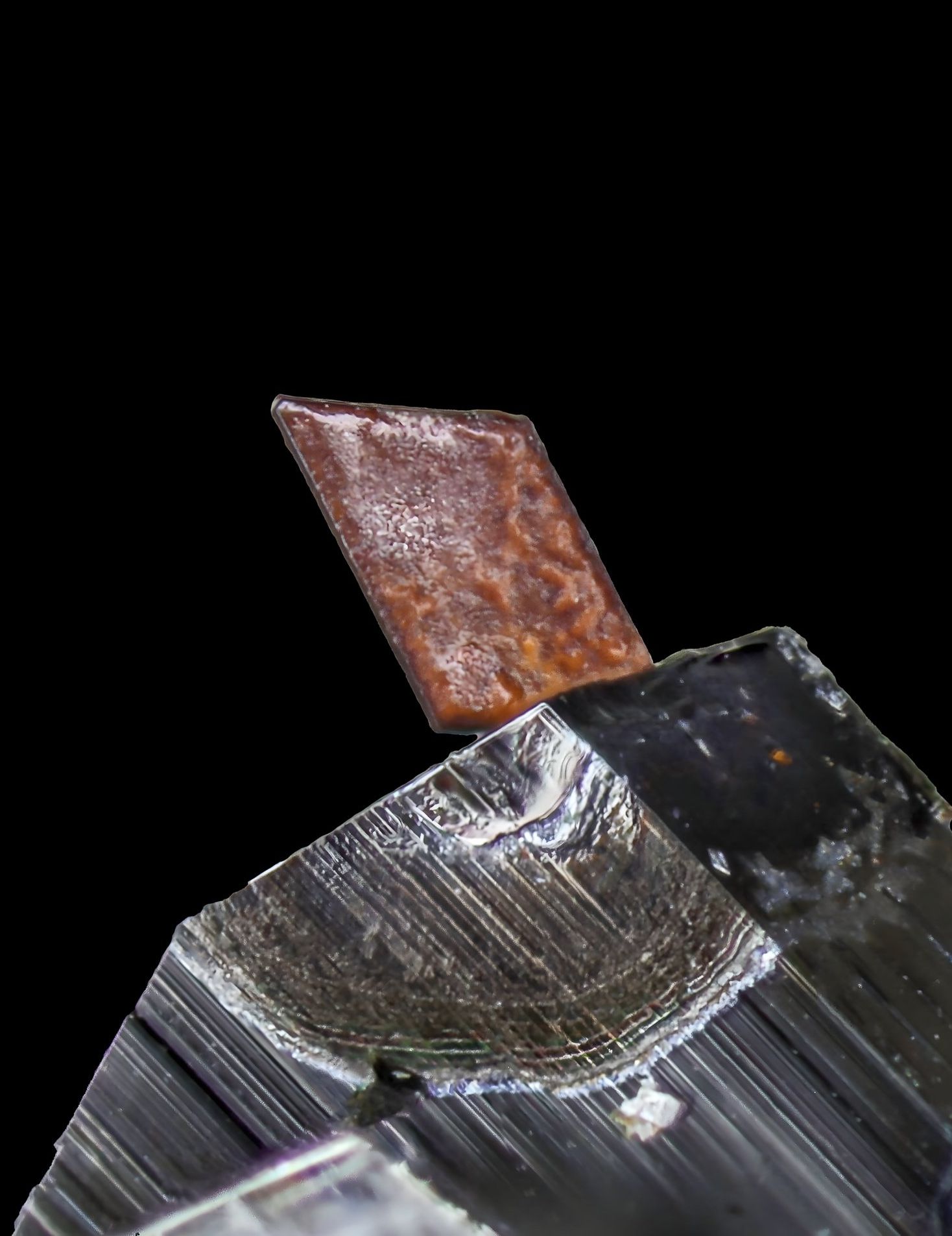
In May 2023 three friends and I went on a mineral hunt for a week to São Miguel, the largest island in the Azores archipelago. The article below briefly discusses the geographical and geological aspects of the islands and the phenomenal landscapes that can be admired, before describing the most important mineral sites and showing the finds.
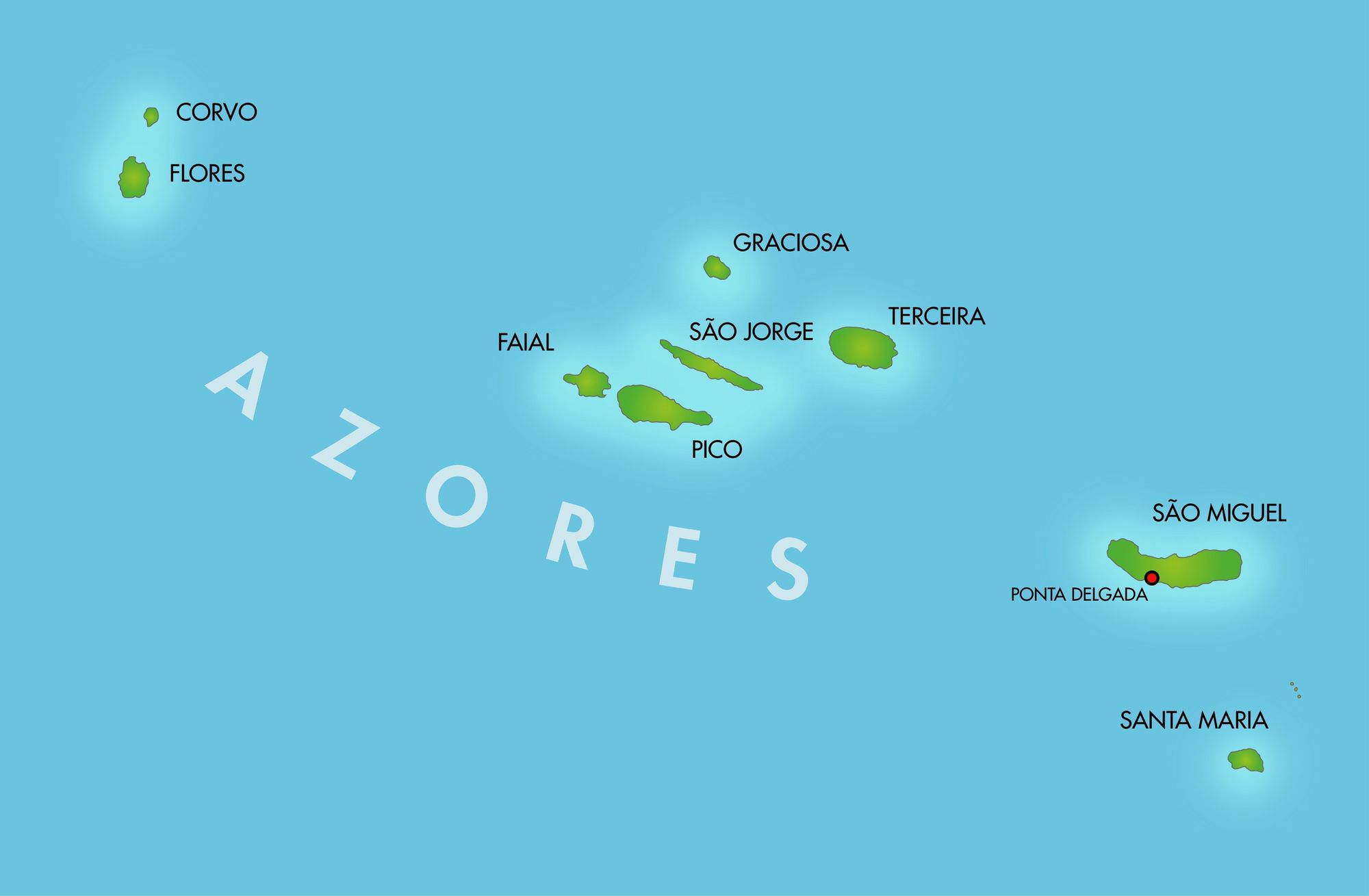
The archipelago
One could rightly say that the term “in the middle of nowhere” applies here. The Azores are located in the Atlantic Ocean, with Portugal - to which the islands belong - as the nearest mainland at 1600 km to the east, and Newfoundland in North America at 2500 km to the west. To the north Greenland is 3900 km away, and to the south there is no mainland until Antarctica at 13500 km.
The archipelago is part of the Mid-Atlantic Ridge, more or less at the intersection of three different continental plates: the North American Plate in the west, the Eurasian Plate in the east are the origin of the entire Mid-Atlantic Ridge, but here the African Plate in the southeast comes into play.
The complex interaction between the three continental plates is the cause of the origin and unusual position of the Azores, estimated about 36 million years ago. Unlike the Hawaiian Islands, for example, there are no subduction zones here. The volcanic character of the islands arose purely from plate tectonics, which has created a complex set of fault zones and rifts. The archipelago consists of nine islands, plus a large number of underwater volcanoes, in an area of about 450 km from east to west.
The highest mountain in the archipelago, with its summit at 2351 meters, is located on the island of Pico, and is also the highest mountain in Portugal. The last volcanic eruption was recent, in 1957-1958, on the island of Faial. That was only very recently, but since then there has been no reason to fear new eruptions.
To the east is the main island of São Miguel, and that is the island that I visited in 2007 and in 2023, and where all the mineral finds come from.
São Miguel
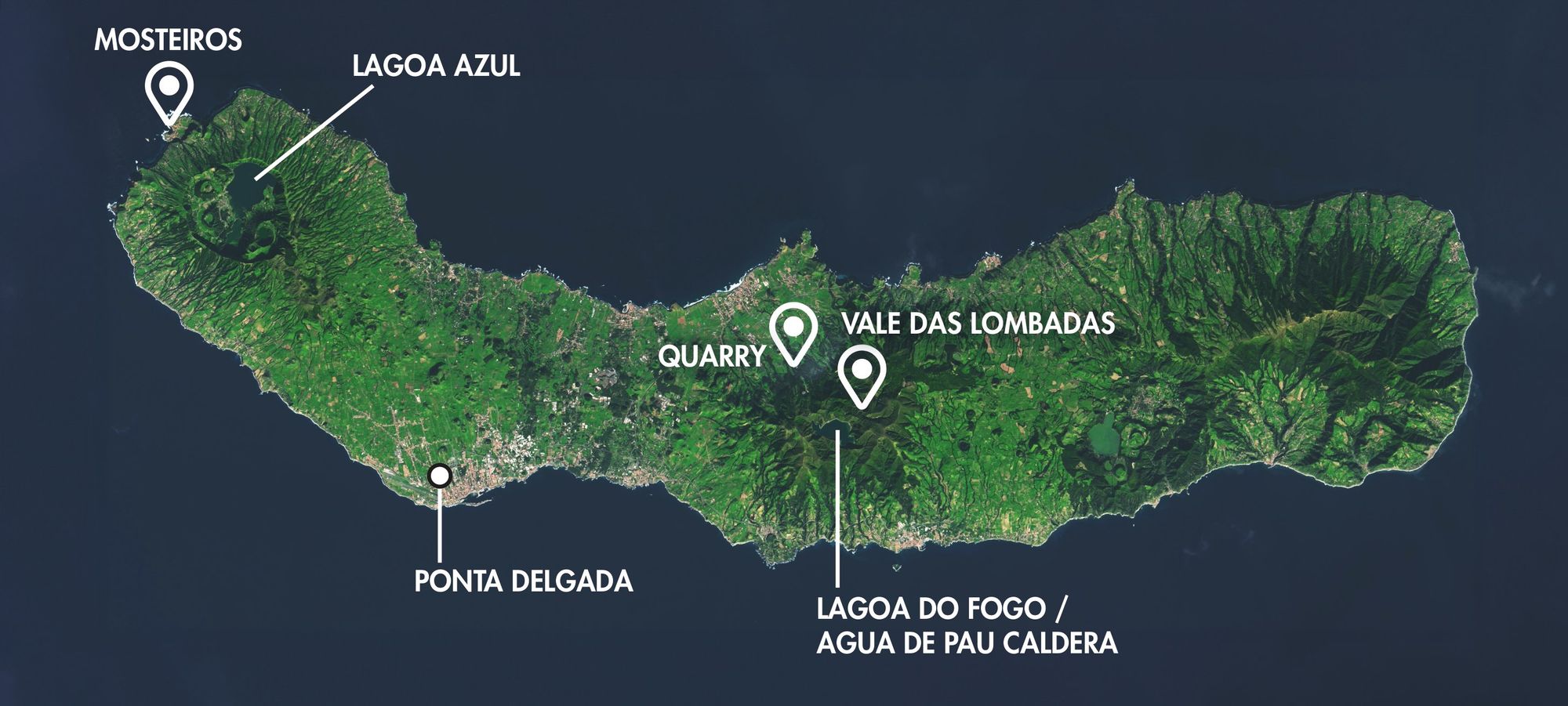
The main island, with the capital Ponta Delgada, is 60 km long and 10 to 15 km wide. It is dominated by the Agua de Pau volcano, which is virtually the geographical center. More or less the center of the volcano is the Lagoa do Fogo (“Fire Lake”). The two most important mineralogical hotspots are located on the flanks of Agua de Pau. There is a third interesting site, which mainly produces olivine crystals, that is Mosteiros beach on the far west side of the island.
São Miguel's landscape is truly a feast for the eyes. Extremely green, with trees and tree ferns that are impressively tall, and with strong witnesses to the volcanic origin everywhere in the form of visible remains of ancient calderas.
The mineral collecting sites
The two main sites are located a short distance apart, on the northwest side of the volcano. The first is Vale das Lombadas, a natural occurrence in the shape of a fairly deep valley, part of the riverbed of the Ribeira Grande (“Great River”). The valley can be reached entirely by car from the north via a narrow but paved mountain road. At the end of the road you can park near a group of dilapidated buildings that once served as a water bottling plant.
The other site is an active quarry, called Pumice Quarry, which, in addition to pumice, mainly exploits basalt. The quarry can also be reached from the north. Both times, in 2007 and in 2023, immediate permission was granted to us at the entrance to search for minerals.
In both sites the base rock is not interesting, there must be searched for xenoliths in the form of chunks of syenite. These are not easy to miss, because in addition to being easily recognizable, they are also present in abundance. And what's more, almost all of them contain desired microminerals. Syenite is a granitoid, with an alkali-feldspar/plagioclase ratio of 65% to 90% and less than 5% quartz. As the quartz content increases, syenite grades to granite. But while granite is extremely hard due to its high quartz content, syenite is extremely soft and brittle, due to the virtual absence of quartz. This has the advantage that there is a lot of room for free-standing crystals to form, but at the same time the disadvantage is that preserving the microminerals is certainly not an easy task. Fortunately, finding the syenites is very easy, the chunks can vary from a few centimeters to half a meter.
The current list in Mindat of minerals in the area of Agua de Pau contains 74 different species, 4 of which are type locality minerals. It is virtually impossible, no matter how rich the syenites are, to find them all, because many of them are extremely rare. The finds presented, in alphabetical order, are only the results of our expedition in 2023, supplemented with a few that I obtained through exchange with other collectors. The dimensions of almost all minerals are less than a millimeter, meaning that correct identification requires a different approach than with larger pieces. Standard methods such as determining hardness, density or stripe color are impossible. Identification, except through formal analysis, requires different knowledge and a different way of observing. Very important is first of all the precise description of the location, as well as the possible paragenesis, the colors and their nuances, and, above all, the crystal shape and the visible end faces. Without the latter, visual assessment is completely impossible.
As an example, the comparison between two similar minerals, that can nevertheless be visually distinguished, based on the crystal drawing. Both specimens have the same color, are both elongated, and at first glance look very similar. But the end faces are clearly different, so the crystal pattern provides clarity.
The finds
Aegirine
NaFe3+Si2O6
Aegirine is one of the most common minerals on São Miguel. It belongs to the pyroxene group, to the clinopyroxene subgroup to be precise. The bottle green color is typical. It usually forms crystal groups, which are often quite jumbled, but almost always with well-developed crystals, which makes identification relatively easy.
Aenigmatite
Na2Fe2+5TiSi6O20
Agua de Pau produces several mineral species that are black in color, that often occur close to each other, and therefore are difficult to distinguish from each other. The crystal shape and vertical striation are characteristics of aenigmatite when the crystals are thick. Aenigmatite is an inosilicate, the color of which in slimmer crystals, usually grouped in sprays, is less black and tends more towards reddish brown.
Arfvedsonite
[Na][Na2][Fe2+4Fe3+]Si8O22(OH)2
The crystal faces of arfvedsonite can range from simple to complex (like depicted below), but are usually easy to observe and identify because of the well-developed crystals. Arfvedsonite belongs to the amphibole supergroup.
Astrophyllite
K2NaFe2+7Ti2Si8O26(OH)4F
Astrophyllite is usually extremely small, but is nevertheless relatively easy to find due to its orange to orange-brown coloration on the usually white background. The crystals may look needle-shaped, but under high magnification they are always flat-shaped, occurring singly or in groups.
Bastnäsite Group
(Ce/Nd/Y/REE)(CO3)F
The specimen on the photo was the only find of this mineral. It is slightly corroded, but is a good example of bastnäsite's tendency to form stacks of hexagonal plates, reflecting the hexagonal structure. Bastnäsite is a Rare-earth element (REE) mineral, therefore contains rare earth elements. Without a formal analysis it is not possible to determine exactly which one it is, hence the group name and the general formula.
Chevkinite-(Ce)
Ce4(Ti,Fe2+,Fe3+)5O8(Si2O7)2
Just as dark as several other black minerals here, but clearly recognizable by the crystal faces and, as a characteristic, the very high lustre. The identification was possible not only on the basis of the crystal drawing, but also on the basis of a REM photo. Chevkinite is also a REE mineral, but as far as known only the Ce-variety occurs here.
Chiappinoite-(Y)
Y2Mn(Si3O7)
One of the four type locality minerals from Agua de Pau is chiappinoite-(Y). It is extremely rare; so rare that worldwide it is only known from here. Although the crystal shape is actually unmistakable – see the drawing for illustration – it remains an educated guess whether the identification of this specimen based on visual observation is indeed entirely correct. Actually, it should be formally analyzed, but since this was the only find, sacrificing it for analysis would be too much to ask.
Clinopyroxene subgroup
ADSi2O6
Pyroxenes are a huge group, containing two subgroups with different crystal structures. Orthopyroxenes, the smallest subgroup, are orthorhombic, while clinopyroxenes, the much larger group, are monoclinic. The variation in crystal shapes is enormous.
The crystal in the photo is unmistakably monoclinic, therefore clinopyroxene.
Fergusonite-(Y)
YNbO4
Orange to yellow elongated, double-terminated, coil-shaped crystals. Then only one conclusion is plausible: fergusonite-(Y). They also occur in some places in the Eifel, and those look exactly the same. Three varieties of fergusonite are known, in addition to the Y-variety, also the Ce- and Nd-varieties, but only fergusonite (Y) has been found here so far.
Ferro-katophorite
{Na}{CaNa}{Fe2+4Al}[(AlSi7)O22](OH)2
Katophorite is a member of the sodium-calcium amphibole subgroup, with Fe2+ dominant, hence the name ferro-katophorite. In all likelihood the vast majority of all amphiboles here are ferro-katophorite, but nevertheless good crystals are rather rare. Most amphibole material consists of irregularly shaped and distorted pieces.
Fluornatropyrochlore
(Na,Pb,Ca,REE,U)2Nb2O6F
Without doubt the most abundant mineral in both Vale das Lombadas and the Pumice Quarry is fluornatropyrochlore. Literally every piece of matrix contains a number of these crystals. Usually loose, sometimes in groups of a few specimens, varying in color from yellow to deep red, highly glossy, and almost always undamaged - they are truly a feast for the eyes. A second pyrochlore variety is also found, namely fluorcalciopyrochlore, but that is much rarer and usually unsightly.
Fogoite-(Y)
Na3Ca2Y2Ti(Si2O7)2OF3
Fogoite-(Y) is the second type locality mineral, and just as rare because it is only known from here. The name obviously refers to the Lagoa de Fogo. Despite their rarity, fogoite crystals are easy to recognize: they are creamy white to pale yellow, flat lathlike crystals that can hardly be confused with anything else. So far they have only been found in Vale de Lombadas, and not (yet) in the pumice quarry. No other REE-variety is known.
Hematite and Ilmenite
Fe2O3 and Fe2+TiO3
Ilmenite and hematite can look very similar, and normally they are not easy to tell apart. But although hematite also occurs here, ilmenite is much more abundant due to the abundant titanium present. It is quite safe to regard the pictured specimen as ilmenite - with high probability rather than absolute certainty.
Lorenzenite
Na2Ti2Si2O9
Elongated crystals, often in a radial composition, in a typical rusty brown color: lorenzenite is the only candidate. Confusion with something else is not an issue.
Molybdenite
MoS2
Molybdenite occurs in the same form almost everywhere in the world: as thin, curved, irregular, highly glossy, metallic gray lamellae. The crystal structure of molybdenite is hexagonal, but crystals that are actually recognizable as hexagonal are relatively rare. As here is the case also.
Petarasite
Na5Zr2(Si6O18)(Cl,OH) · 2H2O
Petarasite is one of the local rarities. We have only found one single specimen of it, and that too, a crystal that is not particularly beautiful or sharply defined. Nevertheless, there is no doubt about the identification: the color, the opacity and the slightly rounded shape are characteristic. Moreover, the crystal withstands the crystal drawing test.
Sanidine
K(AlSi3O8)
Although in most places, for example the Eifel or the volcanoes of Tuscany, sanidine is very common and is often the matrix, good crystals are not easy to find here in the Azores. The crystal in the photo is colored by iron, sanidine is basically colorless.
Steacyite
Th(Ca,Na)2K1-xSi8O20
So far, four different thorium minerals are known from the Azores, steacyite being one of them, along with thorite, turkestanite and huttonite – all very rare locally. The identification of steacyite is clear enough though: colorless tetragonal crystals, which can hardly be confused with anything else. The appearance in the photo is typical for the sites here.
Titanite
CaTi(SiO4)O
Although titanium is an abundant component of the rock, titanite crystals are not as widespread as one might expect. Good crystals are not present in abundance. They occur in different habitus, as titanite does everywhere. The color varies from pale yellow to orange-brown, on a usually light background, which helps to spot and identify them.
Zircon
Zr(SiO4)
Zircon crystals are not very rare, are usually found in the company of pyrochlore and astrophyllite, but are not easy to discover. They are almost always white, and occasionally slightly yellowish - which makes the crystal depicted very good find -, but given the mostly white matrix, finding them requires good detective work. The identification is usually relatively unambiguous: the crystals are almost always developed according to the textbook.
Acknowledgment
The identification of the presented finds, based mainly on visual
characteristics, is entirely the responsibility of the author, with thanks for the support and advice of several colleagues. All photos are my own and can be found on my website
www.tomeikminerals.com.