In recent years, fluorite has become one of the most sought-after minerals among collectors worldwide. Its exceptional range of colors, striking crystal habits, and geologically diverse origins make it a highlight in both private collections and scientific research. While legendary localities such as Mont Blanc or Planggenstock are well known internationally, Austria’s fluorite occurrences remain relatively underappreciated outside specialist circles.
Yet the Eastern Alps have much to offer: from vividly colored cubes in the Lungau region to spectacular individual finds in the Central Alps and geologically unique deposits in the west of the country. Many Austrian fluorites rival top international specimens in quality—and some are entirely without parallel.
This article offers a structured overview of Austria’s most significant fluorite localities, organized by federal state. It focuses on well-documented sites, both historical and contemporary. Naturally, not all known or potential finds could be included—some remain unpublished, others are kept confidential by their discoverers, and in some cases, suitable photographs are lacking.
No fluorite localities are known from the federal states of Vienna or Burgenland. In Lower Austria (Niederösterreich), only a few microcrystalline specimens under one centimeter have been found, such as those from the Groisbach quarry in the Baden district or smaller occurrences in the Waidhofen an der Ybbs area.
Things start to get more exciting in Upper Austria (Oberösterreich)—and from there, the journey through Austria’s rich and often underestimated fluorite landscape truly begins.
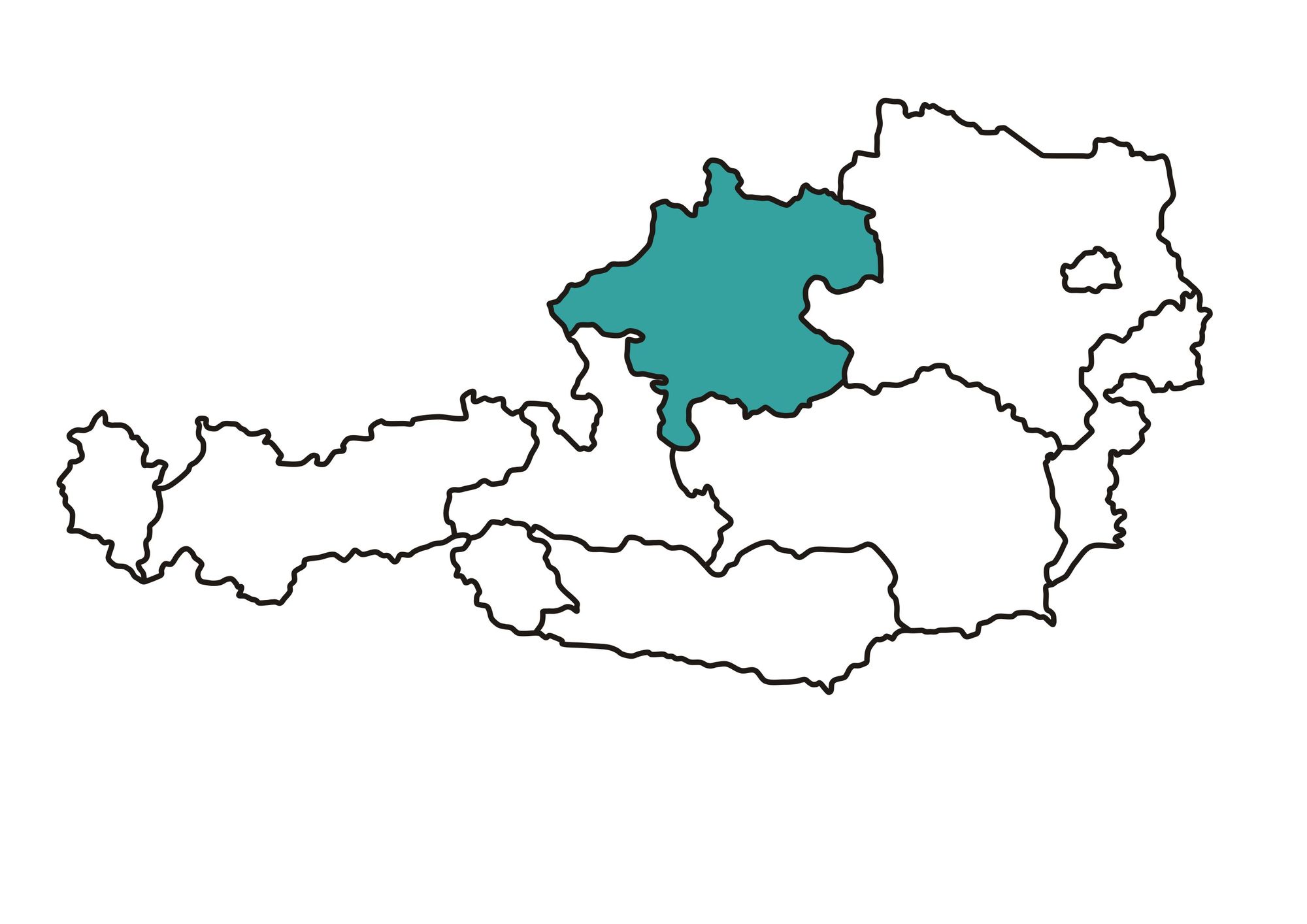
Upper Austria (Oberösterreich)
Two collecting areas are worth mentioning here – first, the older one: the famous Hüttgraben on the Fuchsalm, in the municipality of Spital am Phyrn; and then the somewhat newer one: Rosenau. Both areas are located in neighboring municipalities of the Kirchdorf an der Krems district, in a heavily forested area between the Phyrnpass and the Hengstpass. Rosenau, with just over 600 inhabitants, is a small municipality, but it covers an area of over 100 square kilometers, which, like the Fuchsalm, is predominantly covered by forest. The localities are essentially discovered by chance, in quarries, after mudslides, or during the construction of forest roads.
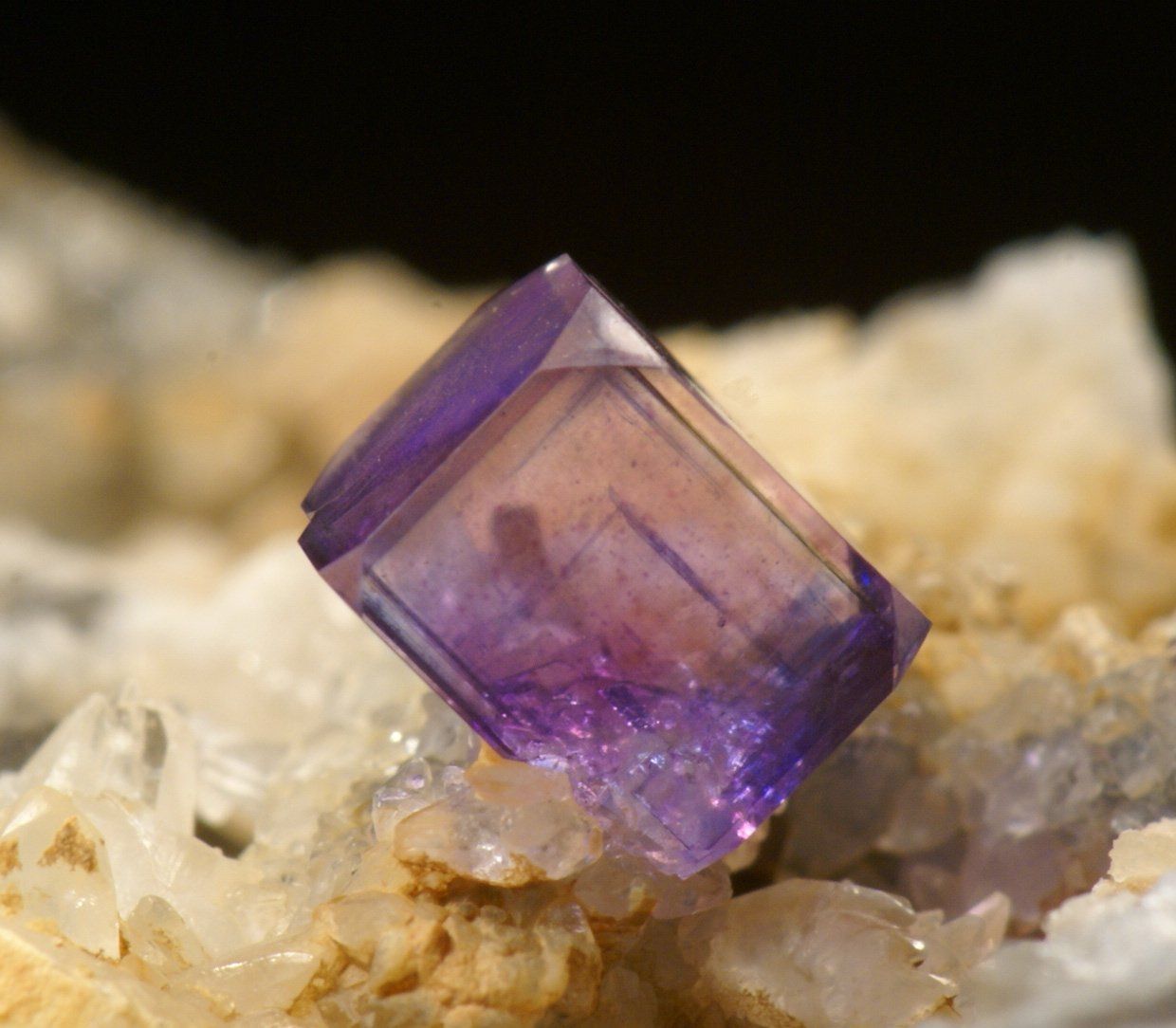
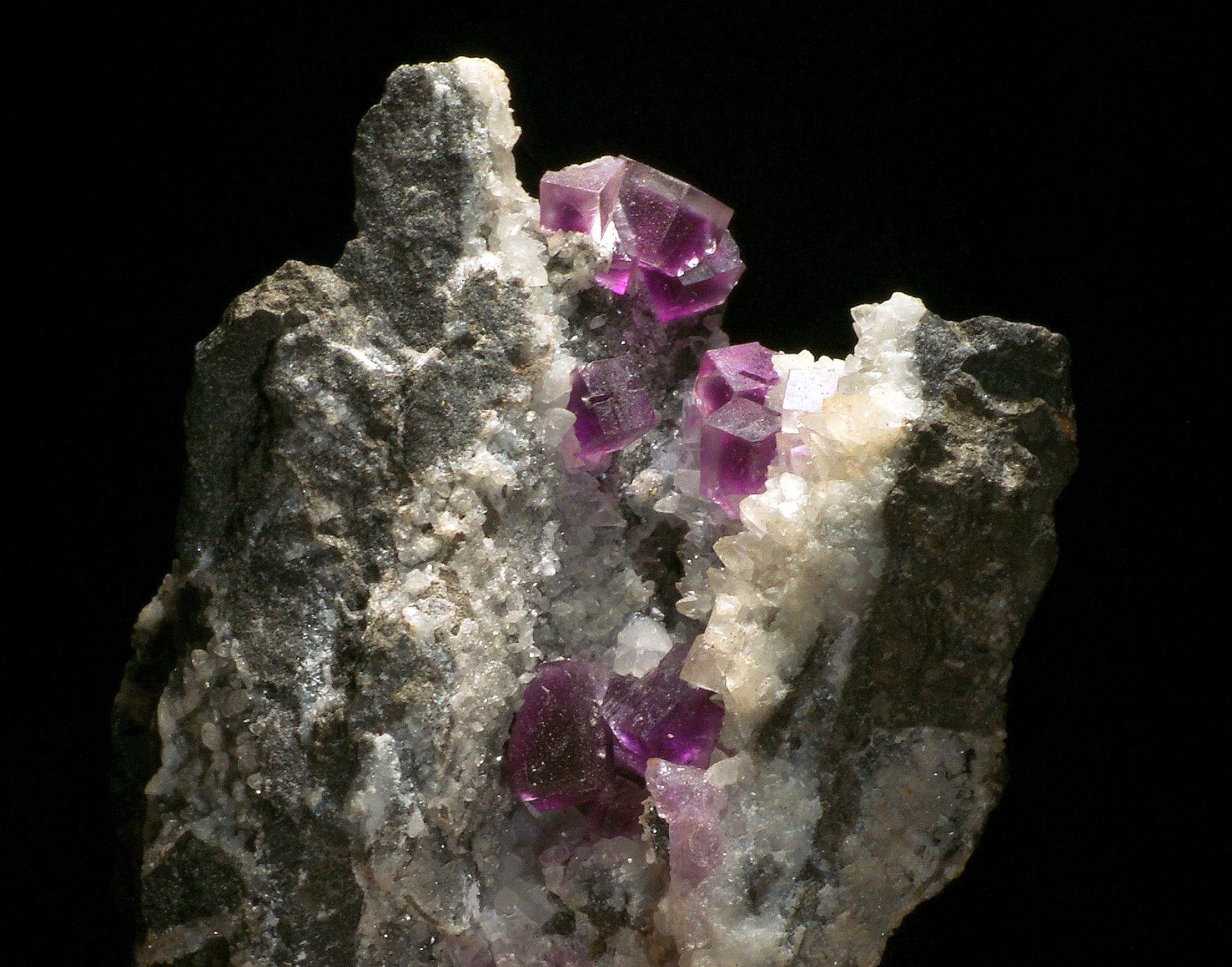
Another similarity between the two localities lies in their geology. Like another, less significant site in Hinterstoder, both are located at the contact zone between the Gutenstein Limestone and the Haselgebirge formation. The Gutenstein Limestone is a marine limestone deposited in deeper water environments, while the Haselgebirge is a clay-rich, salty formation originating from shallower depositional settings. This geological constellation once again illustrates the immense forces at work in Earth's history: rock formations that were once separated by thousands of meters in altitude now meet at the same level. The fluorites from the Gutenstein Limestone are known primarily for their dark violet color. This is due to the hydrofluorocarbon content of the limestone: the higher the concentration, the darker the limestone and the more intense the violet color of the fluorites will be.
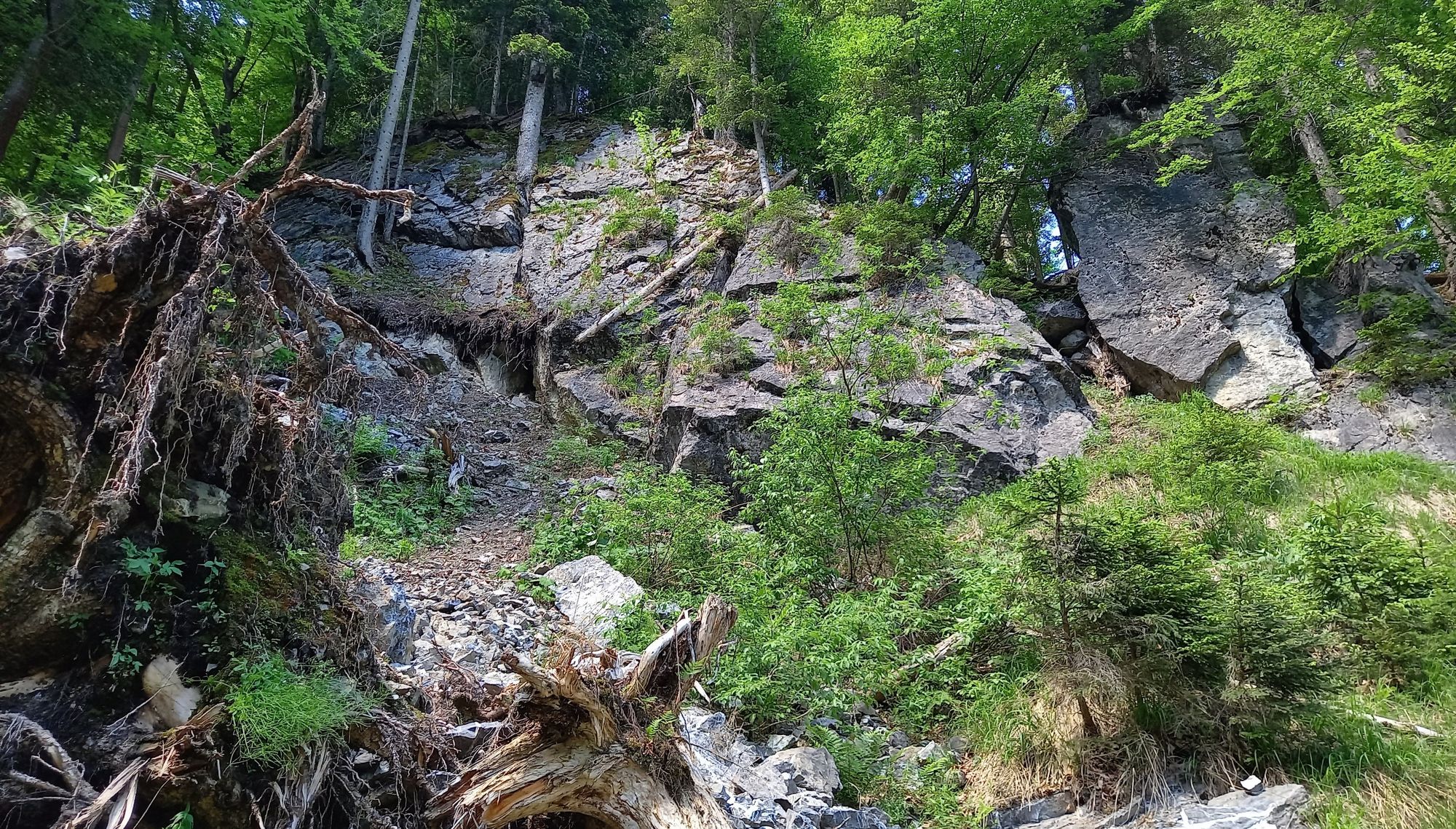
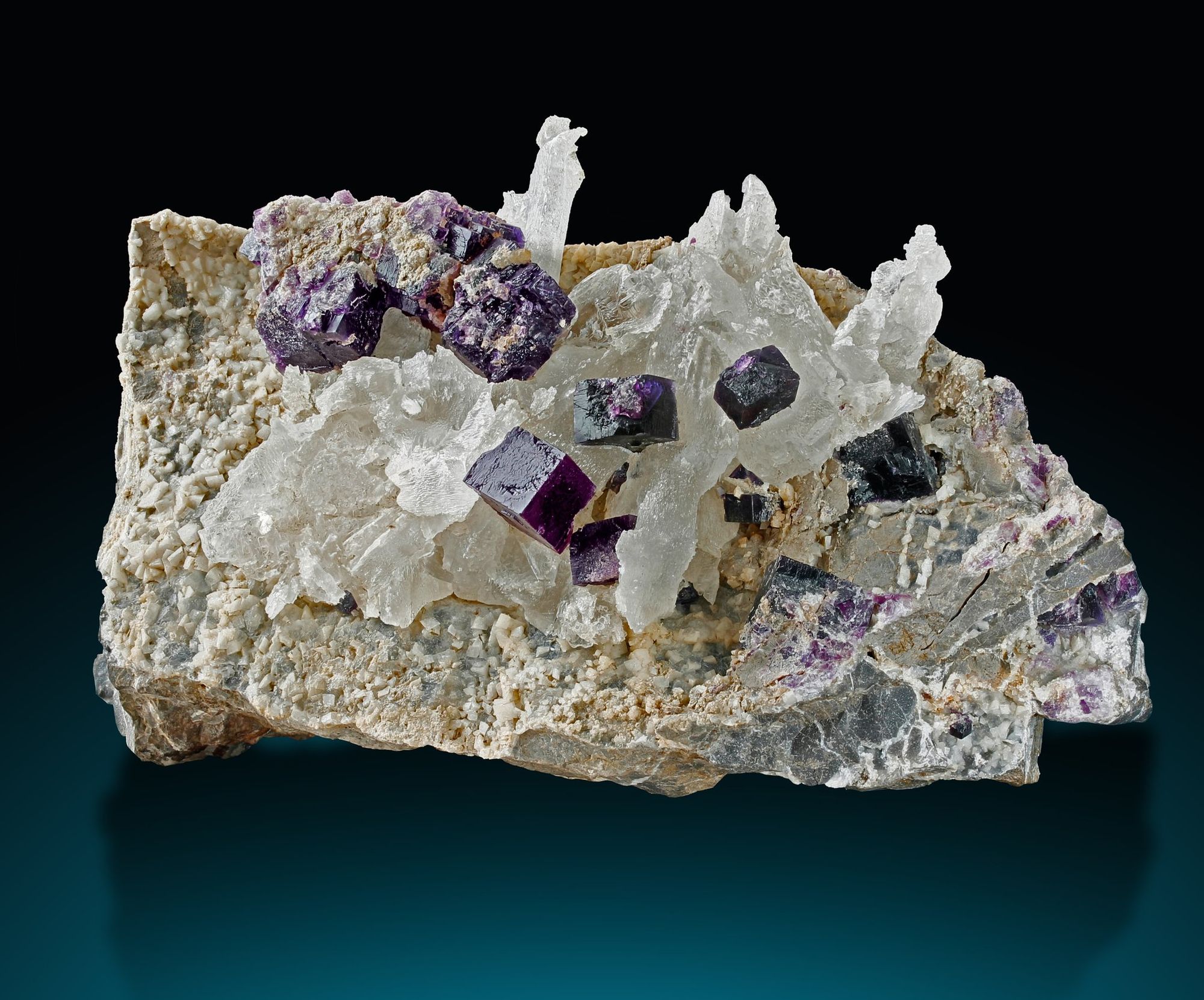
Just a few meters from the first discovery site of Rosenau, colorless fluorite cubes to 2 cm and large calcites have been found in the light-colored limestone. Although the material in the dump is heavily weathered, it still indicates the magnificent specimens that must have been found here long ago. The Gutenstein Limestone stretches from Upper Austria through Styria to Carinthia, but collecting sites are hard to find, as the limestone is often covered by vegetation and only shows up at occasional outcrops.
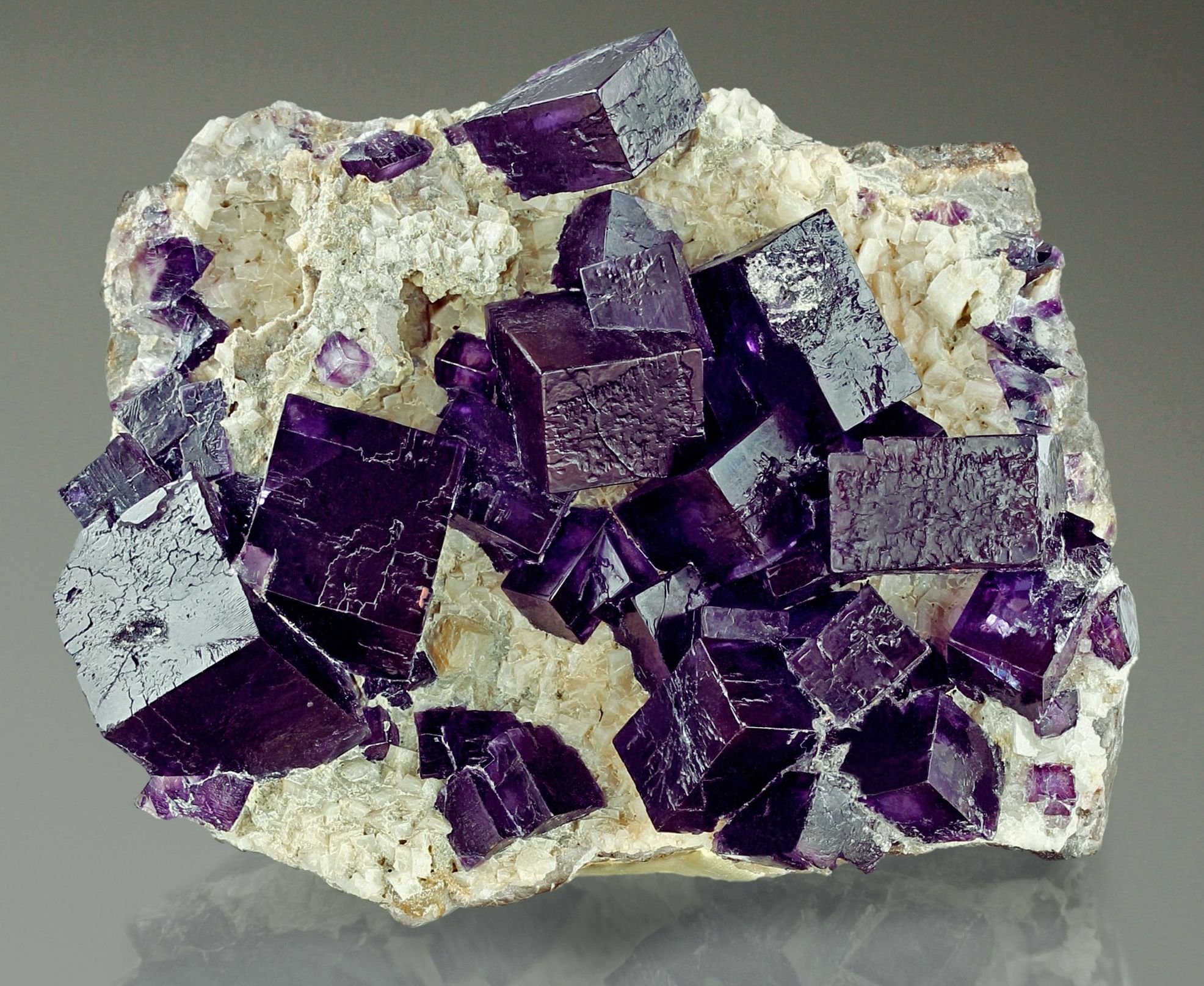
The illustrated specimens are in the collection of Klemens Mikulaschek, who has been working at this locality - that was first discovered by the renowned mineralogist Othmar Valenta - for many years. Collecting in the Gutenstein Limestone is a real challenge, since the rock is extremely hard and almost impossible to deal with using only a hammer and chisel. During a visit to the site by Mikulaschek and the author, the handle of a 10 kg sledgehammer was wrecked by the hardness of the rock. Furthermore, the vibrations generated by the hammer blows caused the small fluorite crystals to fly from the rock like purple sparks. Only the use of drilling allows a reasonably safe recovery of fluorite specimens. Usually only cubes are found.
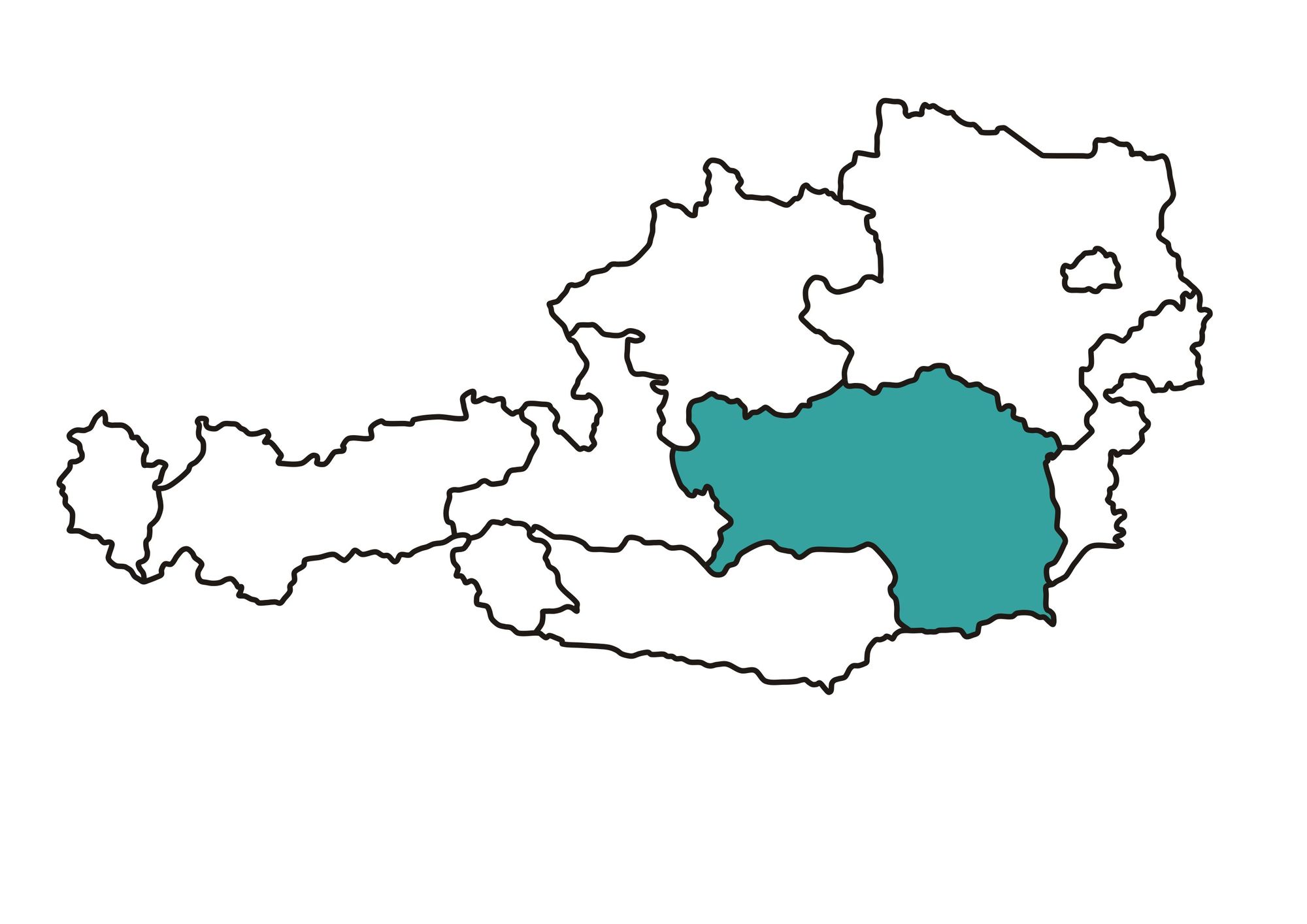
Styria (Steiermark)
The most significant fluorite finds in this federal state also come from the already described Gutenstein Limestone. Particularly well-known are the specimens from Gams bei Hieflau and the Kaswassergraben – however, the most famous and best collecting locality in this geological formation is beyond doubt Unterlaussa.
The famous Ungerhammerplatzl locality in Unterlaussa dates back to a hammer mill that was active until 1911. Nearby, a gypsum quarry known as the "Zieherbauerischer Gypsbruch" (Zieherbauer Gypsum Quarry) operated in the 19th century. Geographically, the site can be classified as part of the Ennstal Alps, whose highest elevation is the Hochtor at 2,369 m above sea level. One of Europe's largest open-pit ore mines, the famous Styrian Erzberg (Ore Mountain), is also part of the Ennstal Alps.
When exactly fluorites were first discovered here, has been lost in history. We do know, however, that the Austrian Archduke Johann had a piece from Unterlaussa in his collection, and he lived from 1782 to 1859. In Styria, he was considered a great modernizer in the areas of agriculture, industry, and railways; as well as in education and culture. His work was not tied to any office or honor; so to this day, his selfless commitment secured him a place in the hearts of the people of Styria. His work in this green state can be narrowed down to the years 1807 to 1859. His mineral specimens, preserved in the collections of the Joanneum in Graz, likely date from the same time period. The Universalmuseum Joanneum, founded by him in 1811 and later named after him, is today the oldest and second largest museum in Austria.
Knowledge of the Unterlaussa localities was lost over the centuries, until the Linz based collector Rudolf Planitzer started prospecting in the area. This gentleman is no stranger to the readers of Mineralica, for his truly impressive amethyst find from the Zillertal was described in the first special edition (2024).
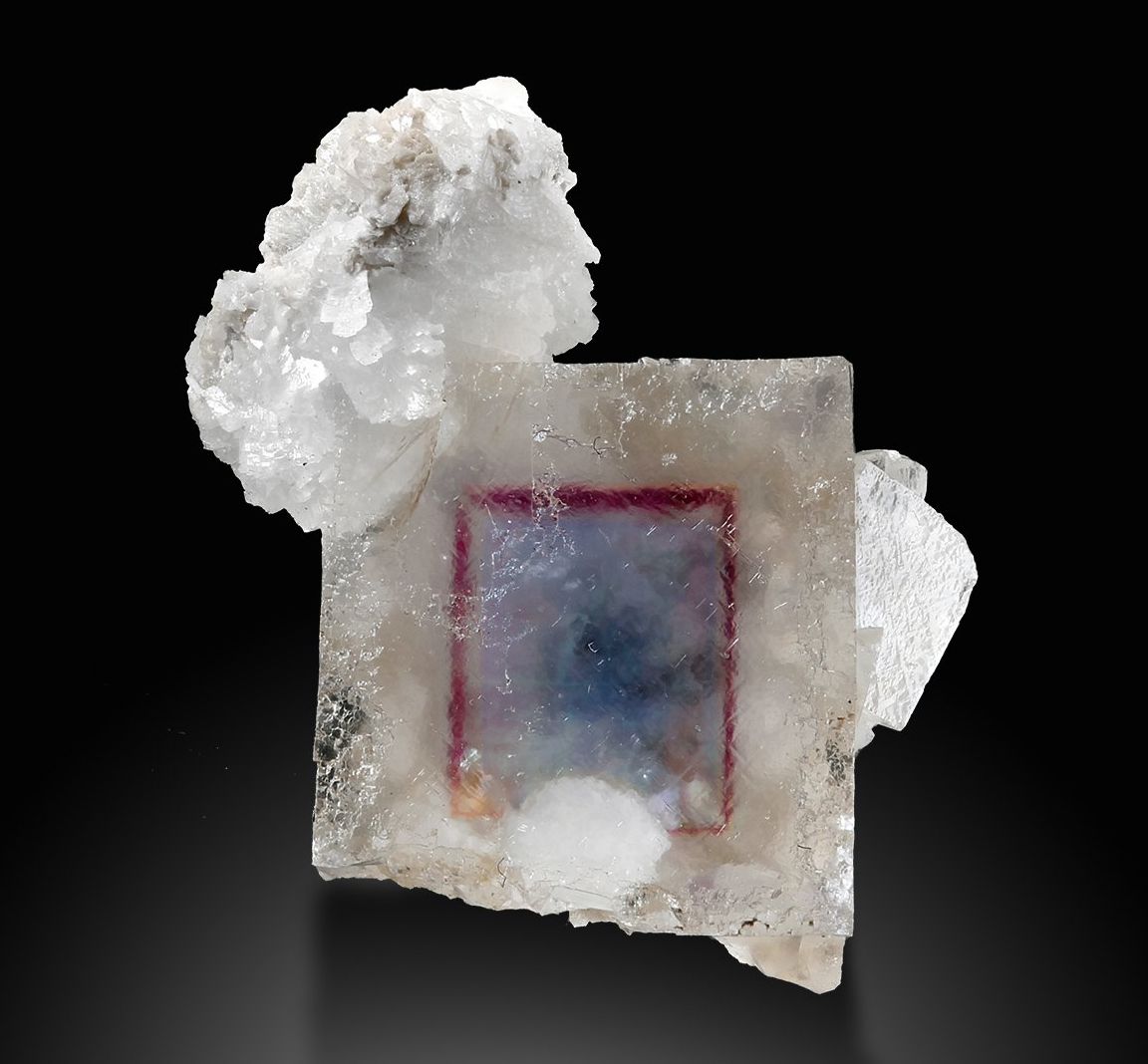
The Planitzers, together with local collector Berghammer, discovered the first cavities in dolomite in 1967. The specimen shown here is one of the best hand specimens ever discovered there. Fluorites have usually grown on dolomite or on the Gutenstein Limestone. But the Planitzers also discovered unusual specimens of fluorite embedded in gypsum. The crystals from the Unterlaussa are larger than those from most other Gutenstein Limestone sites, and they are also striking due to their incredibly dark purple color.
Carinthia (Kärnten)
In Carinthia, the Hocharn, or rather its western flank, which slopes down into the large Fleißtal, must be mentioned first and foremost. At 3,254 meters above sea level, the Hocharn is the highest mountain in the Goldberg Group. Its summit is located exactly on the border between Salzburg and Carinthia. It can be climbed either via the Fleißtal from Heiligenblut or via the Salzburg side from Kolm Saigurn or Bucheben, both located in the Rauristal. In its immediate northeastern neighborhood is the Hohe Sonnblick with its famous weather observatory and the Zittelhaus mountain hut, built by Ignaz Rojacher.
The geology of the Hocharn provides the conditions for a wealth of magnificent finds. In the aplite veins embedded in black slate and gneiss, large cavities often form, yielding extraordinary clear quartz, smoky quartz, and even amethyst. And, of course, some of the most significant fluorite finds of the Eastern Alps.
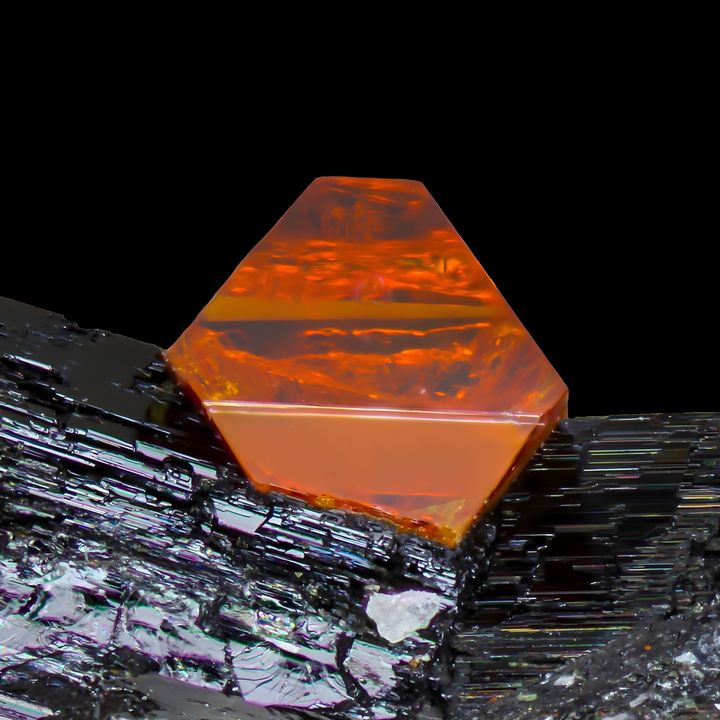
Of all the great discoveries on the Hocharn, one has achieved tragic notoriety and yet remains among the most coveted of all Austrian fluorites. In the late 1960s, Sebastian Brandstätter, a mountain farmer's son known by his nick name "Wastl Reiter," discovered the "Reiter" cleft that was later named after him. From this cleft originate the dark violet octahedral fluorite crystals, unique in the entire Alpine region.
Sebastian Brandstätter was a simple man with great visions and an even larger number of children. He usually sold his finds, with the proceeds going to the family and to finance the construction of a house. On August 18, 1972, he climbed to search for crystals and never returned. His body was recovered days later in a scree field. His finds will forever be a memorial to this great prospector.
Another famous find dates back to 1982. Georg Kandutsch discovered a cleft containing pink fluorite octahedrons to 3 cm on edge, with slightly lilac centers, associated with angels wing calcite, bavenite, and some light blue apatite. Other well-known individual finds, such as a massive dark-pink octahedron on smoky quartz (discovered by Rasser/Fink), confirm the importance of the Hocharn as a fluorite locality.
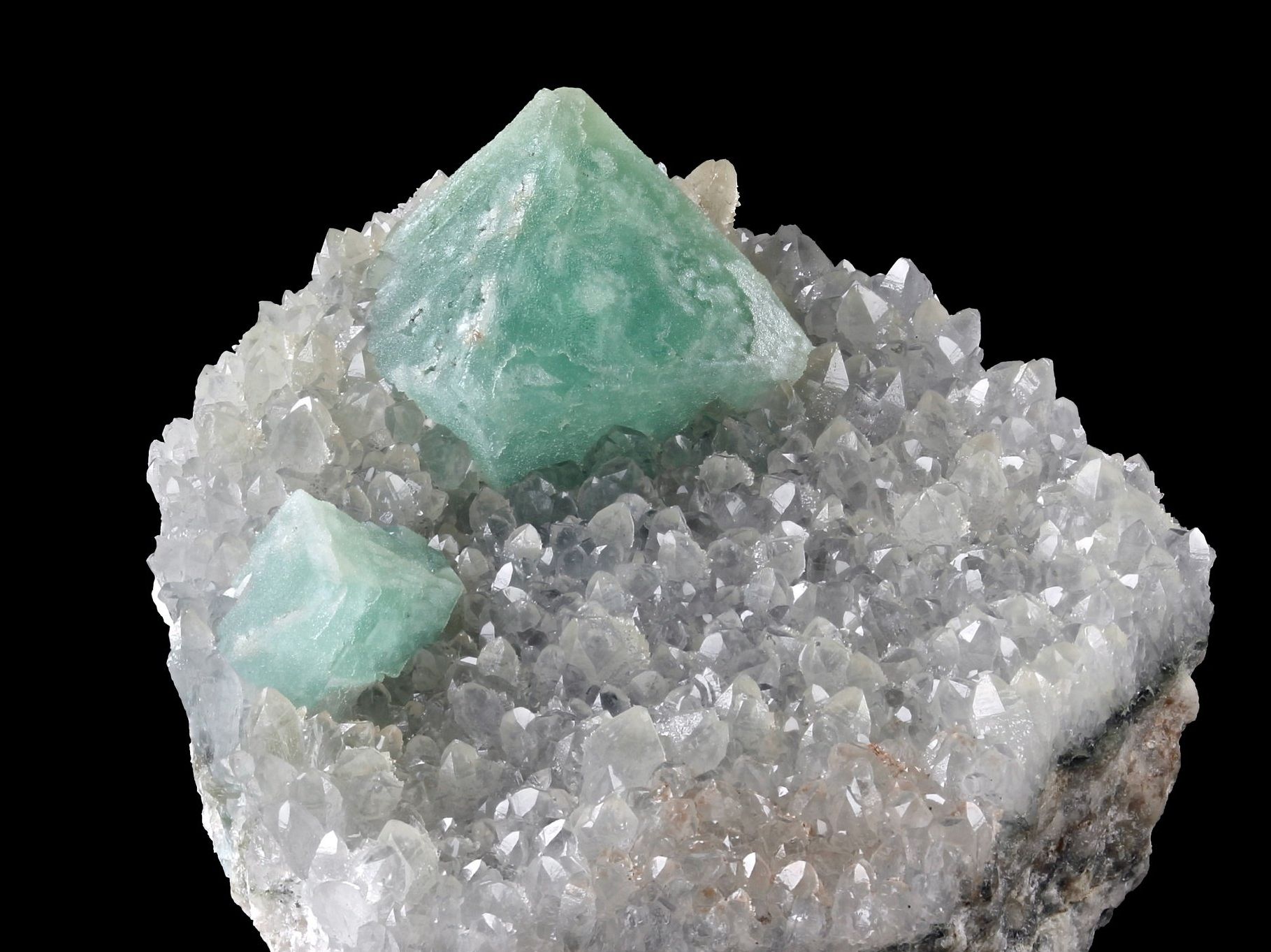
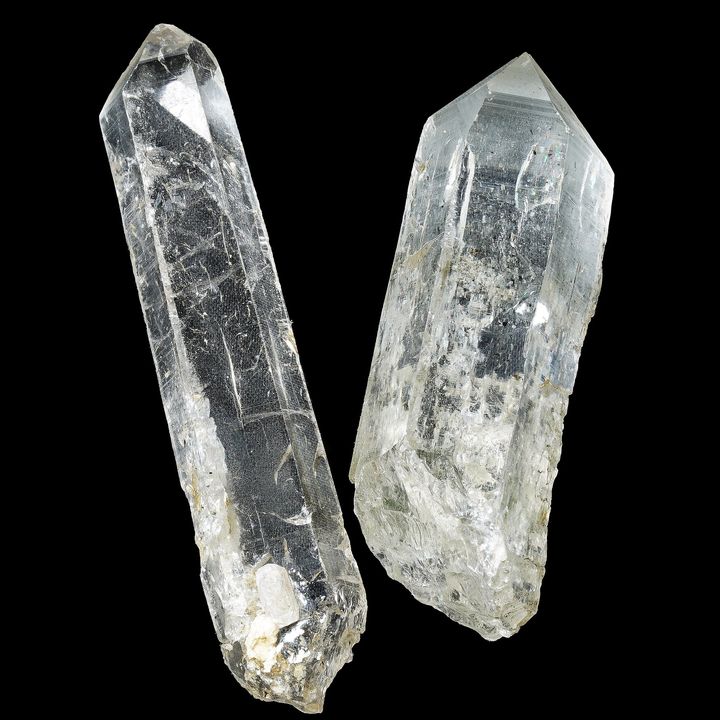
Another exceptional discovery was made recently at the “Schwarze Wand” (Black Wall) in Carinthia. Rudolf Hasler, a former school principal from Bad Bleiberg and well-known for his wulfenite collection, discovered four clefts there, containing green octahedra up to 8 cm across, which he collected between 1998 and 2013. The crystals exhibit an etched surface structure with raised, highly lustrous features and contrasting, more matte structures. Another special feature are fluorite specimens with two generations, the first being the green octahedra described above, the second a generation of violet crystals that show both cubic and dodecahedral faces. One individual specimen even has faces of the hexahedron, the dodecahedron and the octahedron. Most of the crystals are sitting on water-clear, fine needle quartz.
Although pink fluorite is highly sought after among collectors, green octahedra are significantly rarer in the Alpine region as a whole, both in quantity and in localities. Truly an exceptional find, and not just for Austria.
Another special find comes from the Grosses Fleißtal, made by engineer Worel in the late 1980s. Quite unusual for alpine fractures, hexahedrons were found here instead of the familiar octahedrons. The bright yellow cubes reached up to 2 cm on edge. Only three specimens of this find exist, but due to its uniqueness, it had to be mentioned in this article.
Salzburg
Weisseck takes center stage in the federal state Salzburg. Pink octahedrons from alpine fractures may be of interest to the discerning collector of Austrian alpine minerals due to their rare occurrence. However, compared to the red crystals of Mont Blanc or the gigantic octahedrons from the Planggenstock, Eastern Alpine fluorites are of lesser importance. Weisseck, on the other hand, occupies an exceptional position, due to the size of the crystals, the incredible variation in color, and, of course, the extent of the deposit.
The Weisseck, located in the Lungau region (the southeasternmost region of Salzburg) and 2,711 meters high, is an alpine wasteland, and the landscape conveys solitude and vastness as well as untouched beauty.
Its fluorite deposits were first described in 1859 by Dr. Ludwig Ritter von Köchel in his book "Die Mineralien des Herzogthumes Salzburg." Historical specimens from classic finds of that time can be found in cabinets and display cases of old Austrian natural history museums.
Over the centuries, cavities have repeatedly been opened in the limestone and dolomite marble exposed at Weisseck, and remarkable discoveries have been made.
In the 1980s, a discovery made by a Viennese collectors group at Riedingsee achieved minor notoriety. It became known as the "Wiener Loch" (Vienna Hole) or the "Kuh Loch" (Cow Hole). Kuh-Loch refers to the story that a cow supposedly died in one of the holes dug by mineral collectors. Far-fetched stories were invented just to throw a wrench in the works of the collectors working there.
For decades, collecting has been prohibited around the Riedingsee. As in the entire Austrian Alpine region, this is essentially based on a completely misunderstood approach to nature conservation. The accusation is that searching for minerals would destroy the environment. On the contrary, minerals are almost always found in shallow crevices. If they are not recovered, they are destroyed by erosion, rockfall, avalanches, and frost. Properly recovered, they enable scientific discoveries, promote knowledge of mineralogy and geology, and, thanks to the display cases of local museums, stimulate interest in natural sciences. Undiscovered and unexploited, they become rubble – collectors are the discoverers and preservers of these natural treasures.
Back to the Riedingsee area: there are over 40 natural lakes, ponds, and pools throughout the Riedingtal. The Riedingtal Nature Park is arguably one of the most scenic in Austria and is home to an enormous variety of plant and animal species.
The Riedingsee proper lies along mighty, rugged cliffs, 600 meters below the summit. Sharp-edged, light-green cubes with edges to 5 cm have been found in the famous Wiener Loch and other nearby crevices. Most have rather matte surfaces; only a few crystals are of the exceptional quality that exhibits a high luster. Smaller crevices along the lake yielded small, ice-blue hexahedra, and there were also a small number of green cubes with violet cores and dodecahedral modifications of the edges.
On the eastern slope, discoveries of blue fluorites caused a stir among insiders. However, because the eastern slope is very unstable, clefts collapsed during excavation, and some collectors only escaped injury by sheer luck, working in this area is at a considerable risk and rarely undertaken. The monochrome blue crystals usually form a beautiful contrast to the yellow matrix and are often associated with light colored calcites.
The deposits are rich, the finds diverse. Perhaps the most famous and largest find was made by local collectors and “Stoasuchan” Walter Petzelberger and Martin Brunnthaler in 1996. “Stoasucha” is the Austrian equivalent of the Swiss “Strahler” and the French “cristallier”. The site, now known as the Summit Cleft (Gipfelkluft), is located 50 meters below the summit, on the eastern slope of the Weisseck. Over many years, it has been excavated 47 meters into the mountain, by several collectors—including Reinhold Bacher, the current chairman of the Lungauer Mineralienvereins (Lungau Mineral Society). Since the use of heavy machinery is prohibited in Austria, this was accomplished solely with hammers and chisels — a truly incredible feat.
The Summit Cleft can be divided into three areas:
Shortly after the original entrance is the first cavern. Small, very dark, and deeply etched crystals were found there. This area is filled with debris from further advances during the prospection work and is no longer accessible today.
There, a very narrow and low passage leads deeper into the mountain. From this passageway originate sharply terminated cubes with violet centers and slightly bluish zoning along the edges. These individual crystals are sitting on needle quartz. Unfortunately, only a handful of these unique fluorite specimens exist.
Shortly thereafter, a second side passage branches off. Reinhold discovered the second cavern here in June 2006. Its fluorites differ from the other specimens of the Summit Cleft in their significantly lighter, blue-tinged color and their distinct zonal structure, with a light blue outer zone and a purple core. The specimens are highly sculptural and consist of sharp, intergrown cubes.
Now follows a final and steep crawling section. It was cleared of fallen rocks in the spring of 2003. Behind it lay the end of the cleft: the large cavern, over 8 m deep, up to 3 m wide, and over 1 m high. The entrance 3 has now collapsed. Here lies the treasure trove – the finds were richer and more varied than at any other location. Stepped crystals, with edges to 17 cm, are typical for this part of the Summit Cleft. This kind of crystals was the most common and is also the best known.
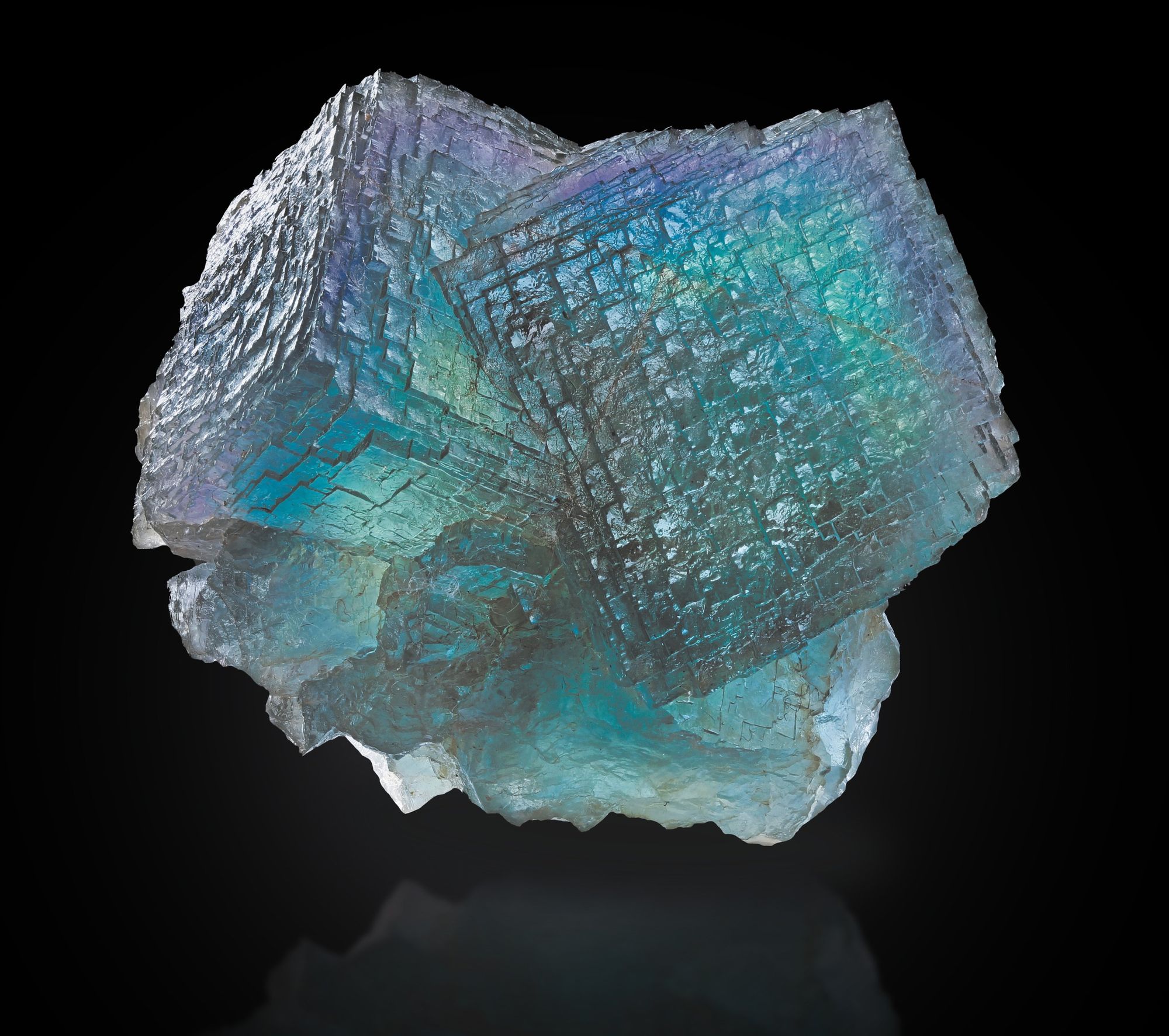
The best specimens came from the ceiling area, are highly lustrous and show an incredible color spectrum. The specimen illustrated displays shades of green and countless nuances from blue-green and intense blue to violet and purple. It can be considered one of the best ever recovered and, with an edge length of approximately 16 cm, is among the three largest crystals known to the author.
Special mention should be made of a small area with monochrome green crystals and an exceptional find consisting of a fluorite band approximately 40 cm thick, in which a cavity had formed, and from which five specimens of unsurpassed clarity, transparency and luster were recovered.
In the years that followed, new clefts have been discovered in the summit area of the mountain – the wealth of colors and crystal forms on this mountain seems to have no limits. There are even botryoidal fluorites, combinations of hexahedrons and dodecahedrons, octahedrons, and combinations with other minerals such as calcite, quartz, and barite. Collectors from all over the world succumb to the fascinating specimens of this exceptional locality.
Another famous site in Salzburg is Krimml, located at the western end of the Salzach Valley, in the Upper Pinzgau (Oberpinzgau ) region. The site is located in an abandoned quarry on the northwest side of the Rehrlköpfel mountain. Gravel was quarried there between 1928 and 1935, but fluorite was not described until 1953. Before the Second World War, a German company was allegedly interested in excavating this site, although it is unclear whether the mining would be for dolomite, fahlore or fluorite. The tunnels, their layout, and their size, however, suggest that no industrial mining ever happened.
In the 1950s, Hugo Ullhofen, a former school principal from Neukirchen, began working at this site. He gained his first experience at the Knappenwand, the world-famous epidote locality in the Untersulzbach Valley. In Krimml, he not only mined fluorite, but also kept detailed scientific documentation of his finds and observations. Starting in 1965, the tunnel was further excavated by local mineral collectors. However, due to the highly unprofessional nature of this work, the majority of the rubble remained in the tunnel. The tunnel became increasingly inaccessible, and the quality of the fluorite discovered deteriorated. As the color of the discovered specimens became paler and the quantity decreased, mining ceased in the mid-1970s.
When a specially founded association around Hans Kammerlander and other prominent figures from the local mineral collecting scene set out to convert the tunnel into a show mine in 1988, better specimens were discovered during the work, but they never matched the quality of Ullhofen's discoveries.
The carbonate-rich rock sequence can be attributed to the so-called Lower Eastern Alps (Unterostalpin). In 1953, Günther Frasl called it the "Krimml Triassic." Geologically, it lies between the Lower Eastern Alps to the north, and to the south within the Tauern Window. Apart from a smaller deposit in the same geological zone in Vorderkrimml, no further finds are known. The best specimens from Ullhofen's finds are among the great classics from the Pinzgau region.
One valley is particularly famous for its fluorites: the Gastein Valley. The Gastein Valley is located in the Pongau region of Salzburg. It consists of the Naßfelder Valley, which runs from the southwest, and the Anlauf Valley, which runs east. The Gastein Valley is approximately 40 kilometers long. The two valleys that form the Gastein Valley meet in Böckstein, a district of Bad Gastein, a well-known tourist destination in Austria. The main river is the Gasteiner Ache.
Geologically, the valley has its roots in the Ankogel Group (whose highest peak is the Hochalmspitze, 3,360 meters above sea level) and the Goldberg Group (its highest peak is the Hocharn, 3,254 meters above sea level). Both are part of the main ridge of the Hohe Tauern, which is partially covered in ice. A glacier of gigantic proportions—about 1 kilometer thick—once occupied the valley. The gigantic blocks that the glacier transported from the inner Tauern peaks can still be found scattered across the landscape today. The entire valley forms a vast and impressive alpine landscape, inviting not only to mineral prospecting, but also to linger, hike, and explore the wildly romantic area.
Fluorite has a special significance for the Gastein Valley. The situation here is similar to the previously described finds by Rudolf Hasler in Carinthia: while the dominant color of fluorite octahedra throughout the Alpine region is pink, green crystals have also been found in Gastein. Of particular note is the so-called Böckstein-Röhre (Böckstein Pipe). This is a tunnel that was excavated during the construction of a water power plant in Remsach.
At linear meter 1640, the miners encountered a cavity in which sharp, light-green octahedra were discovered on small, pale milky quartz crystals. The fluorite crystals were mostly singles, generally reaching 2 cm, with exceptional specimens exceeding 3 cm across.
The beginning of the site known as "Hirschau" or "Hirschwald" cannot be dated precisely, but it was reactivated in 2009 and 2010 by Reinhold Bacher, with significant support from the young Gastein collector Stephan Weghofer, Hans Leitner, the author of this article, and several other collectors. Forgotten for decades, the site had to be cleared of tons of rubble that generations of collectors had accumulated, essentially covering the site, before the active collectors could follow the hydrothermal fluorite vein further into the mountain. The crystals reached up to 5 cm across, and their color ranged from pale green to intense dark green. Some crystals were partially covered with a light stilbite coating, creating beautiful contrasts between the green and light surfaces on the octahedra.
Numerous other smaller finds or historical individual pieces can’t be taken into account due to space constraints, but the Gastein Valley can certainly be called Fluorite Valley.
Tyrol (TIROL)
Of course, the Ziller Valley is particularly well-known in Tyrol, for its amethysts and iron roses, diopsides and almandines, all these and many more minerals from the region are among the great Austrian classics. And then there is the Schrammacher Mountain:
With its striking silhouette and 3,410 m elevation, it is the second-highest peak of the Tux Ridge, after the Olperer (3,476 m) to the north, which in turn is part of the Zillertal Alps. Also to the north are the Fußstein (3,380 m) and the Sagwandspitze (3,227 m) to the west. An impressive backdrop for the dedicated collector!
The Zillertal Alps are now a nature reserve, home to many rare species of flora and fauna. They are therefore of great importance not only for their high alpine landscape and glaciers, but also for their biodiversity.
Geologically, they consist primarily of the central gneiss of the Zillertal core. This is the name given to orthogneisses of the Eastern Alpine Tauern Window. They were formed during the orogeny from the metamorphism of granites. These granites penetrated the older overburden during the late Carboniferous to early Permian periods. Tectonically, they form the deepest unit of the Tauern Window.
Back to the Schrammacher: it's the main scene of one of the most spectacular fluorite discoveries in the Eastern Alps. Vincent Eller, the son of a mountain farmer and now around 90 years old, made the discovery of his life in 1985, on the approximately 600-meter-high northwest face of the Schrammacher. Although pink fluorites from the Eastern Alps rarely compare to their relatives from Switzerland or France, this one does! Weighing over 3 kg and with an edge over 16 cm, it is the largest fluorite octahedron ever found in the Eastern Alps. Its faces are slightly etched, but the corners are highly lustrous, and its high transparency and beautiful pink color are truly impressive.
The second-largest fluorite octahedron in the Eastern Alps was also found by Eller. It has a more ice-blue color and an edge length of approximately 13 cm. Like most of the finds, it comes from a geographically rather small area that has been visited by many Stoasuchan since Eller's finds. However, nothing comparable to Eller's fluorites has ever been found since.
The Schrammacher specimens are characterized by a wide variety of colors, and the photos we selected aim to illustrate the whole spectrum, ranging from intense violet to cool blues, lilacs, and almost colorless with a pink center. And it is the only locality in Austria that produced octahedrons from alpine fractures that can compete internationally.
Another site in the Zillertal Alps is the Stampflkees glacier. Surrounded by the Schrammacher, the Sagwandspitze and the Hoher Wand, it is the second-largest glacier of the Tux main ridge; only the Tuxer Ferner glacier is larger. Since the extremely cool climate period of the Little Ice Age ended in the mid-19th century and temperatures began to rise again, the Stampflkees glacier has been in retreat. The glacier's highest elevation (2250 meters) dates back to around 1850.
In the now ice-free lateral moraines southwest of the Schrammach Ridge, green octahedra have been found in mineralized crevices and extensions of fluorite-bearing veins. These octahedra typically range in size from 1 to 2 cm. They are usually covered by a thin layer of quartz. The specimen shown here, with a 26 mm main crystal without this quartz layer, is rather exceptional. However, the quartz crystal matrix on which the fluorites sits is typical. Generally, only a few specimens have been recovered, and they remain a great rarity even today.
The last site in Tyrol worth mentioning is the Obernberg am Brenner. This is an old lead mine; Stoasucha prospecting for fluorite there can expect rich associations in the form of galena and cerussite. Parageneses with baryte, calcite, and hydrozincite have also been identified.
Lead and zinc mining was only carried out sporadically, and no mining has taken place since around 1920. However, the first activities likely date back to Roman times, with further activity documented between the 14th and 17th centuries.
For decades, only collectors have been active there. Specimen mining has continually expanded the dump there, and anyone hoping to find something today must first clear the debris left by generations of collectors, before being able to prospect in the exposed rock again. The mineralization of fluorite, sphalerite, and galena is associated with dolomitized Triassic limestones in the Wetterstein Formation.
Geologically, this locality is of particular interest, as Obernberg am Brenner is not part of the typical Wetterstein limestone belt that stretches from Garmisch-Partenkirchen into the Tyrolean Außerfern. Instead, it represents an isolated block of Triassic sediments embedded within the crystalline basement of the Central Alps – a geological anomaly within an otherwise coherent high-grade metamorphic region.
This so-called Central Alpine Triassic block is composed of dolomitized Wetterstein Formation and forms the host rock for the mineralization of fluorite, galena, and sphalerite. These carbonate rocks originated during the Triassic period, when extensive reef structures formed in the warm shallow waters of the Tethys Ocean – primarily built from corals and shell debris. Later, they were uplifted to their present elevation during the Alpine orogeny.
Obernberg is located in the Innsbruck-Land district, at the head of the Obernberg Valley, a side valley branching off from the Wipptal. The valley is dramatically framed by the Schwarze Wand (“Black Wall”), providing a striking backdrop for one of Tyrol’s most geologically unusual and mineralogically significant fluorite localities.
The fluorites from this locality are characterized by two generations. The first generation consists of violet hexahedrons, which are mostly dull and slightly etched, but some reach considerable sizes with edges over 3 cm. Smaller, crystal-clear, colorless crystals often grow on this first generation. These cubes are modified along the edges, by the elongated faces of the dodecahedron, a rather unique combination for Austria.
vorarlberg
There is only one notable collecting locality in Vorarlberg: the Hirschberg. Until 26 years ago, the Hirschberg was primarily known for winter sports. National championships, European Cups, and FIS downhill races were held there. And at 1,834 meters, the Hirschberg is one of the higher elevations in the Bregenzerwald Mountains.
Geographically, the Bregenzerwald Mountains – together waith part of the Allgäu Alps – is considered part of the "Bregenzerwald" section (Spatial Division of Austria, Reinhard Mang). It is located in the extreme northwest of the Eastern Alps, east of the lower Alpine Rhine Valley, and southeast of Lake Constance. It lies entirely within the federal state of Vorarlberg and dominates its northern part. It covers an area of approximately 830 square kilometers, and its rocks – primarily sandstone, limestone, and marl – date back to the Jurassic, the Cretaceous and the Tertiary.
Since ski races have long since ceased on the Hirschberg, and the summer toboggan was closed due to insolvency, the area is now primarily of interest to ski tourers and to the avid mineral collector!
The fluorites discovered so far are mostly light green, sometimes with light-colored zones along the edges. Gray-blue crystals with almost white edges are also known.
Acknowledgement
At the end of this article, the author would like to thank Christian Hager, Rudolf Watzl, Anton Watzl senior, Gerhard Brandstetter, Herwig Pelckmans and Klemens Mikulaschek for their photo contributions, and especially the tireless, still enthusiastic collectors Rudolf Planitzer and Rudolf Hasler.