In August of this year, I was given a rare opportunity: to join a collecting and digging tour with Gem Tours outside of Delta, Utah, in search of the legendary red beryl, one of the rarest gemstones on Earth. Among mineral collectors, this name borders on mythical. Only a few localities worldwide have ever produced crystals of this mineral, and the Thomas Range in western Utah ranks among the most important of them.
I’ve been an avid collector of crystals, gemstones, and even gold since childhood, but Utah was entirely new territory for me. After a long drive from Denver, I spent the night in Delta before meeting my guide, Christian, early the next morning.
From Delta, we followed a short off-road trail that wound its way into the rugged foothills of the mountains. The landscape was barren and sunburnt, both harsh and fascinating. Christian, who had scouted the site the day before, handed me a small handful of gleaming topaz crystals he had collected. It was my first encounter with Utah topaz. It is gleaming in warm champagne tones, soft pinks, and clear whites, so different from the cool blues I knew from Colorado.
After a quick safety briefing, we descended into one of the main pits which are part of a network of excavations that have been worked regularly since the early 1980s. By mid-morning, the temperature had already climbed close to 100°F (40°C), and the pale rhyolite walls reflected the heat relentlessly. With hammer and chisel, we worked our way through the tough volcanic rock—layer by layer, strike by strike.
The host rock here is a topaz-bearing rhyolite of Tertiary age, which erupted roughly 8 million years ago. During cooling, hydrothermal fluids circulated through a network of cracks and fissures. These solutions, derived from volatile-rich magmas, were enriched with beryllium, manganese, and trace elements. As they reacted with feldspar, quartz, and iron-manganese oxides in the rhyolite, red beryl (Be₃Al₂Si₆O₁₈) crystallized. This happend under geochemical conditions so precise that they have never been reproduced anywhere else on Earth.
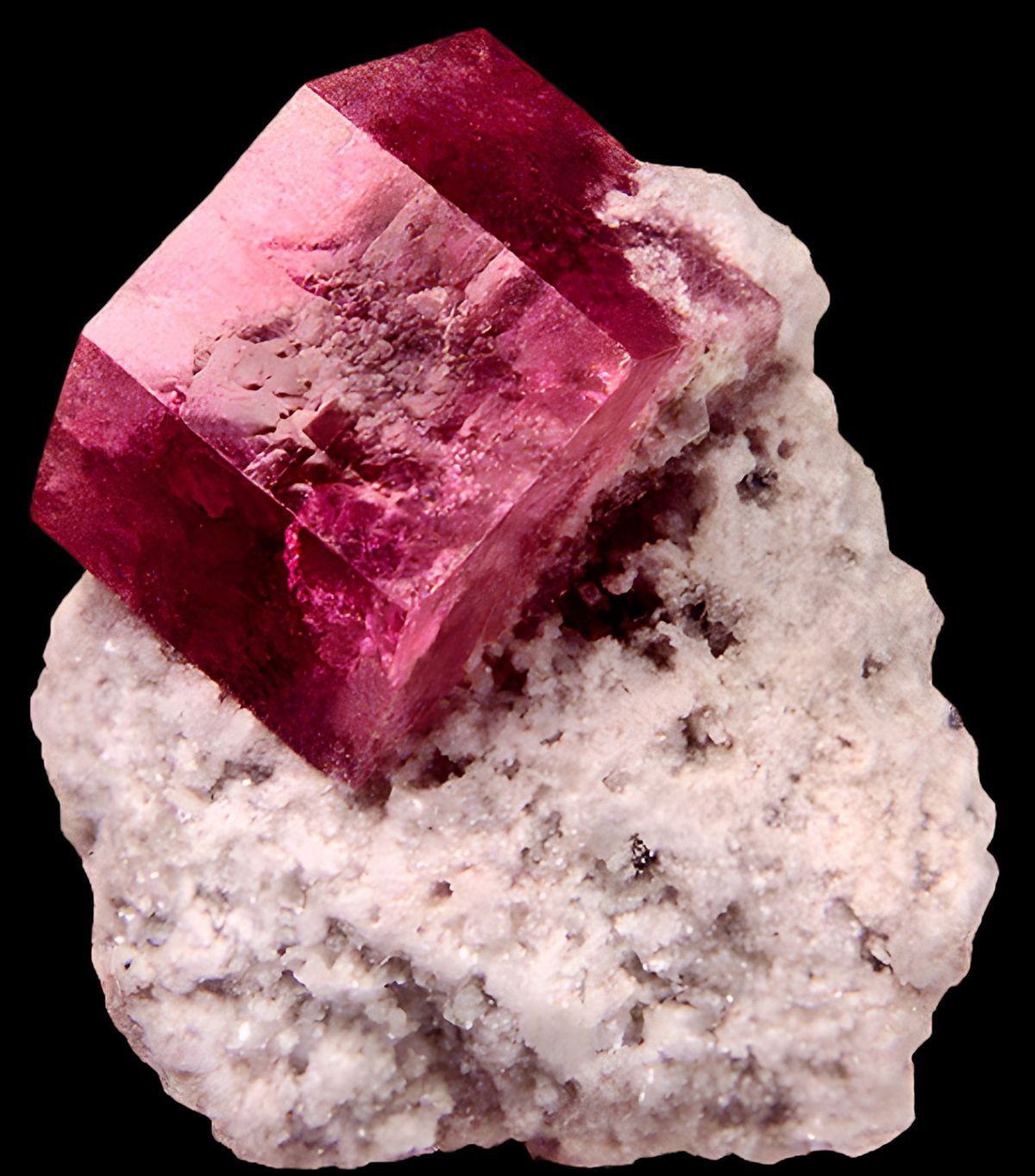
The Searle Canyon Red Beryl and Topaz Mine, now part of TheGemTours.com, was discovered and claimed in 1983 by John Holfert. It is currently operated by Jeremy Fuller, who continues active mining today. The site is famous for its lustrous, transparent red beryl crystals ranging from deep ruby red to bright raspberry pink.
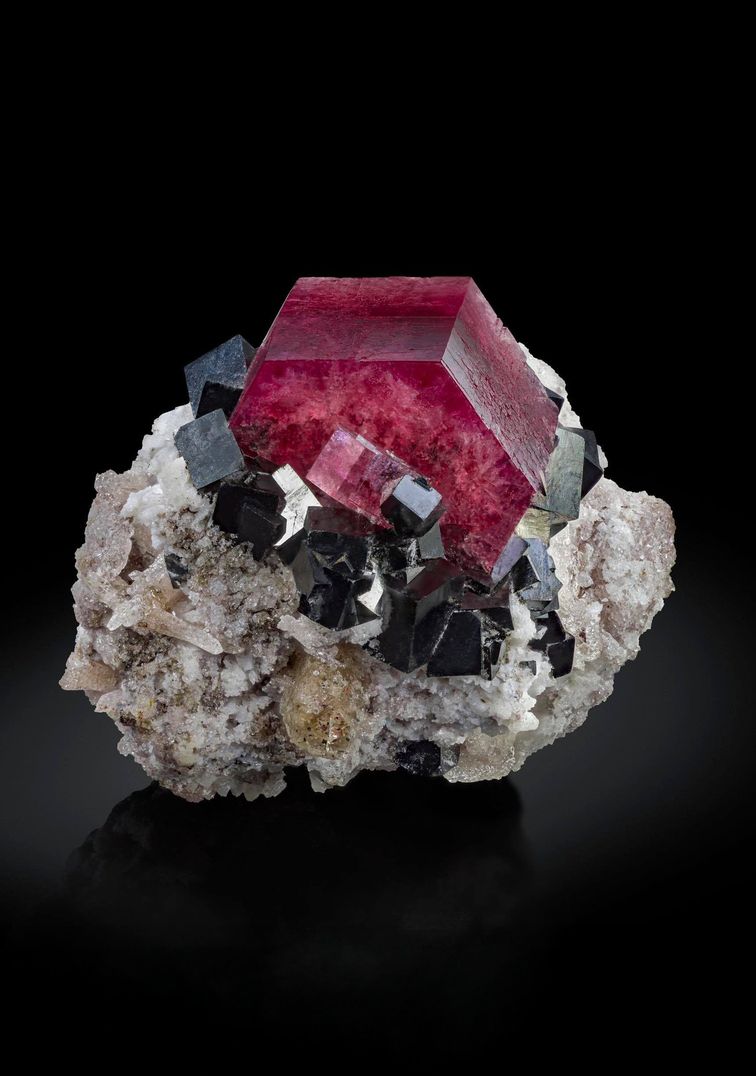
In addition to red beryl, the mine yields topaz, bixbyite, pseudobrookite, amethyst, garnet pseudomorphs, and the very rare uranium mineral holfertite, which was first described from this locality. Some of the finest specimens display red beryl growing on topaz or bixbyite, forming some of the most aesthetic mineral combinations of the Thomas Range. Because of its rarity and beauty, red beryl is considered one of the most valuable gemstones in the world. It is about 150,000 times rarer than dia-mond, with flawless faceted stones fetching several thousand U.S. dollars per carat.
I will never forget the moment when a faint red glint appeared in the rock wall. Carefully, I pried it loose and held my first deep raspberry-red beryl crystal in my hand. Definitely a find I had dreamed of for years.
As the day went on, we uncovered more pieces: individual crystals, matrix specimens, and even combinations of red beryl with topaz and bixbyite, like miniature color symphonies of red, champagne, and metallic black. Some crystals showed the typical flat-prismatic habit characteristic of Searle Canyon, while others were clear and gemmy enough for cutting.
Today, Searle Canyon (also known as Starvation Canyon) remains the only active locality in the world where red beryl can still be legally collected. Gem Tours offers guided expeditions there, giving visitors the chance not only to search for minerals but also to learn about the geology, the minerals, and the dedicated people who make these discoveries possible.
For collectors, this place is more than just a mine. It is a living chapter of mineralogical history, where science, adventure, and passion meet.
At the end of the day, I was exhausted, covered in dust, and absolutely thrilled. I left with a few red beryl crystals, several fine topaz specimens, and memories I’ll never forget.
This trip was more than just a dig; it was a reminder of why I love collecting: because it’s about discovery, learning, and connection.
A very special thank you goes to Jeremy Fuller and Christian Poll, whose knowledge, patience, and enthusiasm made this experience truly unforgettable.

/mineralica-magazine/0b9n5b/p40-01.jpg)