All the color variations of the quartz family in a single vein deposit? Collectors' legend? Wishful thinking? Or reality after all?
It must have been a special moment for the worker when he suddenly struck glass-hard quartz with his pickaxe in the small granite quarry on Maissauer Berg, just 45 km northwest of the federal capital of Austria, Vienna. This was no ordinary quartz. It shimmered in the most beautiful violet! The year was 1848. Shortly before, scattered finds of this stone had already been made in the surrounding fields before the small quarry was established for the extraction of road construction material.
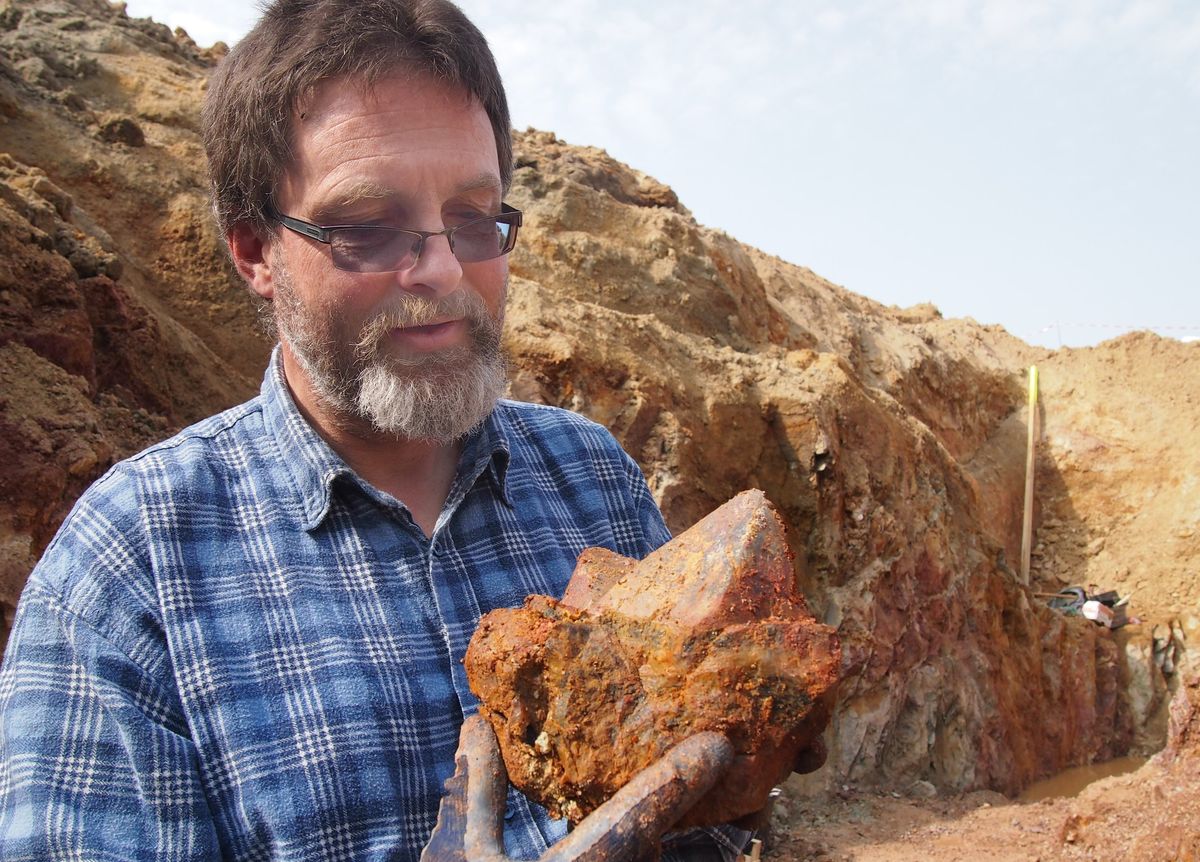
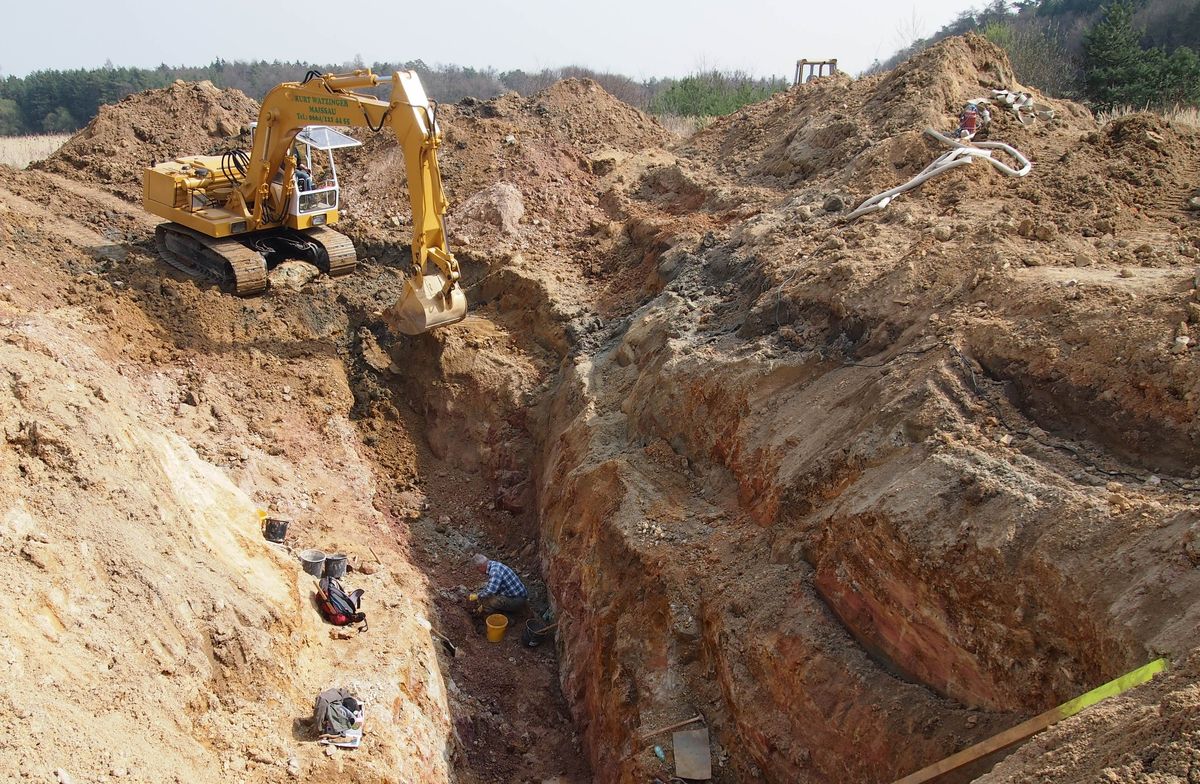
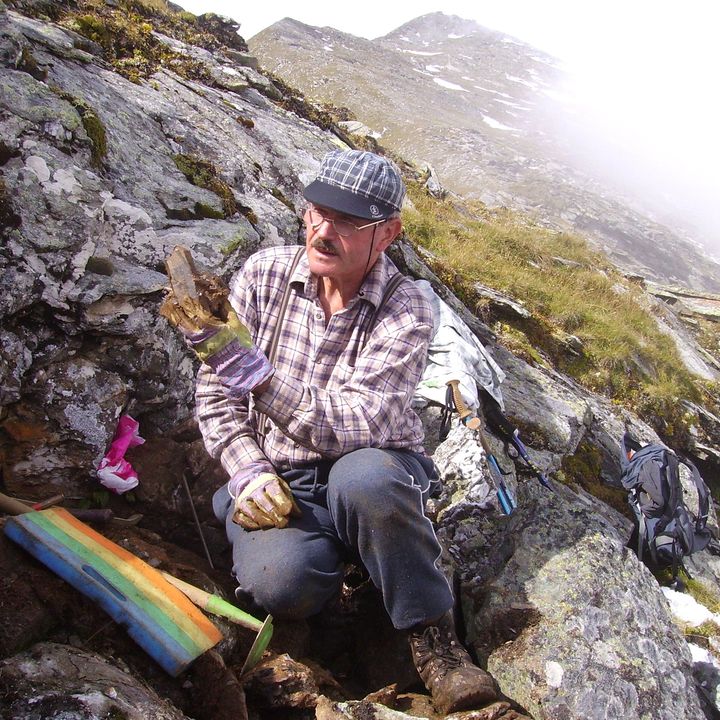
166 years later, we are standing in an excavation pit, just a hundred meters away from this spot. We are: Dr. Manfred Linner from the Geological Survey of Austria, Anton Rauscher, employee of the Krahuletz Museum in Eggenburg, Peter Tomazic, and the author (G.K.). Karl, our excavator operator, is familiar with the Maissau amethyst from previous prospectings. He carefully exposes the quartz vein on its southern flank. There, the adjacent granite has largely been converted into kaolinite. This approach (digging from the southern side) protects the delicate crystal tips in the pockets within the vein. We do the rest by hand. Soon, a crack appears from which clay oozes. A good sign! With little effort, I loosen the quartz next to the crack. The first chunk alone is already cause for celebration. Decimeter-sized crystal tips adorn its back! But Maissau experts know that tips from the center of the passage are never violet. The color is found inside them, hidden under a layer of milky quartz. Violet crystal tips are found almost exclusively in the narrower “feather cracks” that branch off from the main passage into the surrounding rock. These also contain other types of quartz such as citrine, smoky quartz, and iron quartz.
Peter, Manfred, and Anton have now opened up several fissures. A fiberglass beam stick proves to be helpful. It protects the sensitive edges and tips. In these April days of 2014, we recover several hundred pounds of coarse banded amethyst and numerous crystals up to 15 cm length on edge. Grateful and satisfied, we fill box after box. Most of the material remains in Maissau. Specimens are sent to the Krahuletz Museum and the Steinstadel Aggsbach Geocenter. The Geological Survey of Austria can now supplement the initial finds stored there with current ones.
KNOWN FOR MORE THAN 170 YEARS
It can be assumed that the discoverers were well aware of the significance of their findings, as amethyst was considered one of the most valuable gemstones in the 19th century. Pieces of the new deposit were sent to the “K & K Geologische Reichsanstalt” (Imperial Geological Institute) in Vienna, the predecessor of the later Geological Survey of Austria. The first director of this institution, founded in 1835, was Wilhelm von Haidinger, one of the most important mineralogists of his time. He had slices cut from the crystals and examined them under a polarizing microscope. In doing so, he recognized that these crystals consisted of an intimate intergrowth of right-handed and left-handed quartz. He published his discovery and called it “idiophane axis figures.” The Maissau amethyst soon became well known among experts. In 1849, the imperial mining official Johann Cžjžek was sent to Maissau to investigate the deposit. His description indicates that the amethyst quartz vein was then exposed at a depth of “9–10 feet” at the edge of the quarry, from where it extended approximately “100 fathoms to the east towards Maissau.” In January 1850, Cžjžek sent a 165-pound crate of samples to the Imperial Geological Institute.
FIRST highly VALUED – THEN UNDERVALUED
Maissau amethysts subsequently found their way into important collections. In the first volume of his work “Mineralogisches Lexicon für das Kaiserthum Österreich” (Mineralogical Lexicon for the Austrian Empire), Victor Ritter von Zepharovich devoted an entire paragraph to the Maissau amethyst. However, this mineral treasure gradually faded into obscurity, which may have been due to the closure of the small quarry.
It was not until 1909 that the mineralogist and local historian Alois Sigmund mentioned the Maissau amethyst again in his standard work “Die Minerale Niederösterreichs” (The Minerals of Lower Austria), but he only referred to the old findings of Cžjžek and Haidinger. Nothing significant seems to have changed in the next 20 years, probably due to the war, because in the second edition of his book in 1929, Sigmund has nothing new to report about Maissau amethyst.
REDISCOVERED!
After World War II, mineral collecting experienced a renaissance, especially among private collectors. The resurgent enthusiasm for collecting stones led to a veritable boom in the 1970s and 1980s, which naturally also left its mark on Maissauer Berg. Mentions in popular mineral books (e.g., Werner Lieber: “Der Mineraliensammler,” 1st edition 1963) contributed to this. Unfortunately, all-too-human traits such as craving for recognition, greed, and envy were also quite prevalent among the species known as “mineral collectors.” This led to conflicts with local farmers, who were understandably not enthusiastic about mole-like activity in their fields. Meter-deep holes in the fresh grain or in the adjacent community forest were a daily occurrence. A serious scientific investigation of the geological conditions was not carried out. Soon, interest in Maissauer amethyst declined noticeably. The guidebook “Mineral Fundstellen in Oberösterreich, Niederösterreich und Burgenland” (Mineral Deposits in Upper Austria, Lower Austria, and Burgenland), published in 1981 by the collector couple Simone and Peter Huber, which became standard literature for stone enthusiasts, does not describe the prospects for finding specimens as particularly promising. Nevertheless, the cover of this work is adorned with a Maissau amethyst...
1986: FIRST SCIENTIFIC RESEARCH BY THE KRAHULETZMUSEUM EGGENBURG
While those working on their own were hardly finding anything, there were occasionally amateur collectors who sought cooperation with scientific institutions. This opened up completely new perspectives. Gerhard Putzgruber and Harald Strunz were pioneers in this field. They were able to persuade the director of the Krahuletz Society Eggenburg, Univ. Prof. Dr. Fritz Steininger, to join them in a joint project. In the summer of 1986, an agreement was reached with a landowner under whose field the quartz vein was believed to continue. Soon, a targeted excavation began using an excavator, in which the author was also allowed to participate. Success came quickly. This and other similar actions yielded large quantities of good material until the early 1990s. In particular, the multicolored and very differently formed quartz crystals exceeded all expectations. Some of the most beautiful pieces can be admired in the new, attractively designed exhibition depot of the Krahuletz Museum. For the first time, people began to think about perhaps developing the deposit for tourism at a later date. At the same time, however, a false rumor spread among collectors that it was now finally mined out. The amethyst monograph by German mineralogist Dr. Werner Lieber (1993) lists Maissau as one of the 200 most important locations on earth, but it also contains the sobering statement: “The site has hardly anything left to offer”...
NEW IDEAS...
Things only started to pick up again in 1996 when those who had already been thinking about possible uses for the underestimated deposit put their ideas down on paper. These included Fritz Steininger and the author. What followed were the most eventful years in the history of Maissau amethyst. They began in September 1999 with the first exploratory excavations and culminated in the construction of the “Amethyst World” and its opening in early 2005.
...AND THEIR IMPLEMENTATION
The road to get there was not an easy one: it was necessary to locate the most beautiful part of the vein, expose it, and showcase it attractively in the underground “Amethyst Dome.” In addition, there was a restaurant, a museum with a shop, the magnificent “Gemstone House” with changing special exhibitions, a spacious park, and numerous attractions for children and families. A welcome side effect is the jobs that have been created in this previously structurally weak region. Anyone visiting Maissau today, which now proudly calls itself the “Amethyst City,” can see what it's all about from the purple crystal sculptures, bridge railings, and street lamps. In its 20 years of existence, the “Amethyst World” has welcomed well over a million visitors.
TOURISM PROMOTES SCIENCE
Thanks to the dedicated, long-standing managing director Josef Piller, scientific research into the site has not been neglected alongside its tourist use. In collaboration with the Montanuniversität Leoben, the Krahuletz Museum, the Geological Survey of Austria, and the author, excavations have been carried out repeatedly in the vicinity of the site. The last one took place in April 2014. This allowed the situation on site to be studied in order to learn more about the nature of the deposit and its extent. Some of the results are quite exciting.
For a long time, surface finds of amethyst were limited to a narrow area of about 50 m. There were no finds outside this zone in the past, which is why it was believed that the deposit was not larger. However, there was also a persistent legend that it extended as far as Eggenburg. However, the deposit at the local cemetery runs parallel to the one in Maissau and has no connection with it (apart from their geological relationship). More realistic are the rumors that beautiful amethysts were found during the expansion of the B 4 highway towards Horn. The story of the construction of a well in Sonndorfer Straße, where amethysts were allegedly found, also seems plausible. After all, the two sites are located exactly in the extension of the previously known deposit, albeit at a distance of over 1 km! The excavations carried out by the Krahuletz Museum shed more light on the matter. For the first time, the significant extent of the quartz vein was suspected.
The prospectings for the amethyst world yielded new findings. Using geo-electrics, the quartz vein was detected 200 m further east and then actually opened up. It lies there under a 2 m thick Miocene sediment layer. This prevented pieces of it from reaching the surface. A similar situation was found to the west. There, too, the vein is sealed at the top, but lies in all its glory underneath. This confirms an extension of at least 400 m. The straight course – approximately from west-northwest to east-northeast – is now well documented. The hosting rock of the vein is granite, which is around 580 million years old. The opening of the vertical tectonic fissure(s), in which the quartz ultimately crystallized, probably occurred much later, during the decline of the Variscan orogeny 300 to 250 million years ago.
ONE QUARTZ VEIN, MANY FACES
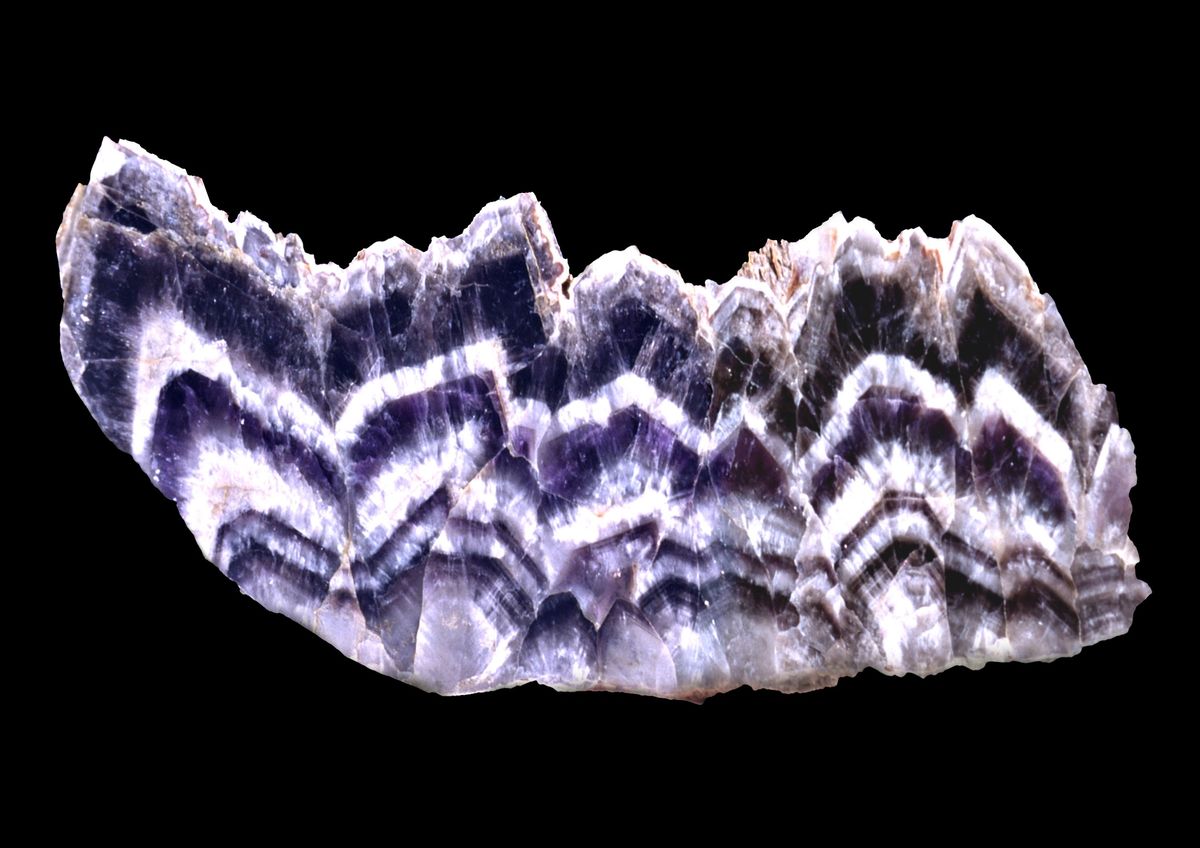
The areas of the quartz vein that have been opened up so far show significant differences in their structure in some sections. With an average width of 30 to 60 cm, it sometimes splits into several parallel veins and forms “feather cracks” that extend at acute angles from the main vein for meters into the surrounding rock. While the main vein is always banded in black, white, gray, and violet (in varying intensities), the much narrower feather cracks sometimes display only one color. In the middle of the vein, clay-filled fissures with freely grown crystal points often open up. These fissures can be a few centimeters or several meters in diameter.
COLORFUL DIVERSITY
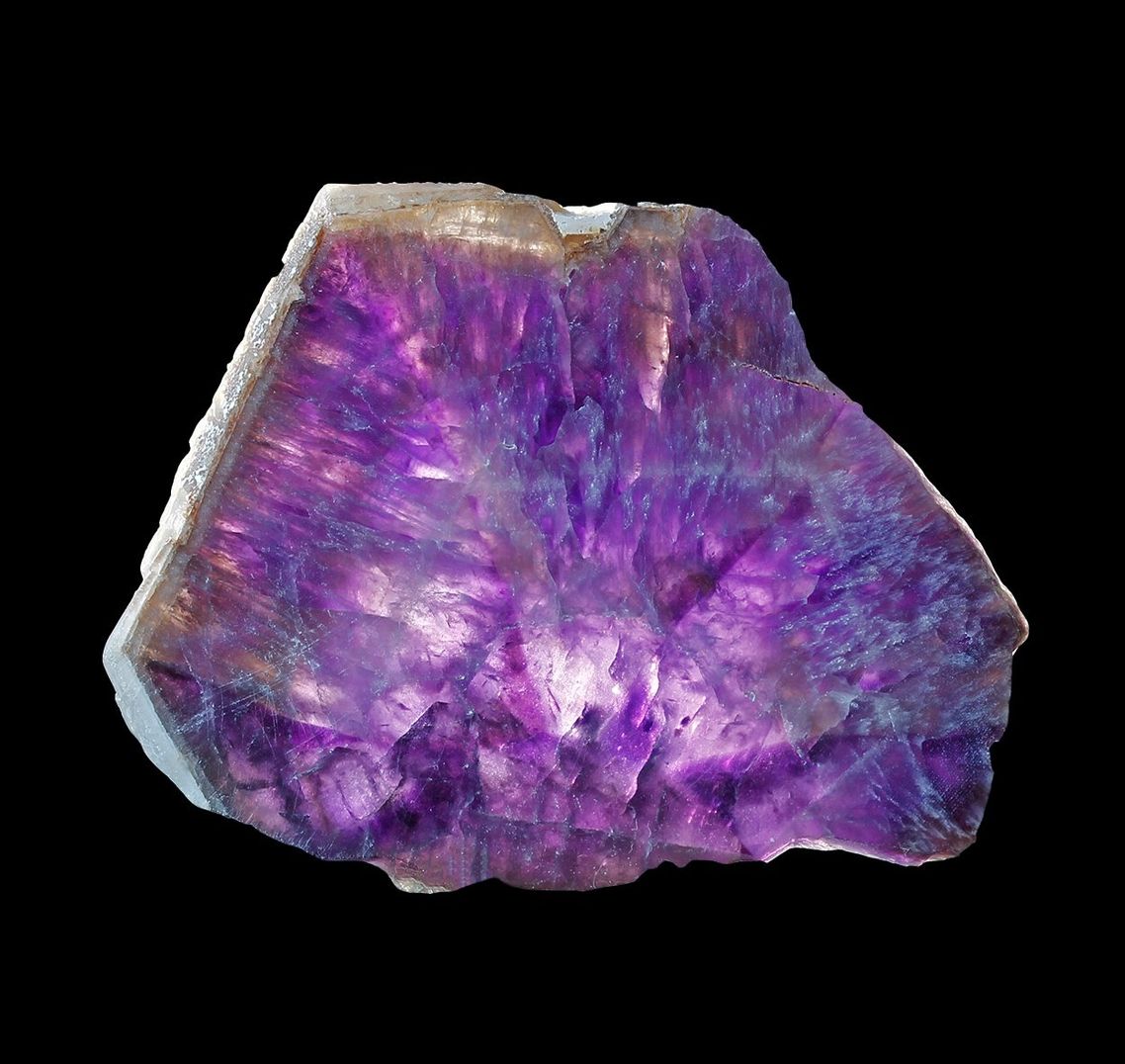
First of all: The deposit is very low in various minerals. Only tiny pyrite and iron or manganese (hydro)oxides can be seen as inclusions in clear quartz crystals. Most quartz crystals are only six-sided pyramids (made up of rhombohedral faces) with edge lengths of up to 18 cm. Prismatic faces are rarely observed. A combination of both occasionally leads to artichoke-like formations. Their color is very varied. It can even be quite different in neighboring cavities. The majority of the tips are grayish-white to light beige in color, often with a rough surface. The smaller crystals in the feather cracks are often more beautifully formed and display the entire color spectrum of the quartz family: from clear rock crystal to all shades of smoky tones to jet-black morion. These are joined by bright red “iron quartz” and, very rarely, genuine citrine. A single find is moss-green-colored “prasem” due to inclusions. Amethyst is rather rare as free-standing crystals. The deep purple tips are usually covered with milky quartz, but sometimes have facetting quality. Cut stones that reveal the distinctive banded vein structure or those cut across the c-axis of the crystals are very attractive. The latter produce attractive concentric cross-sections. As if that weren't colorful enough, brecciated fissure fillings of colorful chalcedony, often with embedded amethyst fragments, are occasionally found in areas of old faults.
A 3-meter-long section of the quartz vein is unique in the world: in the “Eggenburgium,” about 20 million years ago, the Maissauer Mountain formed a small island in the Paratethys Ocean. This part of the amethyst deposit protruded into the rocky sea coast. The violent surf broke off pieces and, over centuries, shaped them into attractive spherical or egg-shaped pebbles with attractive banding. These are absolute rarities and are unparalleled.
CONCLUSION
Decades of studying the fascinating varieties of Maissau quartz make one feel humble and grateful for this unique natural treasure! Where else can you find (almost) all colors of quartz united in a single vein? And you can even marvel at the most beautiful part of it in situ! The region loves “its” stone and identifies with it. Could mineralogy have a more beautiful effect?