Herwig Pelckmans (2025): The impossible fluorite crystal. Mineralica 2025-3, pp. 6–7.
Online
Herwig Pelckmans (2025): The impossible fluorite crystal. Mineralica online, August 2025. https://mineralica.com/a/4v9s6p (accessed October 13, 2026)
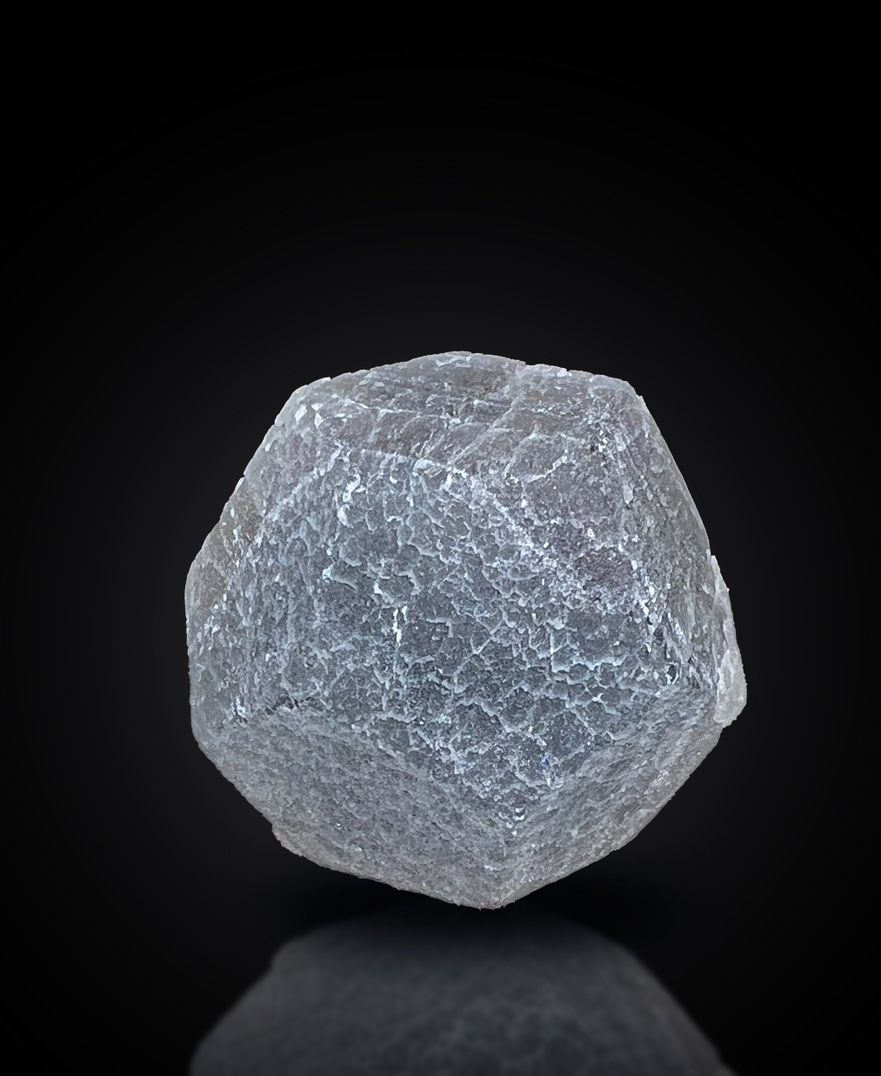
At a mineral show, Herwig Pelckmans spotted a fluorite shaped like a regular dodecahedron – a form fluorite cannot grow. The story of a cut specimen that is all about conversation value.
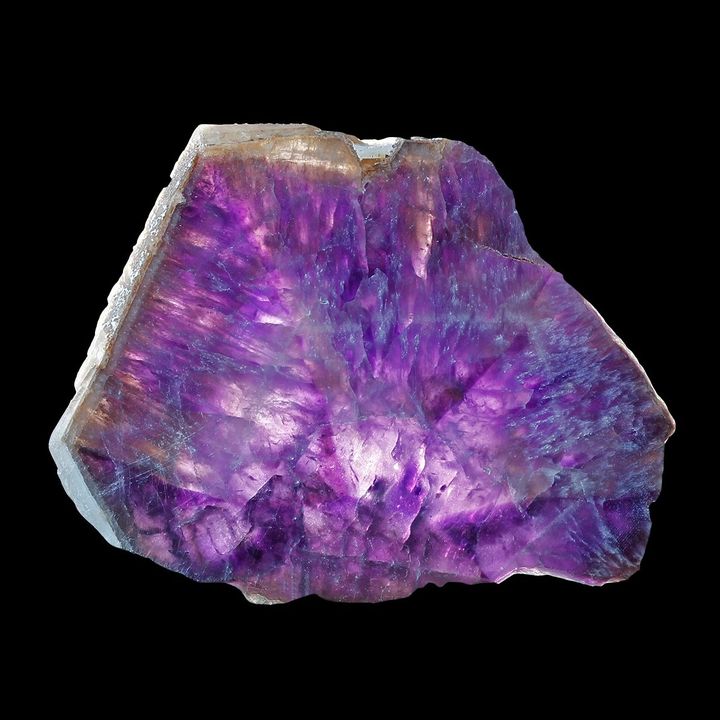
Fluorite in the form of a perfect dodecahedron – an artificially cut and etched crystal that is mineralogically impossible, but guaranteed to spark conversation. Henk Smeets photo.
Okay, I confess, I do have a few flaws. One of them actually does not sound all that bad: I collect minerals. No, not necessarily the zillion dollar ones, on the contrary! The “rocks” I hunt for must have but one property: they need to be conversation pieces.
Last time I went to a local mineral show, I noticed, among the many, many fluorite specimens, one that really caught my eye. Now it’s not hard to find a fluorite at a mineral show: the mineral is extremely common on a worldwide scale: it’s found in almost every country. And many countries have tons and tons of it. Which is a good thing, because metal production depends on it. And so fluorite is mined in many countries, and used to lower the melting temperatures of metal ores. The very name of this mineral reminds us of that useful property: fluorite is based on the latin word “fluere”, meaning “to flow”.
Fluorite is not only a very common mineral, it is also a very colorful one. It is found in almost every color, to the point where it was nick-named “the rainbow mineral”. And if you change the light source, you get to see even more colors. A lot of fluorites happen to “glow” if you look at them with UV (=ultra-violet) light. It was actually the mineral fluorite that gave its name to the words “fluorescence” and “to fluoresce”. The latter is a synonym for “to glow”: many fluorites are able to absorb the energy of UV light, but are unable to hold on to it. When they release the absorbed energy in the form of visible light, we say the mineral is fluorescent (even though nowadays it is more correct to say the specimen is luminescent).
Strangely, it was not the color, nor the luminescence of the specimen, that stopped me in my tracks. No, it was the shape of the crystal. Since fluorite is among the minerals that belong to the cubic system, it is most frequently found as cubes. Together with copper and gold, it is part of the class of species that have the most symmetry of all minerals. And so it can be found in 7 different crystal forms (or any combination of those forms). We already mentioned the cube to be the most common form. For fluorite, the dodecahedron is next in line. That is, a polyhedron with twelve flat faces, each face being a rhombus, and so it’s also called a rhombic dodecahedron.
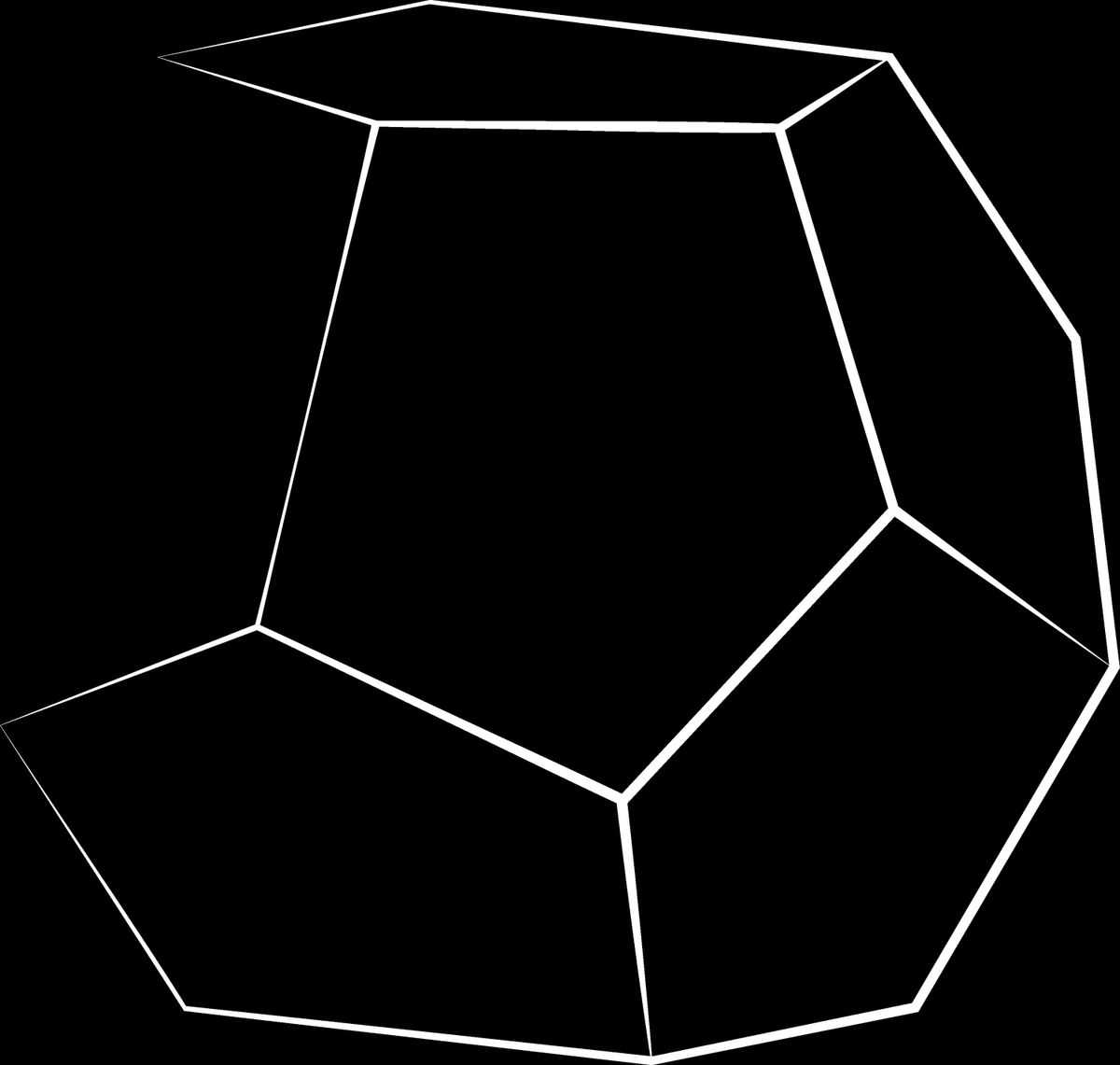
The fluorite specimen that caught my eye, was a dodecahedron, but not a rhombic one. Instead, it was a dodecahedron (with 12 pentagonal faces). A form so common for the mineral pyrite, that it is also known as the pyritohedron. So here I was, confronted with a regular dodecahedron of fluorite, and shaking my head in disbelief! For such a “crystal” is impossible in the natural world: the symmetry of the pyritohedron is too low for the crystal class that fluorite belongs to!
What happened? Well, some inventive Chinese mineral dealers came up with the idea to take massive fluorite and cut it into regular dodecahedrons. Afterwards, they would soak them in sulfuric acid for a few minutes, to make them look “more natural”.
And that is how this impossible fluorite crystal came to be. Needless to say I bought one, knowing very well it was a fake. It now sits in my collection and does wonders as a conversation piece!
In Mineralica 2025-3
This article runs on pages 6–7. The first 2 pages are free to browse.
This page is fully readable with a subscription.See subscription
Karl Wanek from Gloggnitz found almost all of his roughly 5,000 specimens himself – in alpine clefts, old mines and abroad. Johann Zenz portrays one of Austria's most important collectors and his partner Renate Kain.
The Red Cloud Mine in Arizona produced the world's finest deep red-orange wulfenite. Gerd M. Wiedenbeck tells its story from silver mining to the “Red Gem Pocket” and of his own collecting in the mine.
On the Maissauer Berg in Lower Austria, a single quartz vein holds almost every color variety of quartz – amethyst, smoky quartz, citrine and iron quartz. Gerald Knobloch traces its story from 1848 to today's “Amethyst World.”