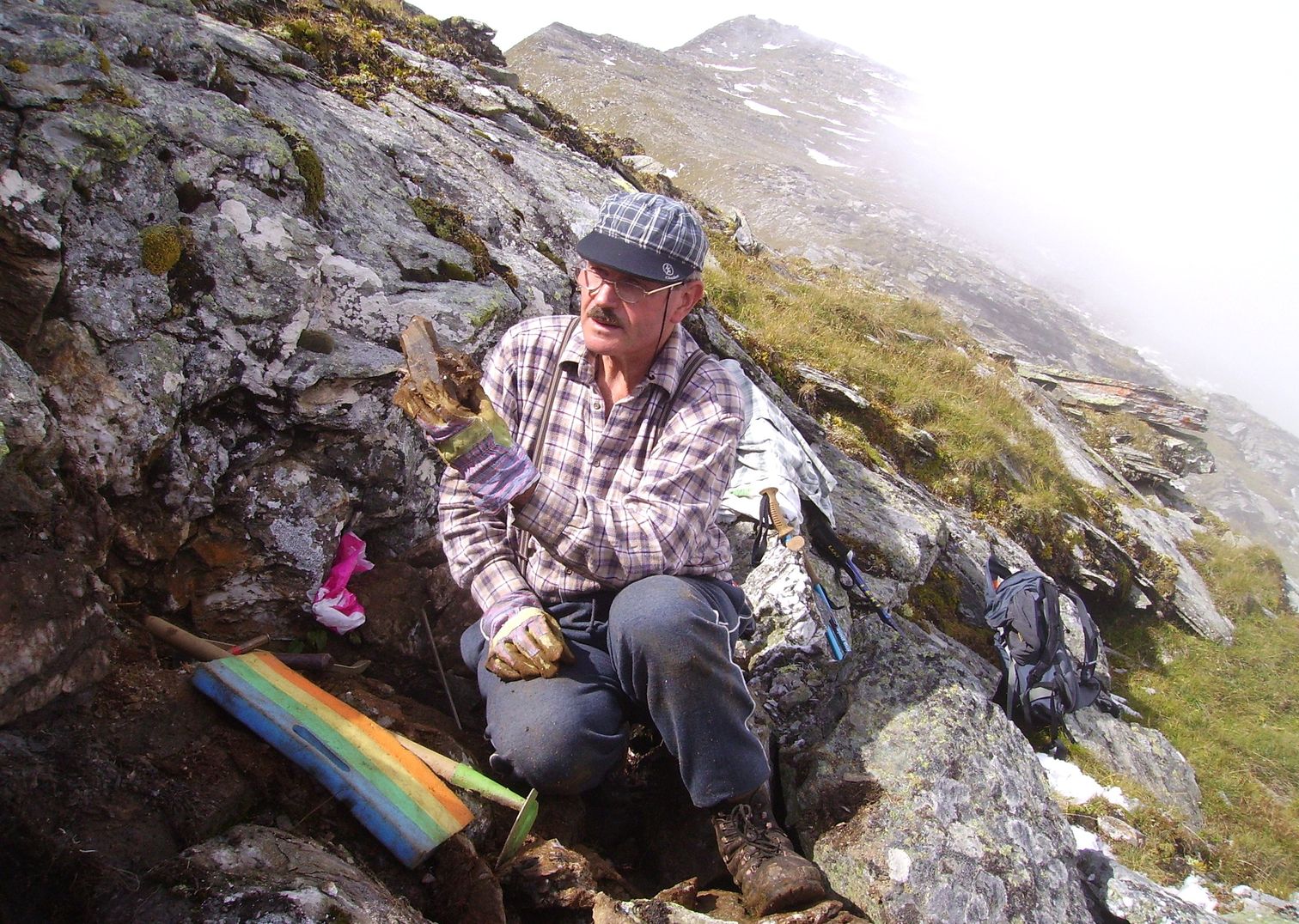
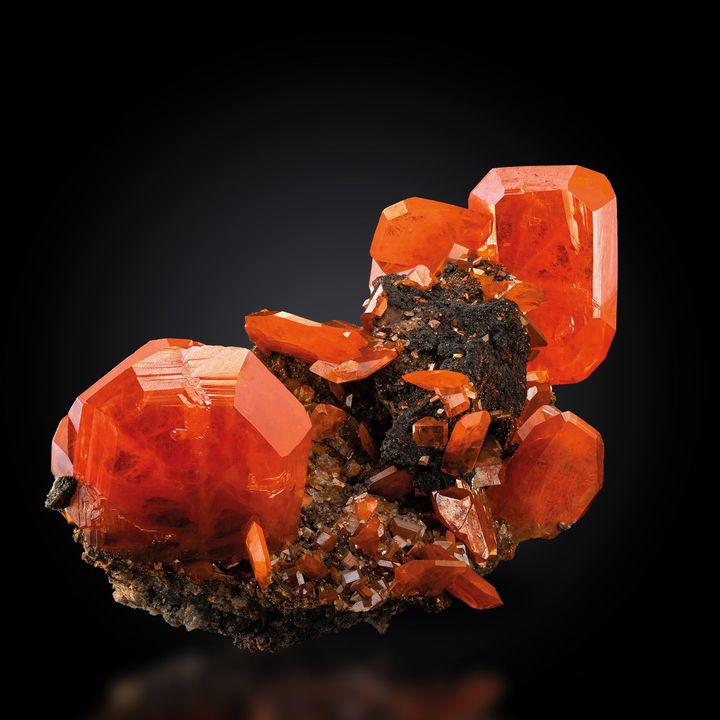
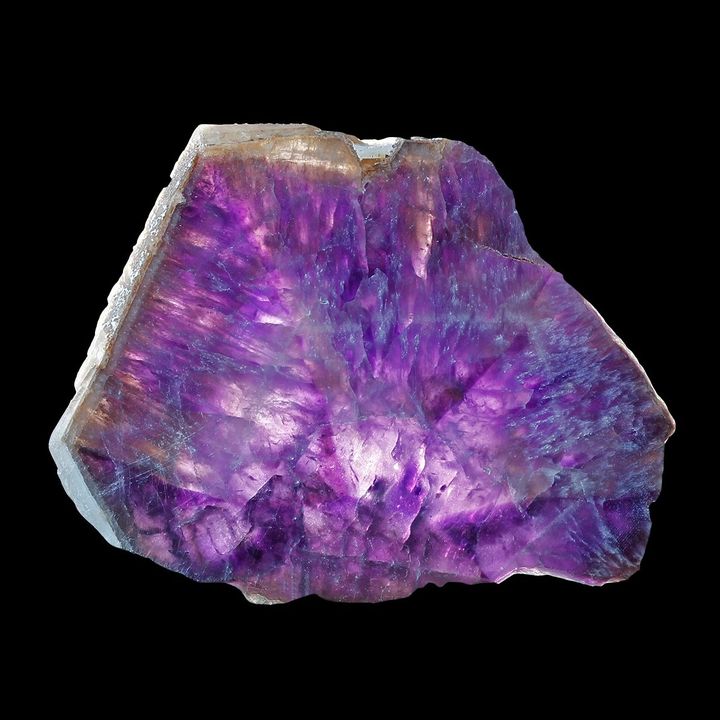
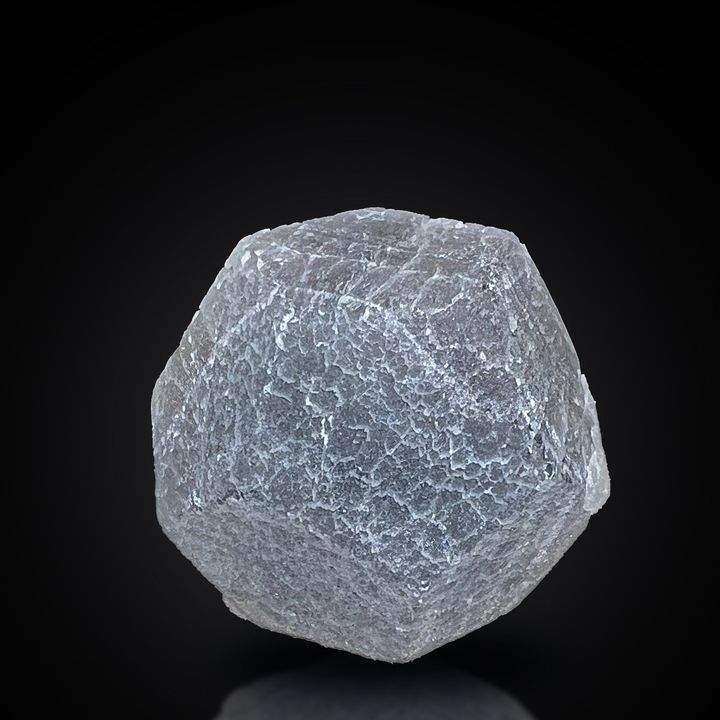
At a time when a large part of the acquisition and “collecting” of minerals and crystal specimens is carried out via the Internet and often at almost unimaginable sales prices, the species of those who still track down and mine their specimens themselves in nature seems to be disappearing. Karl Wanek from Gloggnitz in Lower Austria is one of the most important Austrian collectors who has actively worked on numerous regional and international sites for almost 60 years.
The first contact
Karl Wanek was born in 1944 and grew up in a difficult time in Hirschwang in southern Lower Austria. Although this region has a long mining tradition, finds of really high-quality minerals are a rarity. Nevertheless, interest in these beautiful natural products soon awoke and an alpine garden was soon set up with the first stones he found himself (copper ore, malachite, azurite).
School lessons were not necessarily one of his favorite pastimes. When he was once again forced to spend an extended period of time in the natural history cabinet, he discovered a sparkling rock crystal in the school mineral collection, which soon adorned his alpine garden.
After marrying at a very young age and the birth of his daughter, he took his first major vacation in Zell am See in Salzburg in 1966. In the breakfast room of the accommodation there was a cabinet with magnificent local crystals that immediately fascinated Karl. In the days that followed, he was able to find his first alpine minerals such as actinolite, small quartz crystals, epidote and adular on the Kitzsteinhorn mountain. This sparked his enthusiasm for a lifelong interest in beautiful stones.
A perfect symbiosis with life partner Renate
In the years that followed, further collecting tours repeatedly yielded beautiful finds. As he didn't have his own car, he usually had to use a moped as a means of transportation. The destinations were therefore limited to local occurrences in Lower Austria and neighboring Styria province. The former large magnesite mine in Veitsch, Styria, exerted a particular attraction here, which became the regular destination of around 140 (!) collecting trips over many years and often rewarded perseverance with beautiful aragonite specimens, magnesite and quartz crystals.
However, it was his acquaintance with Renate Kain, who was also very interested in minerals and whom he finally married in 1995, that really ignited his collecting turbo. Over the course of 30 years, he has undertaken hundreds of mineral tours and numerous trips with her, including to foreign sites. Renate is the perfect companion for Karl and was also able to discover and recover numerous beautiful stones herself on their joint collecting excursions.
Mines and high alpine terrain
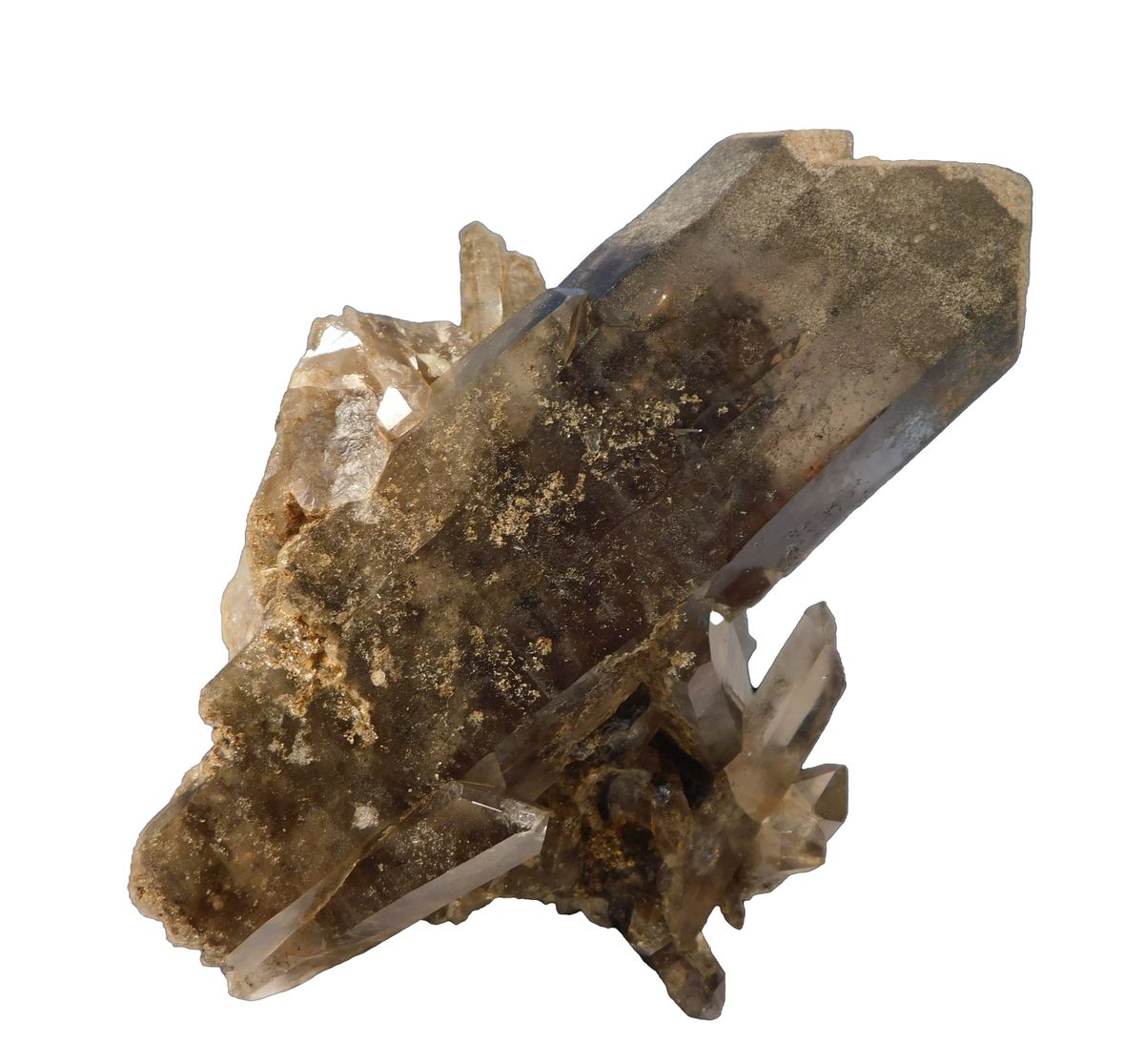
In addition to the local sites, alpine minerals soon became the focus of his collecting interests. Fortunate encounters with “instructors” such as Kurt Nowak and Toni Zlöbl from Gastein, Salzburg, led him to excellent finds of his own: Quartz crystals up to 75 cm in size and outstanding adularia from the Ortberg in the Gastein Valley, Salzburg, beautiful crystals from the Ankogel and the Auernig mountains in Carinthia and, in later years, a wide variety of alpine minerals of excellent quality from the Lungau area in Salzburg quickly enriched his steadily growing collection.
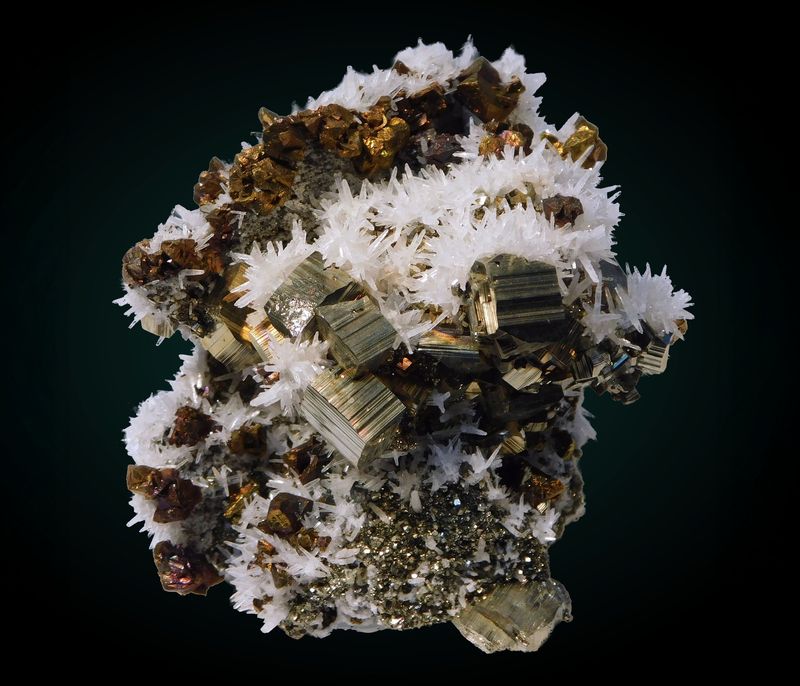
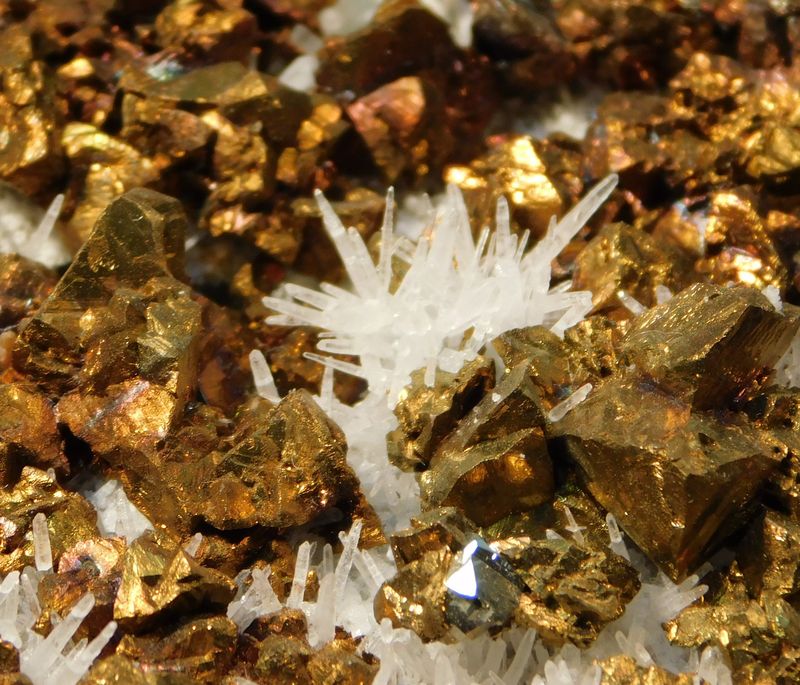
Old mines also exerted a great attraction on Karl Wanek. Extraordinarily good finds of pyrite, chalcopyrite, quartz crystals and the rare lead-silver-bismuth sulphide gustavite (in crystals up to 3 cm in size, huge for the mineral) are among the highlights of his collecting successes. In addition, he was able to bring back minerals of outstanding quality from more than 300 other tunnel explorations, for example in the Theisenegg and Wölch mines in the Carinthian Lavanttal, in Meiselding, on the Katschberg, in Schellgaden, and Leogang in Salzburg.
The iron mine on Grillenberg in the Schwarza valley in Lower Austria, which was already known more than 1000 years ago, is in the immediate vicinity of his home. Until 1926, hematite was mainly mined here for the production of anti-rust paints. Mining was briefly resumed during the Second World War. Together with his friend, Helmut Krenn, Karl Wanek uncovered an access to the old mine in February 1980 and shortly afterwards was able to recover beautiful white aragonite iron blossoms (“flos ferri”), a remarkable first find for Lower Austria. Subsequently, the tunnel system, of which around 4 km is still accessible, was precisely surveyed and set up as a visitor mine under the leadership of the collector and author Michael Hackenberg. Karl Wanek, who was employed full-time by the Austrian Federal Railways, worked here for years as a volunteer mining guide.
The lure of foreign countries
At the suggestion of his wife Renate, the focus of his collecting interest eventually shifted to foreign locations. Greece in particular, with its mineral-rich islands of Crete, Thassos and Serifos, became the destination of longer vacations. Renate and Karl were particularly successful in their numerous explorations of the old mines on the island of Serifos in the Aegean. Great finds of fluorite, barite, prasem quartz, andradite garnets, hematite iron roses, ilvaite crystals and the extremely rare tendril quartz were made.
They were also fascinated by volcanoes. Trips to the Stromboli in Italy, to the island of Vulcano, to Tenerife and even to Mount Kilimanjaro in Africa in November 1993 enriched the collection not only with fantastic nature experiences but also with mineral finds.
Critical situations
In the course of around 2500 collecting trips and in connection with generally not entirely harmless destinations such as high alpine terrain or old mining tunnels, Renate and Karl also had to survive some very dangerous situations: In 1980, Karl was able to rescue at the last second a collector friend who was completely buried in a deep pit he had dug himself in search of gypsum crystal roses in Pöttsching, Burgenland province.
In September 1998, Renate fell into a crevasse filled with water during a tour to the 3105 m high Baumbachspitze in Carinthia. Karl was only able to pull her and her heavy rucksack out of the crevasse with great difficulty.
While working on a promising pocket on the Lungauer Salzkopf mountain in 2007, Karl fell headfirst several meters into the steep terrain, but fortunately “only” escaped with severe bruises and haematomas. Two years earlier, Renate had already fallen 15 meters down a nearby site due to a broken branch and had to be treated for her serious injuries during a lengthy stay in hospital.
Lecturer and author
Karl Wanek was a much sought-after lecturer at Austrian collectors' clubs for decades. His slide shows, presented in a particularly lively manner, were among the highlights of every club program and motivated many listeners to search for minerals themselves.
In 2019, at the age of 75 and towards the end of his active collecting career, Karl decided to record his impressive experiences in a book. In the highly recommended volume „Faszination Kristallsuche – Abenteuer über und unter der Erde“ (Fascination Crystal Hunting - Adventures Above and Below Ground; in German language), Karl amusingly describes the highlights of his 2,500 or so collecting trips over more than 50 years of collecting.
An impressive collecting philosophy
Karl Wanek can serve as a role model for today's generation of collectors in many respects: His collection of around 5000 pieces, which is well documented, consists almost exclusively of pieces he has found himself; only a few were added to the glass display cases as gifts or in exchange. Very few collectors in the world can look back on such intensive and successful collecting activities at so many different sites as Karl.
His connection to science, above all in the person of the former curator of the famous Natural History Museum in Vienna, Dr. Gerhard Niedermayr, should also be particularly emphasized. Among other things, this collaboration resulted in the first description of ilmenite and hematite rosettes from a previously unknown site near Prigglitz in Lower Austria province.
His collecting tours are meticulously recorded in 3 little tour books.
Over the years, many friend- ships developed through collecting. The shared experiences and memories of successful collecting tours with his companions are among the most important moments in Karl Wanek's collecting life. He himself comments: "People interested in minerals always ask the question: 'What is it worth? That's typical of today's materialistic people. I don't like that at all. Of course, every find has a special value. But for me, the experiences behind every find are the most important thing."
The collecting fire that drove Karl Wanek to peak collecting and physical performance for more than five decades has died out in recent years, mainly due to health problems, which unfortunately means that active collecting in the field is no longer possible. However, may the memories of these unique collecting experiences and great collecting successes remain with him for as long as possible...