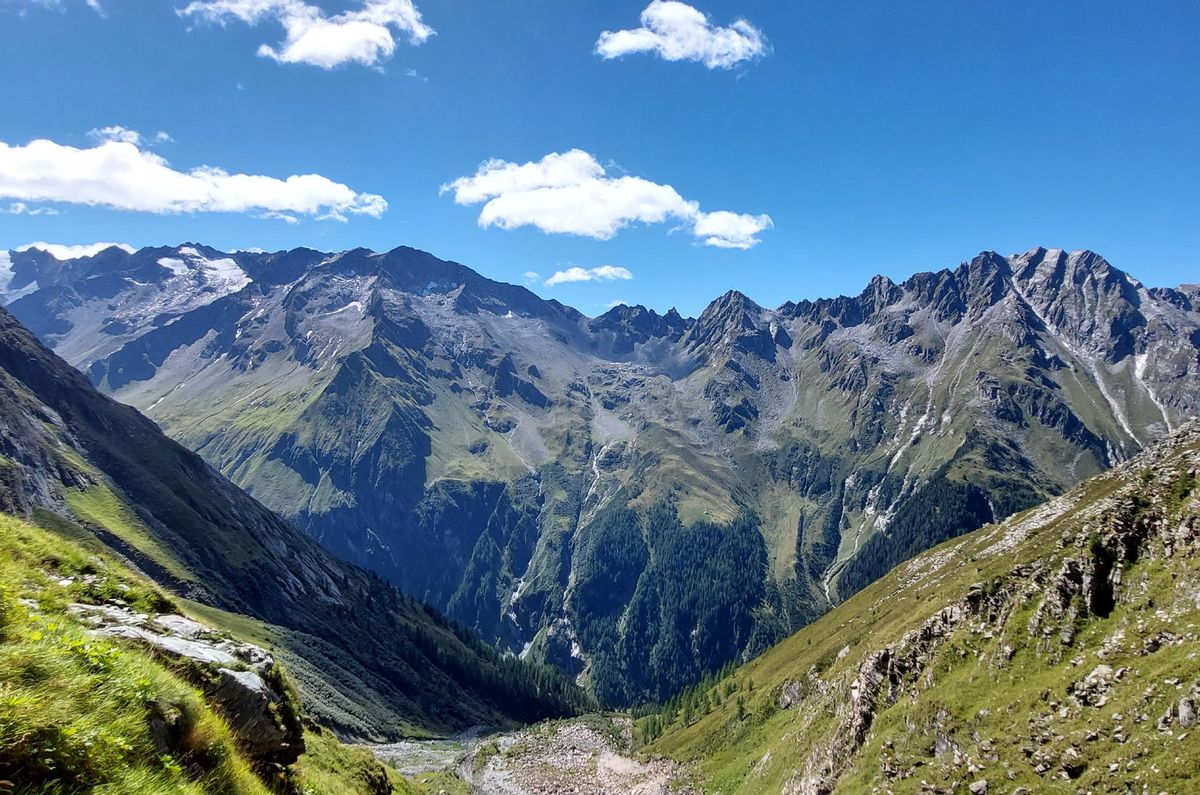
For mineral collectors, scientists, and fortune hunters alike, the Leckbachrinne in the Habachtal, municipality of Bramberg, with its emeralds is one of the best-known mineral localities in the Eastern Alps. The history of the discovery and mining development of the deposit is only patchily documented and often lacking in detail. Important facts have frequently even been reported in contradictory ways, and differing names for localities have made attribution even more difficult.
The history of emerald mining
The following is a summary of some key historical events surrounding the emerald mining. As a general rule, mining in high-alpine terrain above 2,000 m, where the adits and installations are free of snow and ice for only a few months of the year, is a major challenge for everyone involved.
The beginnings of the emerald finds in the Habachtal remain unclear.
There has been much speculation as to whether the emerald deposit in the Habachtal, Pinzgau, Salzburg, was already known to the Celts and Romans and perhaps even mined by them. Historical finds may point in that direction.
In his comprehensive study of the history of emerald mining in the Habachtal, Schmetzer (2023) showed that some old reports of emerald mining from the 16th century onwards must be viewed critically and considered erroneous.
For example, the literature mentions a landslide in the Habachtal in 1593 that allegedly destroyed the “emerald mines”. In reality, it was probably the silver mines on the Gamskogel, further down the valley, that were affected. The first serious written reference to an emerald occurrence in the Habachtal therefore remains the correspondence of 1669 between Archduchess Anna de Medici and her brother Ferdinand II, Grand Duke of Tuscany. The deposit appears to have already been known at that time: as she writes, the scholar and naturalist Niels Stensen, discoverer of the law of the constancy of interfacial angles, is said to have visited “…the emerald mines” on his journey through Tyrol and Salzburg (Schmetzer 2023).
The first scientific mention of an emerald occurrence in the “Heubachthale” appears in 1797 in the writings of Kaspar Melchior Schroll, a “hochfürstlicher Bergrath” (princely mining councillor). The first emerald specimens from the Habachtal, purchased for the Imperial Natural History Cabinet in Vienna, are listed in the inventory of 1807. In 1859, Ludwig Ritter von Köchel, known for the Köchel catalog of the works of W. A. Mozart, reported on the Habachtal emerald occurrence in his book “Mineralien des Herzogthumes Salzburg”. His observation that the deposit was heavily exploited probably meant heavily collected rather than mined in any organized fashion (Niedermayr 1996).
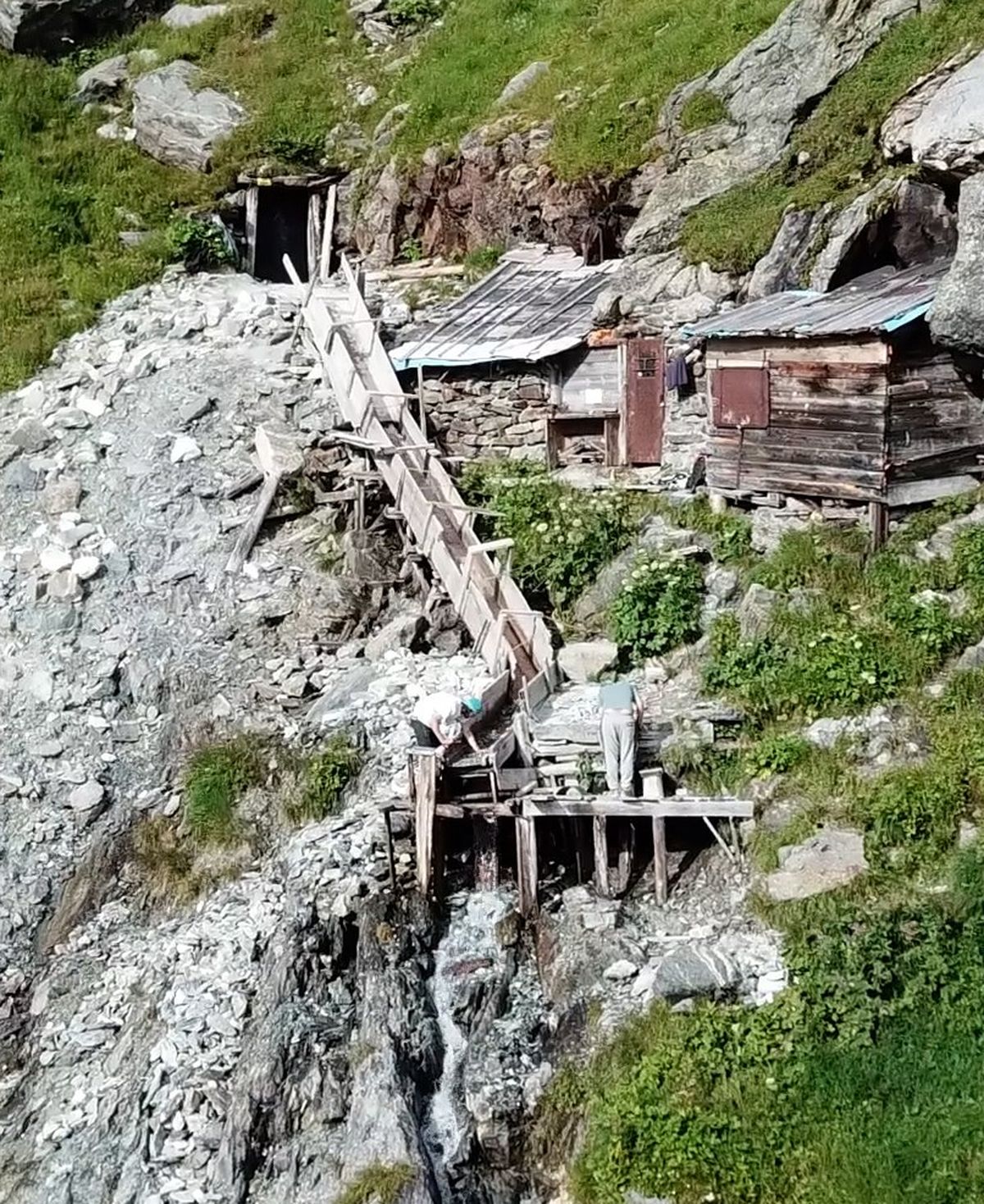
In 1860, the Viennese jeweller Samuel Goldschmidt began mining the deposit, albeit with mixed success. In 1862 he purchased from the state, for 1,000 crowns, an area of roughly one square kilometer by today’s measure around the deposit. Since gemstones did not fall under the mining law and no mining privilege could therefore be granted, the emeralds belonged to the landowner. Goldschmidt had adits driven at about 2,200 m altitude and a mountain hut built as miners’ quarters (Schmetzer 2023).
Peter Lausecker mentioned the driving of three adits below the Leckbachscharte around 1861/62 as probably the first organized mining under Samuel Goldschmidt. It was also during this period that a large, beautiful emerald was found which weighed 42 carats after cutting and today adorns the English Crown Jewels. Despite some remarkable successes, the operation remained unprofitable in the long run and changed operators repeatedly (Lausecker 1986).
In 1896, the “Emerald Mines Ltd.” acquired the ownership rights. At times, up to 30 miners were employed. During this period, around 1900, adit C, the “Engländerstollen” (Englishmen’s adit), was opened at 2,160 m altitude. The annual yields of impure and cuttable stones brought in between 40,000 and 60,000 gulden. The year 1903 was particularly successful, with 68,000 carats, or 13.6 kg of emerald. The good rough stones were sent to the crown colony of India for cutting and subsequently came onto the market as sparkling “Indian emeralds”, where they fetched higher prices than “Habach” stones, which nobody knew (Lausecker 1986).
Due to the English mining company’s debts, Dr. Theodor Ohnesorge of the Imperial Geological Survey in Vienna drew up a valuation report on the emerald mine in 1912. In it, the existence of four adits was recorded for the first time, designated A, B, C and D; he described the portal of adit D as buried (Schmetzer 2023).
In 1913, ownership of the mine passed to three farmers of the municipality of Bramberg; from then on, the owners of the emerald mine changed several times. In the post-war years from 1917, the new operator Anton Hager reopened adit D (the “Smaragdstollen”, emerald adit) at 2,180 m altitude, about 20 m above adit C. It proved to be very productive. Hager also planned, together with investors, to mine talc on a large scale. But the years of inflation were unfavorable for the mine as well as for the sale of emeralds and soon led to decline. There followed further years of changing owners and lessees from Switzerland, Austria, Italy and Germany (Schmetzer 2023).
During the Second World War, all mining came to a standstill. Afterwards, the emerald mine, then owned by Dr. Max Gaab, was placed under public administration. Hans Zieger, who already knew the mine from earlier days, was given an administrative post for the mine area and began working in adit D again. In the course of this, the “Ziegerstollen”, a crosscut driven from the ore chute, was cut into the rock, and good emeralds were recovered. Despite some successes, operations were discontinued in 1949. In 1956, the Austrian mining engineer, Ludwig Hubicky, revived the earlier efforts of around 1930 by H. Leitmeier to extract beryllium as a raw material instead of mining emerald as a gemstone. This time, the beryllium was to be used for the rising nuclear industry (Lausecker 1986).
In 1970, a massive debris flow devastated adit entrances, the Sedl and also parts of the Alpenrose inn with its “Emerald Mine Museum”, opened in 1966. Valuable display pieces and old documents were destroyed.
Among all these historical events, the worldwide interest in Hermann Kautzer’s “million-schilling find” should not go unmentioned. According to these accounts, Kautzer is said to have found a large emerald in 1957, which the Viennese gem cutter Roman Englisch immediately estimated at 2 to 4 million schillings. After cutting, the stone had “turned” into green glass. The courts were called upon, until an acquittal was finally reached (Niedermayr 1996).
In the course of their research, Michael Wachtler and Georg Kandutsch published interesting findings and photographs suggesting that the Kautzer emerald may still exist unscathed today. They showed an emerald 65 mm long and 25 mm thick, weighing about 50 g, which a stranger had presented to them at a meeting (Wachtler and Kandutsch 2002).
The emerald deposit in the Habachtal
The adits of real mining interest were adits C and D.
Adit A was opened at 2,095 m altitude, reached 24 m in length and yielded only occasional, rather colorless beryls. Adit B, at 2,131 m, extended 65 m into the mountain; no beryl finds are known from it. Adit C, with its portal at 2,165 m, was driven around 1900 and was also called the “Engländerstollen”. It probably contained no emerald-bearing zones worth mentioning itself. Via a raise in its rear section, however, about 20 m above the level of adit C, the English presumably reached high-quality emerald-bearing mining zones on the first and second levels and in raises I and II (blue arrow on the mine plan). The English mining company’s returns must have been satisfactory, otherwise they would not have kept the operation going for 17 years (Lausecker 1986).
The date of construction of adit D is a matter of debate in the literature. According to Lausecker, adit D was only driven between 1917 and 1920 in order to reach the English company’s mining zones (Lausecker 1986).
That would have meant that the English had to manage the laborious removal of material through adit C without adit D. Far more plausible is the assumption that the English had already driven adit D for haulage before 1913. During their final withdrawal around 1914, they may have blasted shut the accesses to the emerald-bearing layers because of the world political situation and taken the mine plans of the time with them or destroyed them. Anton Hager would then, around 1920, merely have restored the buried adit D. This theory is also supported by the report of Dr. T. Ohnesorge, who, as mentioned, first described the existence of adit D as early as 1912 (Schmetzer 2023).
Perhaps the English also hoped to return one day? (Author’s note)
Like all beryl, Habachtal emeralds belong to the hexagonal crystal system. They show few forms and are usually bounded by the hexagonal prism along the c-axis and by the pinacoids as terminations. The most important emerald host rocks are biotite, chlorite, actinolite, tremolite and talc schists. The emeralds did not crystallize in clefts like the hydrothermally formed Colombian deposits of Muzo and El Chivor; the Habachtal emeralds owe their origin to metasomatic processes. Thin sections show that they crystallized about 65 to 35 million years ago in a fully crystalline granular fabric, consuming the mineral constituents of the host rock (Lausecker 1986).
“Geochemical studies of the distribution of beryllium in rocks and their individual constituents led to the conclusion that the beryllium contents hidden in the white micas and biotites are already sufficient to produce beryl crystals of the form and size shown here, without any additional magmatic supply of beryllium from outside having been necessary” (Grundmann 1991, p. 44; translated from the German).
The emeralds, beryls colored deep green by chromium, can reach a few centimeters in the Habachtal. Cracks and inclusions of biotite, hornblende, apatite and some 30 other minerals, as well as trails of fluid inclusions, considerably reduce the gem value of Habachtal emeralds, and cutting quality is rather rare. In addition, gray and occasionally bluish beryl varieties (aquamarine) up to 10 cm occur, sometimes even together with intensely green emeralds on the same specimen. As early as 1996, Niedermayr listed more than 50 different minerals from the Leckbachrinne; among them, phenakite, with crystals up to 10 cm, stands out as a rarity even on a global scale (Niedermayr 1996).
Experiences and insights of the Steiner family
Since 1964, the sole mining rights have been held by the family of Dr. Carl Gaab of Munich, and since 1985 the Steiner family of Bramberg (Alois “Lois” Steiner, his son Andreas and, more recently, grandson Simon) has operated the emerald mine as lessees. Lois Steiner still cuts the best emeralds himself; they are then made into jewelry within the family and sold together with attractive emerald specimens.
Around 1996, Lois Steiner and his son Andreas made finds of emerald specimens that are unusual for the Habachtal.
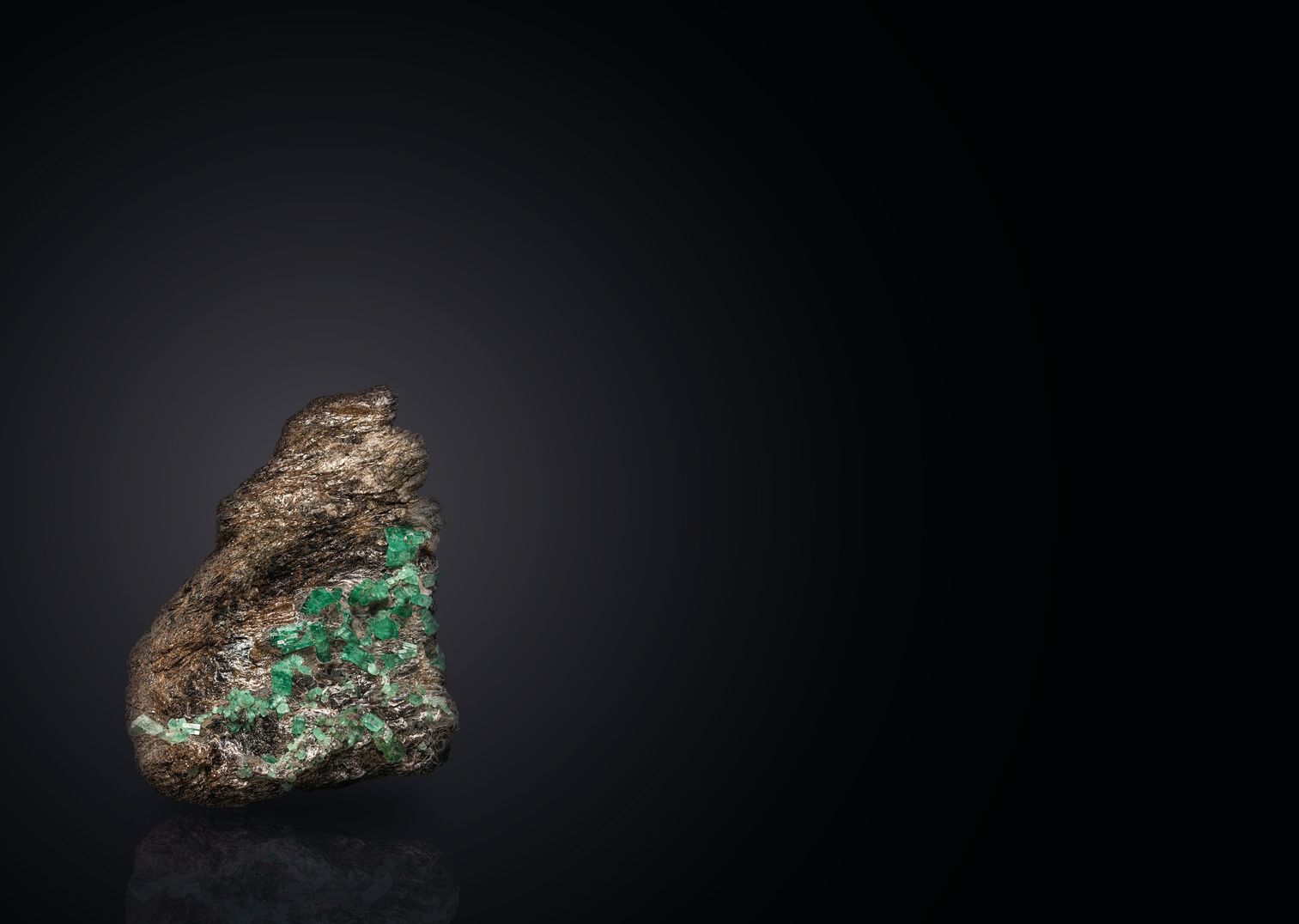
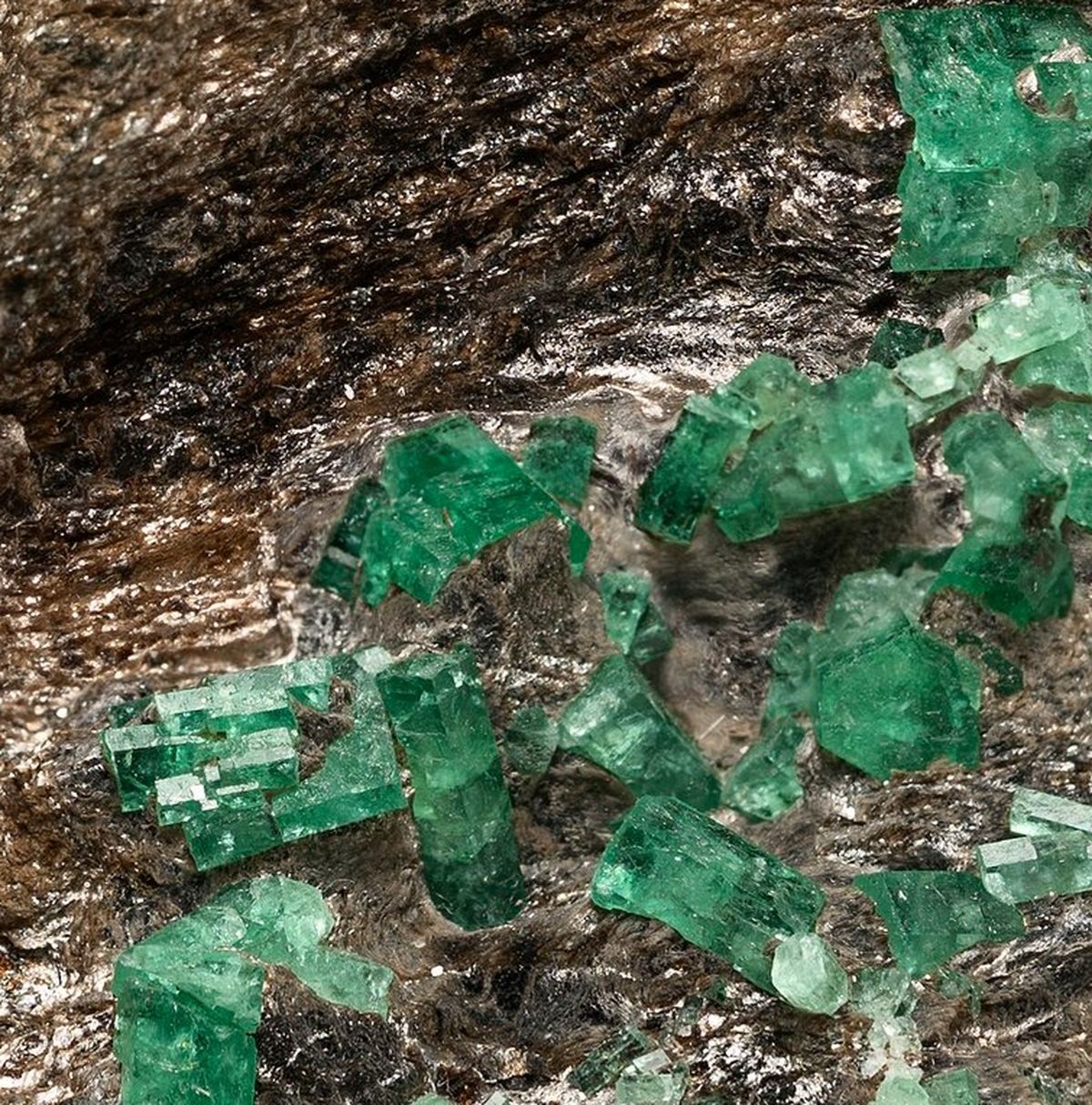
About 90 m from the portal of adit D, in the area of the old ore chute (green arrow on the mine plan), they found several specimens with countless emeralds, 2 to 10 mm in size, of very good clarity. The smaller crystals are light green, the larger ones a rich green, bounded by highly lustrous faces. This material is a great rarity for this deposit and reminds one of Colombian emeralds in quality.
Andreas Steiner described the occurrence as a gneiss body about 25 m thick and probably just as high, dipping steeply in the middle of the talc schist. A layer of biotite schist containing talc and actinolite, about 4 cm away from the hanging wall of the gneiss, hosted the highly lustrous emeralds. Peculiarly, the deep green emeralds occurred only within a thin, 5 to 10 mm zone. They were able to crystallize almost unhindered and with few inclusions in the soft, talc-rich surroundings. Just either side of this thin emerald-bearing layer, the rich emerald green quickly gave way to relatively unattractive pale green and white. There, colorless to pale greenish-gray crystals averaged 5 cm in length, in individual cases reaching 10 cm. The productive area measured about 2 × 5 m.
In the rear section of adit D, quite some time ago (around 1980), the roof of the adit collapsed through to the surface because of its thinness, possibly also as a result of careless blasting by the somewhat confused Sebastian Berger, a lessee of Karl Gaab. This created a natural funnel (blue arrow on the mine plan). Whenever the collapsed material was cleared out, large quantities of new material immediately slid down again, partly in blocks of up to 3 m, until the alpine rose bushes came down from the surface. Emerald-bearing biotite and talc schists were found again and again in the collapsed material.
Andreas Steiner reported several primary emerald occurrences in the Habachtal. Apart from the emerald mine, another primary occurrence lies buried beneath the scree of the Sedl in the mica schist bedrock. There he has so far found small green emeralds up to 6 × 3 mm and larger gray-green beryls up to 4 cm. He also found small emeralds and larger gray-green beryls in situ on the left side of the Leckbach, below adit A, as low as the 2,000 m mark.
On the opposite side of the Habachtal, in the area of the Kesselscharte, there is also a small emerald occurrence. Several collectors have found small emeralds there under difficult conditions, even though the lack of water makes “emerald washing” impossible. Erwin Burgsteiner recalled a specimen with several emeralds found by Alfons Wurnitsch (Erwin Burgsteiner, pers. comm., 2026).
Andreas Steiner likewise found emeralds measuring up to 4 × 2 mm in the scree blocks of the Kesselscharte.
In the Kesselklamm on the Untersulzbachtal side, Herbert Hofer found small but deep green emeralds in the solid rock (Grundmann 1991, Burgsteiner 2002).
A concluding anecdote
“Is your largest emerald already on display in your cabinet, or is it still hiding in the matrix beneath?”
My wife Edith and I are passionate collectors of Habachtal emeralds. She favors natural crystals and faceted stones set in jewelry, while I prefer crystals of deep green with terminations in matrix.
So in 2023 I once again drove to see Andreas Steiner in Bramberg. This time it was to be a bangle with a matching large emerald, uncut and in matrix.
Andreas showed me a wide selection of crystals already prepared for the purpose, in matrix up to 4 cm.
I said: “Very nice pieces, but that’s not what I’m looking for.”
With a slight grin, Andy admitted that he had expected as much.
“What do you have in mind?”, he asked me. Without a word, I walked into the front part of his workshop, where he keeps his special pieces, and reached unerringly for a hand-sized specimen with a single but beautifully colored emerald of 1.7 cm.
The crystal also met the most important criterion for a piece of jewelry: it was embedded flush in mica schist at both ends and thus well protected against damage from the sides.
“Can you work that one for me?”, I asked. “Okay!”, said Andreas, adding, with the decades of experience of the operator of Central Europe’s only emerald mine, that one or two more crystals might still be hidden underneath, because emeralds are rarely loners.
“I’ll cut it out right away and work the piece while you visit your collector friends”, he said. I no longer really wanted to hear that the large specimen was worth much more, because in return I had my dream stone for Edith’s birthday present.
When I returned two hours later, he had that special grin on his face again and held out two beautiful emeralds to me: the one I had chosen for the bangle, and an even larger one that showed a beautiful green color as he held it up against the sunlight. “So there are at least two after all, and both for the price of one”, he grinned, “except that the second one would never have seen the light of day if you hadn’t been so crazy about that first crystal.”
Over a cold beer we let the day wind down and mused about how many collections might still hold their finest emeralds unnoticed in the matrix, waiting for shining eyes at the moment of their discovery. I saw those shining eyes on my return, when Edith unwrapped the birthday present lovingly made by the Steiner family.
Thank you, Andy, for a wonderful experience! Otmar
We thank Mark Mauthner for the emerald photographs and for reviewing the manuscript, Heimo Urban likewise for his review, Andreas Steiner for much new information and many discussions, and Erwin Burgsteiner for providing literature.